

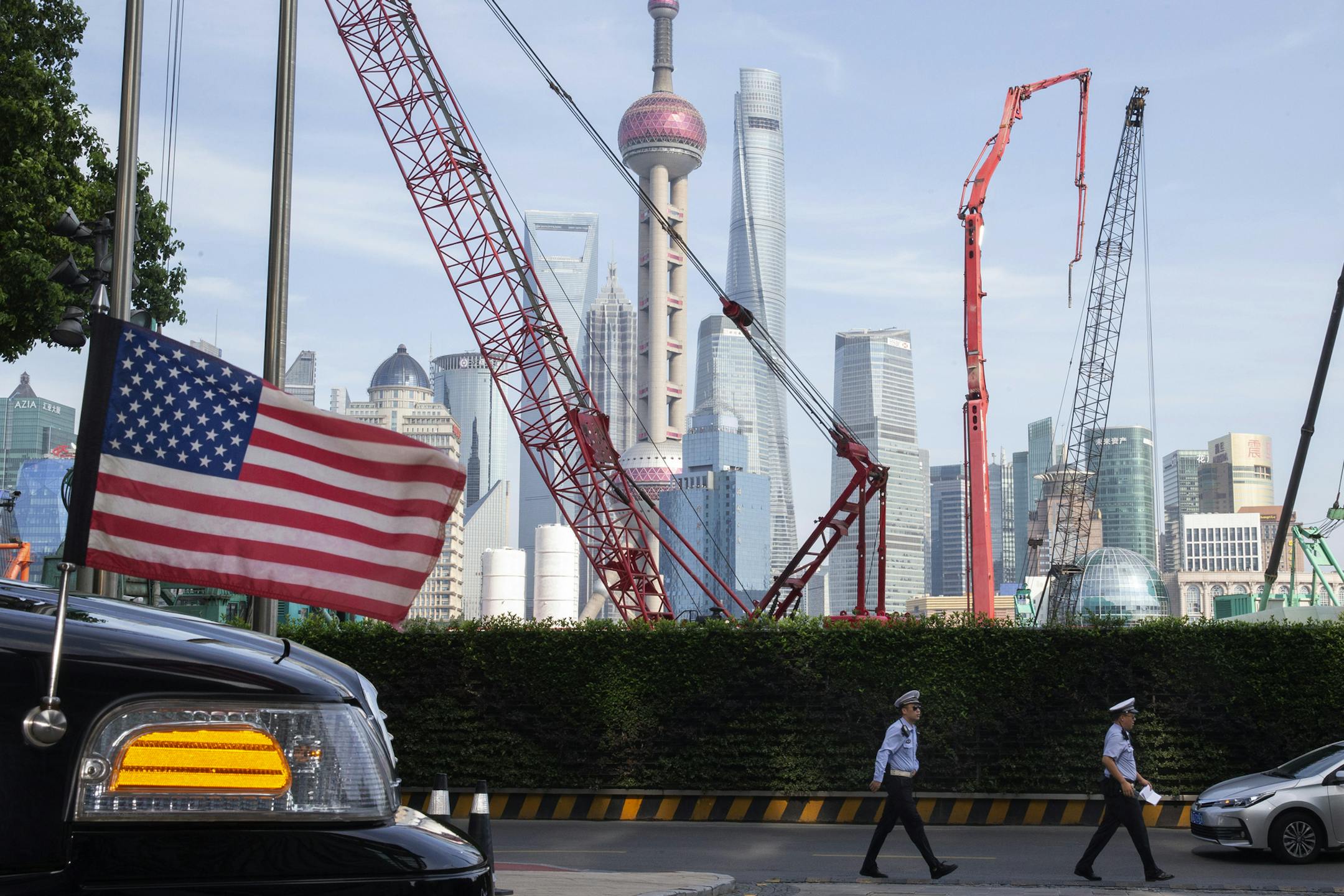
Shortly before Election Day in America, a columnist from the Economist spent an instructive morning in central Beijing, listening to a senior Chinese official explain why his country does not care who sits in the White House.
This was partly bravado. China's rulers do not care to play up the idea that mere voters might hold world leaders to account. But the official's disdain also reflects an elite consensus that a full reset of U.S.-China relations is difficult to imagine.
China wants smoother ties with America, said the official. But given their deep roots, present-day tensions will be hard to reverse unless America comes to a new understanding of the world.
Westerners are a self-centered and judgmental lot, he charged. They never expected the Chinese — a diligent, studious people — to rival them so soon. No matter which party runs Washington, the official said, "The U.S. has to answer this question: Can the U.S. or the Western world accept or respect the rise of China?"
To Chinese leaders, Donald Trump's aggression in office merely accelerated some inevitable trends. To them, the Trump era shows that talk of values is a sham, that China alarms Americans because it is getting stronger — and that the solution is to become more powerful, until Western critics are shamed into silence by China's success. They also think that American weakness is making that ex-hegemon (even more) vicious and determined to scapegoat China.
Back when Xi Jinping was China's vice president, he spent many hours with his counterpart Joe Biden, who is seen as an establishment centrist close to business sectors that want better China ties.
But struggle with America is seen as unavoidable.
Ordinary Chinese citizens never followed an American election so closely as this year's. But many watched with more scorn than envy. Instead, abetted by censors who allowed mocking jokes and memes about the race to flood social media, a common view is that the result is irrelevant.


