
Opinion | The future is flag football

The sport’s rise is good news for female athletes, and it’s good business for the NFL.

The New York Times
September 9, 2025 at 9:00PM
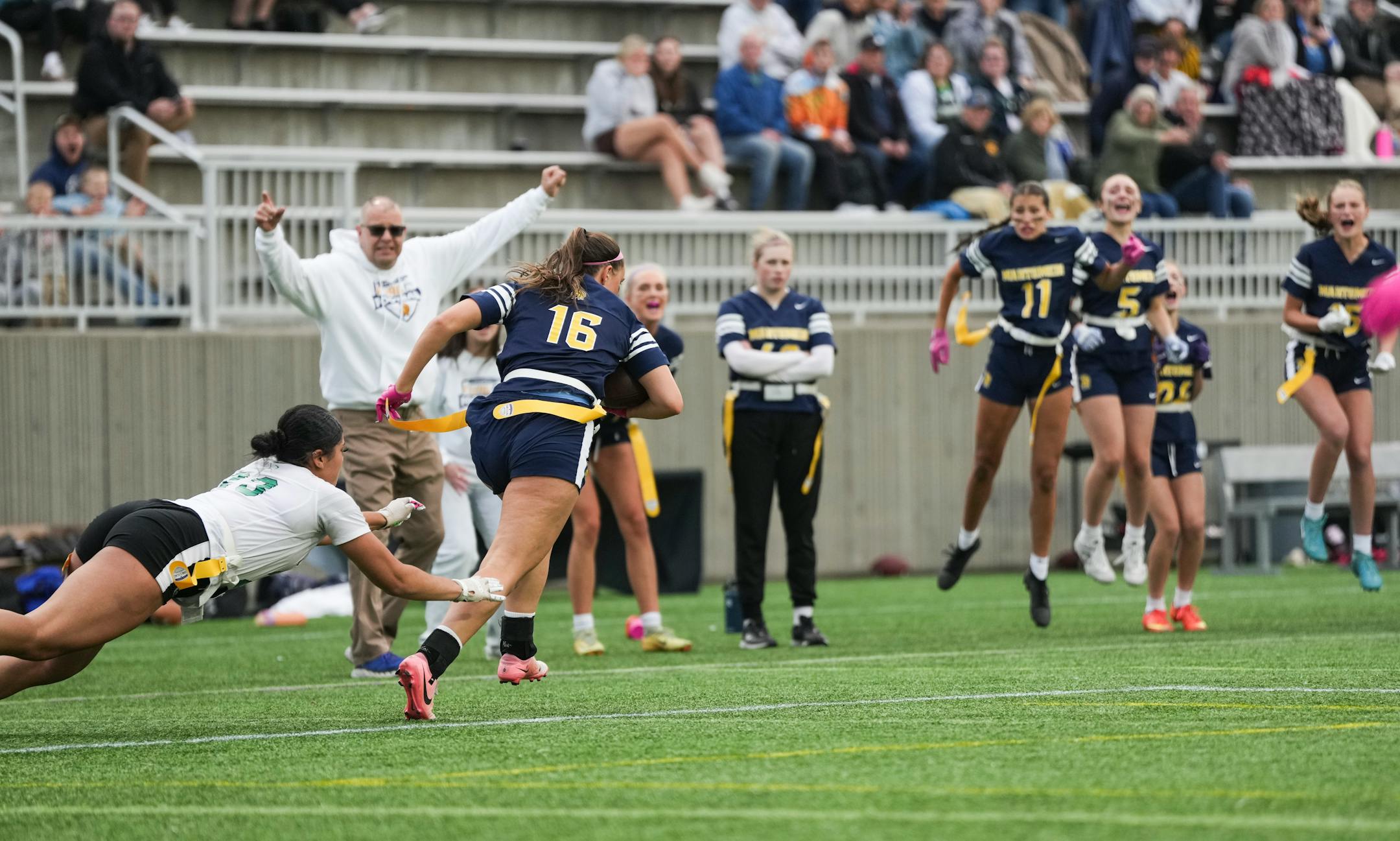
The Minnesota Vikings' girls flag football league championship at TCO Performance Center in Eagan on June 9. (Renée Jones Schneider/The Minnesota Star Tribune)

Opinion editor’s note: Strib Voices publishes a mix of guest commentaries online and in print each day. To contribute, click here.

•••

The NFL has never been more prosperous or more popular, reportedly generating more than $23 billion in revenue last year. The league just kicked off its 106th season. But it still faces a crisis over concussions and other head injuries, one it has been slow to resolve. Tackle football’s gladiatorial style may seem perfectly suited to a world in which the leader of the Ultimate Fighting Championship, Dana White, has President Donald Trump’s ear. Yet lingering concerns about the inherent risks of the sport have created a demand for a safer alternative, both for new players and potential fans.

Flag football, that playground pastime, has found its moment. It offers a means of enjoying the beauty of the sport, to girls as well as boys, with a significantly lower risk of wrecking your brain or the horror of watching that happen to others. Even the NFL is pushing it hard — not as a replacement for its more violent main product but as a more palatable addition.

The NFL’s Pro Bowl is now a flag game, in large part to avoid injuries. Flag football will make its Olympic debut in 2028 in Los Angeles for men and women. Seventeen states — including California, New York and Florida — have added flag football as a high school varsity sport for girls. And if the NFL has its way, that number will soon be 50, thanks to an initiative, Flag 50, that the league promoted in a flashy Super Bowl commercial.

More boys are playing, too. The NFL’s executive vice president for football operations, Troy Vincent, has called flag “the future of the game of football.”

Vanita Krouch, the quarterback of U.S.A. Football’s women’s flag football national team, credits the pop star Taylor Swift in part for girls’ interest in the gridiron. Because of her appearances at NFL games to cheer on her fiancé, Travis Kelce, “these little girls are suddenly watching Sunday football with their dads,” Krouch said.

Flag’s promotion and rise is good news for female athletes. It’s also good business for the NFL, which has long aimed to expand its appeal to women but has faced criticism for its handling of domestic violence cases among its players and lawsuits from cheerleaders over sexual harassment and wage theft. Women’s sports are a surging market, with $1 billion in revenue globally.

Flag has attractive qualities for budget-conscious schools and clubs. It requires much less equipment than tackle, making it far less expensive to set up and run. Rosters can be smaller, with five-on-five and seven-on-seven versions commonly played. Those factors are bolstering its popularity globally, said Diane Beruldsen, the president and founder of the International Women’s Flag Football Association.

Women’s flag also embraces a variety of body types and age ranges, which helps broaden its appeal. At 66, Beruldsen still plays. “It’s not brute force,” she said. “It’s strategy and finesse.”

This year on a field in Gardena, Calif., I watched Monique Adams work with a dozen middle schoolers on one of several football teams for girls and women that she coaches for the Los Angeles Legends sports organization. Lined up in two rows, flags dangling from their waists, the girls one by one made their way down the line, eyes locked forward on their cues. Cheers erupted from parents and friends on the sidelines as girls caught the ball. A chorus of encouragement came when one was missed.

Flag football offers girls a way to feel seen in sports, said Adams, known as Coach Moe, a former flag and tackle player herself. “For them to be acknowledged, that they can compete, that they can be just as good as the guys.”

Saraya Gray, 13, was among the girls practicing that morning, as both a wide receiver and a backup quarterback, while her grandfather Phillip Gray cheered her on. He played football in school but said that a dislocated shoulder ended his playing career. He’s enthusiastic about the possibilities for his granddaughter.

Young athletes and fans are moving with their feet toward a sport that provides the best of the game without the worst of it. If the NFL helps promote that, regardless of its motives, that’s an outcome worth rooting for.

Mary Pilon is a documentary filmmaker and former New York Times sports reporter. This article originally appeared in the New York Times.

about the writer

about the writer

Mary Pilon

More from Commentaries

See More
card image
Anthony Souffle/The Minnesota Star Tribune

Pursuing criminal investigations for political and retaliatory motives is anathema to generations of federal prosecutors like us.

card image
card image