

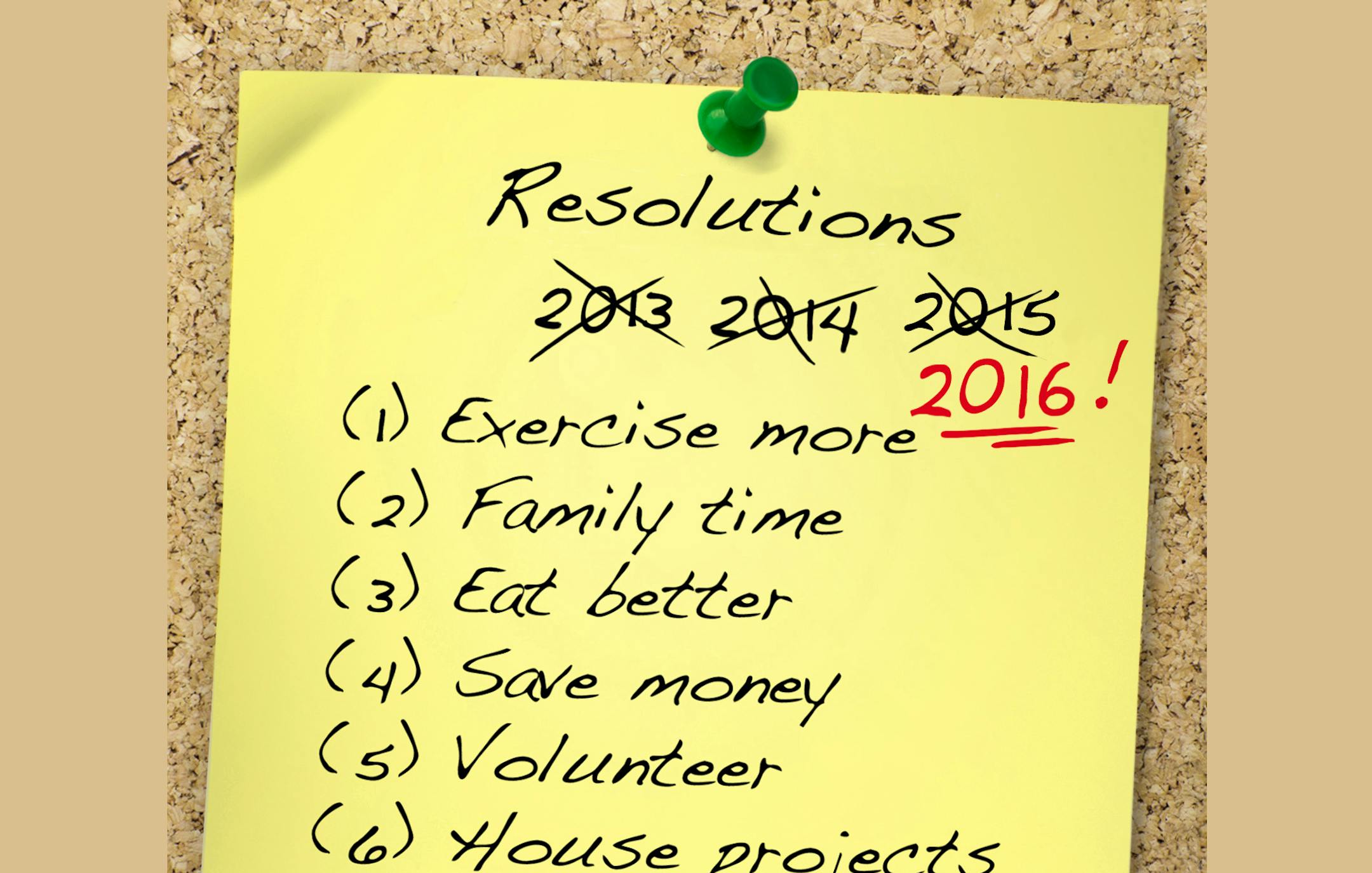
Each year, nearly 50 percent of Americans vow to change their behavior come Jan. 1, resolving to lose weight (a third of us want to slim down every year), get more organized or fall in love. Odds are, they won't succeed. Just 8 percent achieve their New Year's resolutions. A quarter give up after the first week. These statistics are bleak but not surprising. Many New Year's pledges involve trying to establish new habits or conquer bad ones. And there's a lot of misinformation swirling around about how habits are formed and how they can be changed. Here are some of the most common myths:
1. A lack of willpower is to blame for our bad habits.
When people fail to change their habits, they often blame their weak wills. A third of Americans say they lack the self-control they need to accomplish their goals. About a fourth attribute trouble sticking to a diet, for example, to personal character defects such as laziness.
In truth, though, many of our behaviors are not guided by self-control. Half the tasks we perform daily are things we do without thinking. And studies show that people with high levels of self-control aren't constantly battling temptation — they're simply relying on good habits to exercise, make the kids' lunch or pay the bills on time without thinking about it much. In that way, high self-control is an illusion, actually consisting of a bedrock of habitual patterns. That makes sense. It would be exhausting to repeatedly struggle to control our actions to do the right thing.
2. Apps can help us change our behavior.
Apps like Fitbit, MyFitnessPal and BookLover promise to help us change our habits by tracking our good (or bad) behavior. And some websites say they work, running lists like "17 bad habits you can kick using nothing but a smartphone" or "Mobile apps that can help you kick your bad habits."
But most apps simply monitor what you're doing, which doesn't necessarily lead to behavior change. As one group of scientists noted, "The gap between recording information and changing behavior is substantial." There is, they wrote, "little evidence … that [apps] are bridging that gap."
In my research, I've found that certain types of planning and monitoring actually get in the way of creating new habits, perhaps because they focus our attention on things that are irrelevant to behavior change. Some people might like these devices. But until there's broader evidence of effectiveness, I recommend that most people don't bother with them.


