

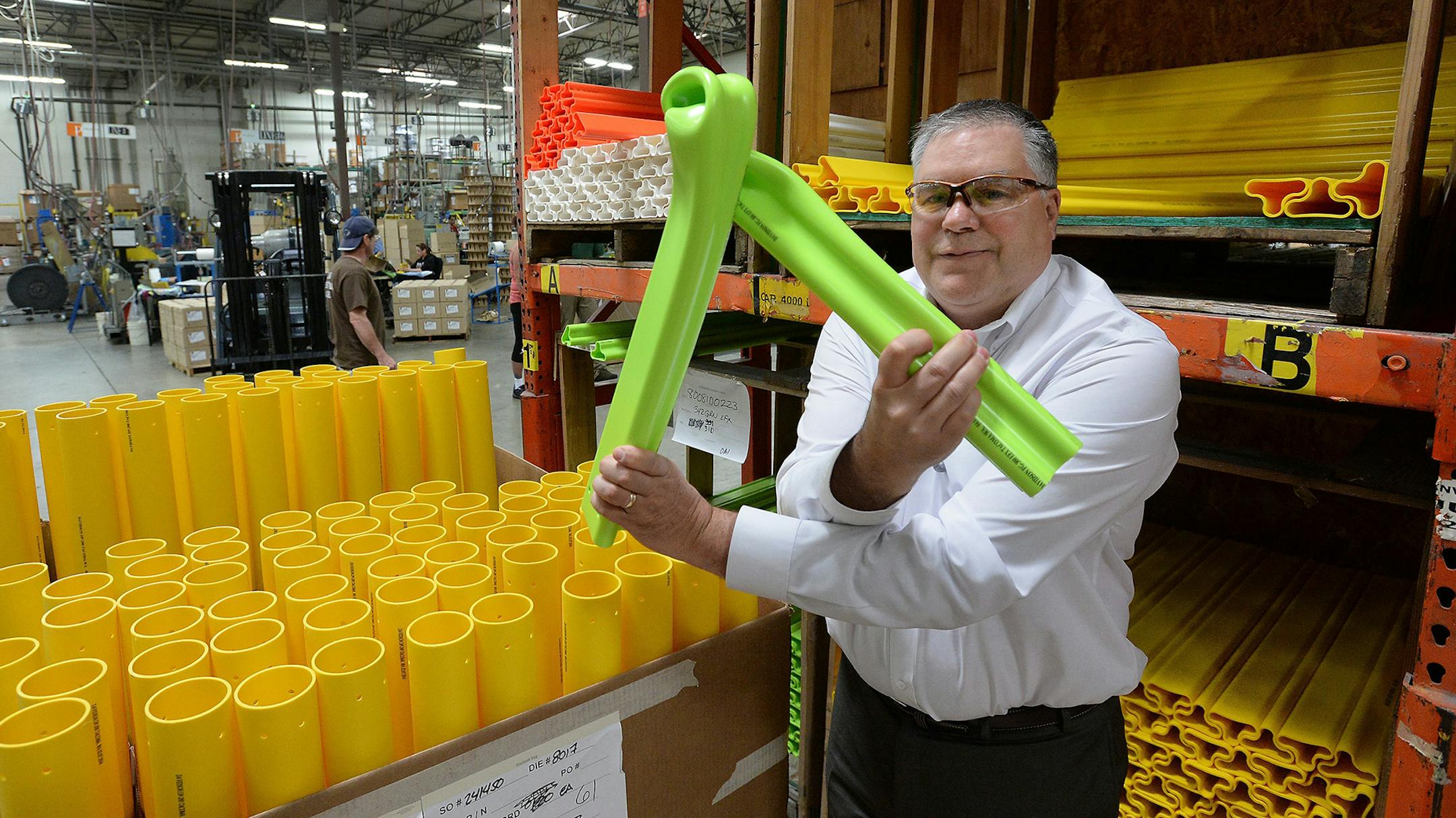
WASHINGTON – At roughly $25 a pop, there's good money to be made in supplying the world with plastic traffic poles.
Pexco, a small manufacturing company with 150 employees in Fife, Wash., already ships the poles to 28 countries. If all goes as planned, thousands more will soon be headed to Turkey each year.
"We've got good products; we know there's demand for that," said Peter Speer, the company's vice president of sales.
There's also a danger that foreign customers might not pay, which is why many commercial banks look askance at such deals. But Speer can sleep a little easier knowing the U.S. government will step in if things go bad.
That federal insurance — which covers $2 million of Pexco's exports — comes from the little-known Export-Import Bank of the United States, which has set off a big spat over the nation's financing of global trade.
As a federal agency, the bank's job is to provide credit insurance, loans and guarantees to help foreign buyers purchase U.S. goods and services. Critics say it's corporate welfare, unnecessarily putting taxpayers' money at risk.
As they revive a fight from two years ago, many conservative Republicans in the U.S. House want the bank disbanded when its funding expires Sept. 30.
Members of Washington state's congressional delegation are among those rallying to save the bank — often called Ex-Im — and it's easy to see why. Since 2007, 183 of the state's companies have lined up $111 billion in financing through the bank, with no state benefiting more.



