

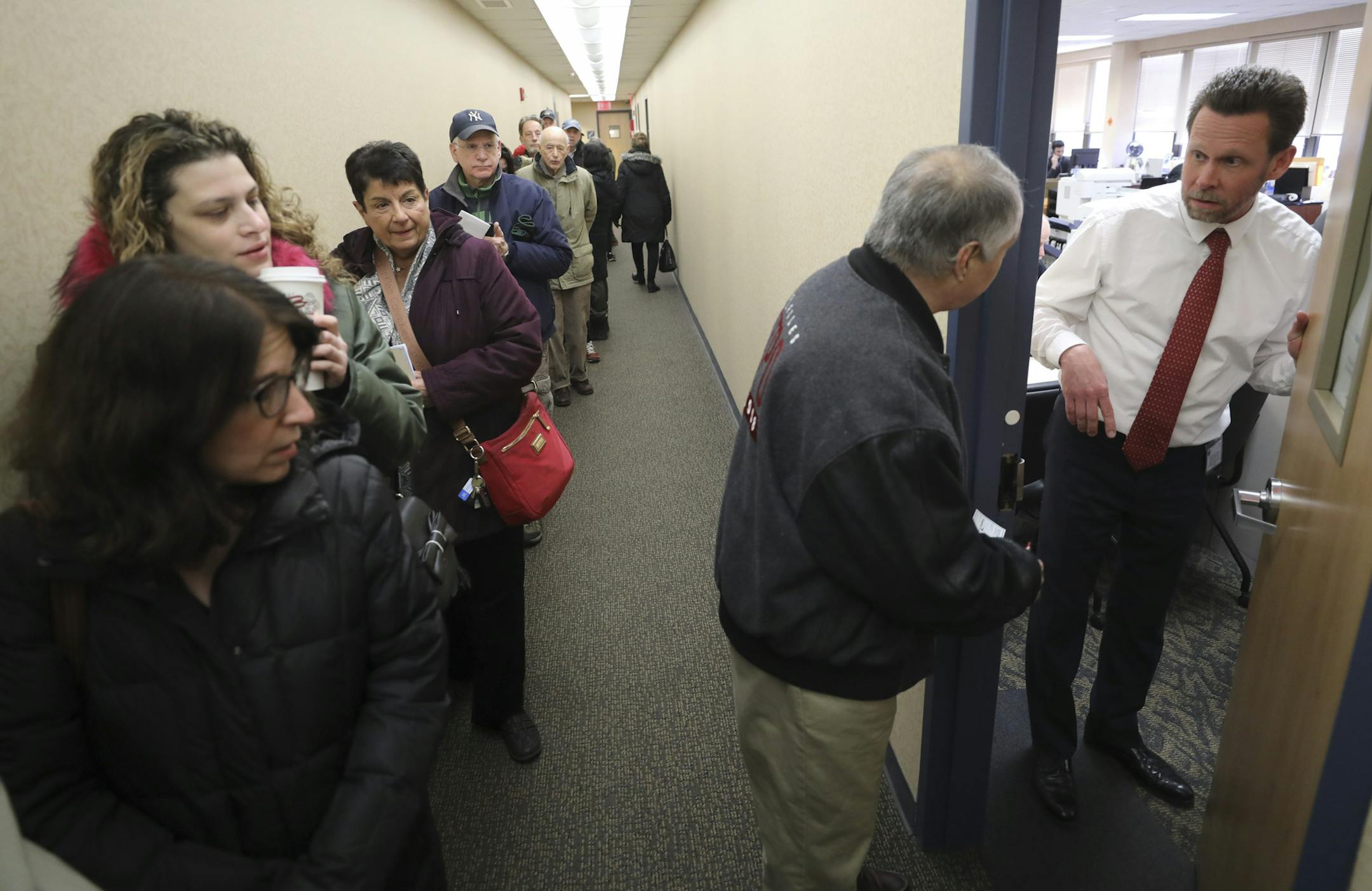
New guidance from the Internal Revenue Service that limits taxpayers' ability to deduct prepaid property levies on their 2017 tax returns is causing confusion nationwide as people rush to pay in advance without knowing whether they're wasting their time and money.
The IRS said this week that taxpayers can deduct prepaid state and local property taxes for 2018 on 2017 returns only if the taxes were assessed before 2018. The guidance — which doesn't define the term "assessed" — had local tax officials scratching their heads.
Some see the issue as an early signal of far wider confusion that's coming soon — the predictable result of passing a bill that rewrites the tax code just two weeks before many of the changes take hold.
"This is the tip of the iceberg as state and local governments try to figure this out — and by the way, they're trying to figure it out with one week before the changes take effect," said Richard Auxier, a researcher at the Urban-Brookings Tax Policy Center, a public policy group. "And that week happens to be the week between Christmas and New Year's."
The IRS guidance comes after many state and local officials — including New York Gov. Andrew Cuomo and New Jersey Gov. Chris Christie — have taken pains to clear the way for their residents to accelerate property-tax payments. The nationwide flurry came ahead of the new tax law that will cap property tax deductions — along with those for state and local income taxes or sales taxes — at an overall total of $10,000.
For people in high-tax states, that spurred a rush to try to prepay for 2018 — or even beyond — to use the deduction on this year's taxes, before the cap. But in practical terms, the new IRS guidance creates a patchwork of answers about whether the strategy makes sense: It depends on where you live.
It also depends on whether you pay the alternative minimum tax — a federal levy that runs parallel to the income tax and is designed to prevent taxpayers from reducing tax bills too much. The AMT — which affects many with six-figure incomes — can be triggered by a large increase in itemized deductions, and it can render those deductions useless in terms of cutting taxes.
"That's why it's so important for people to talk to their tax adviser," said Nicole Kaeding, an economist with the Center for State Tax Policy at the Washington-based Tax Foundation. Beyond that, she noted that local governments across the country can have widely different schedules for issuing property tax bills.


