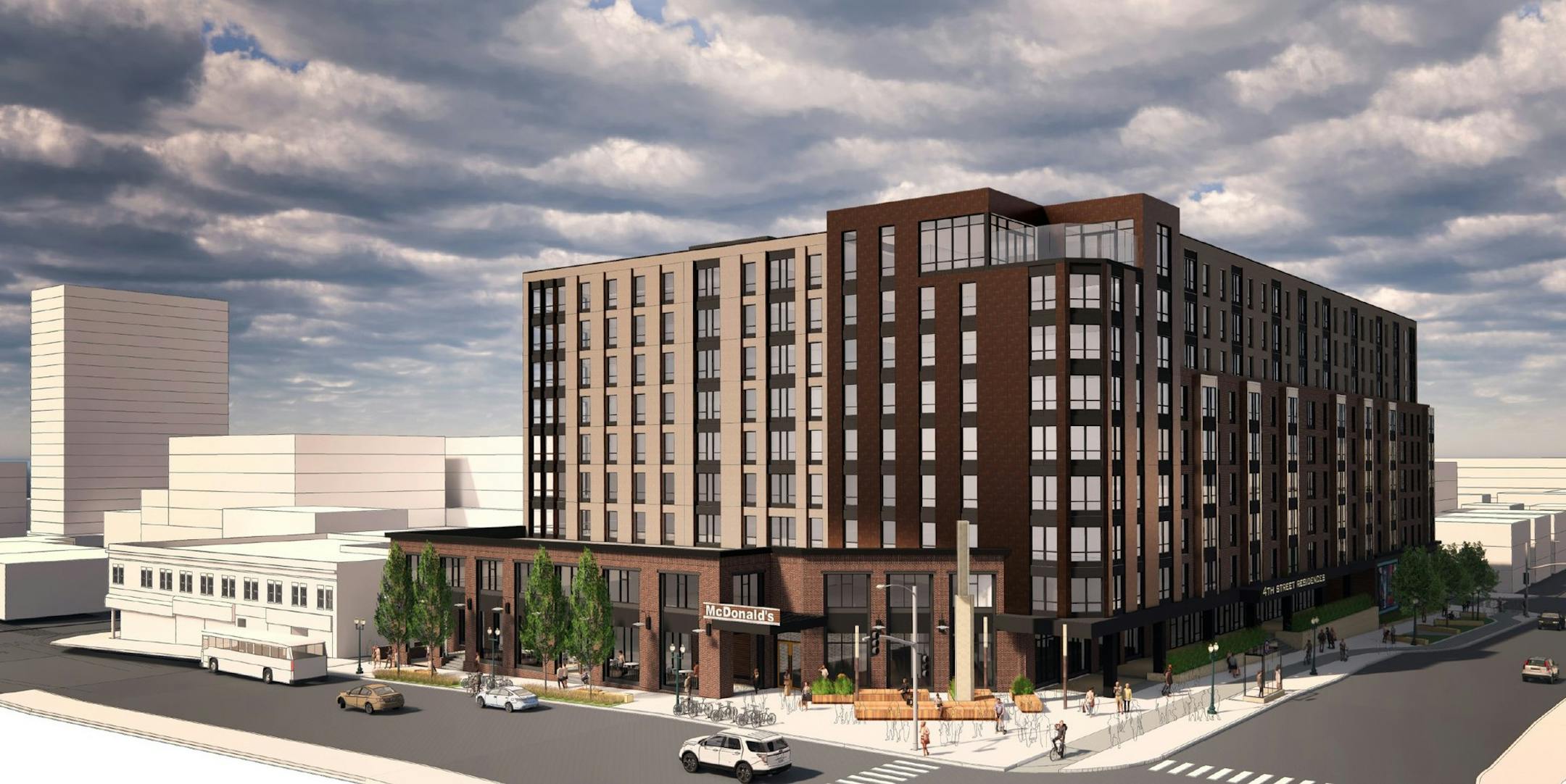
The Chicago developer that wanted to build a controversial 25-story apartment building in the Dinkytown neighborhood in Minneapolis has come back with a new plan that will dramatically crop the building, but preserve much of its density.
CA Ventures has been working for several years on plans to redevelop much of a block that fronts SE. 15th Avenue between SE. 4th and 5th streets in a neighborhood near the University of Minnesota where a fierce battle over building height, density and historic preservation has played out in recent years.
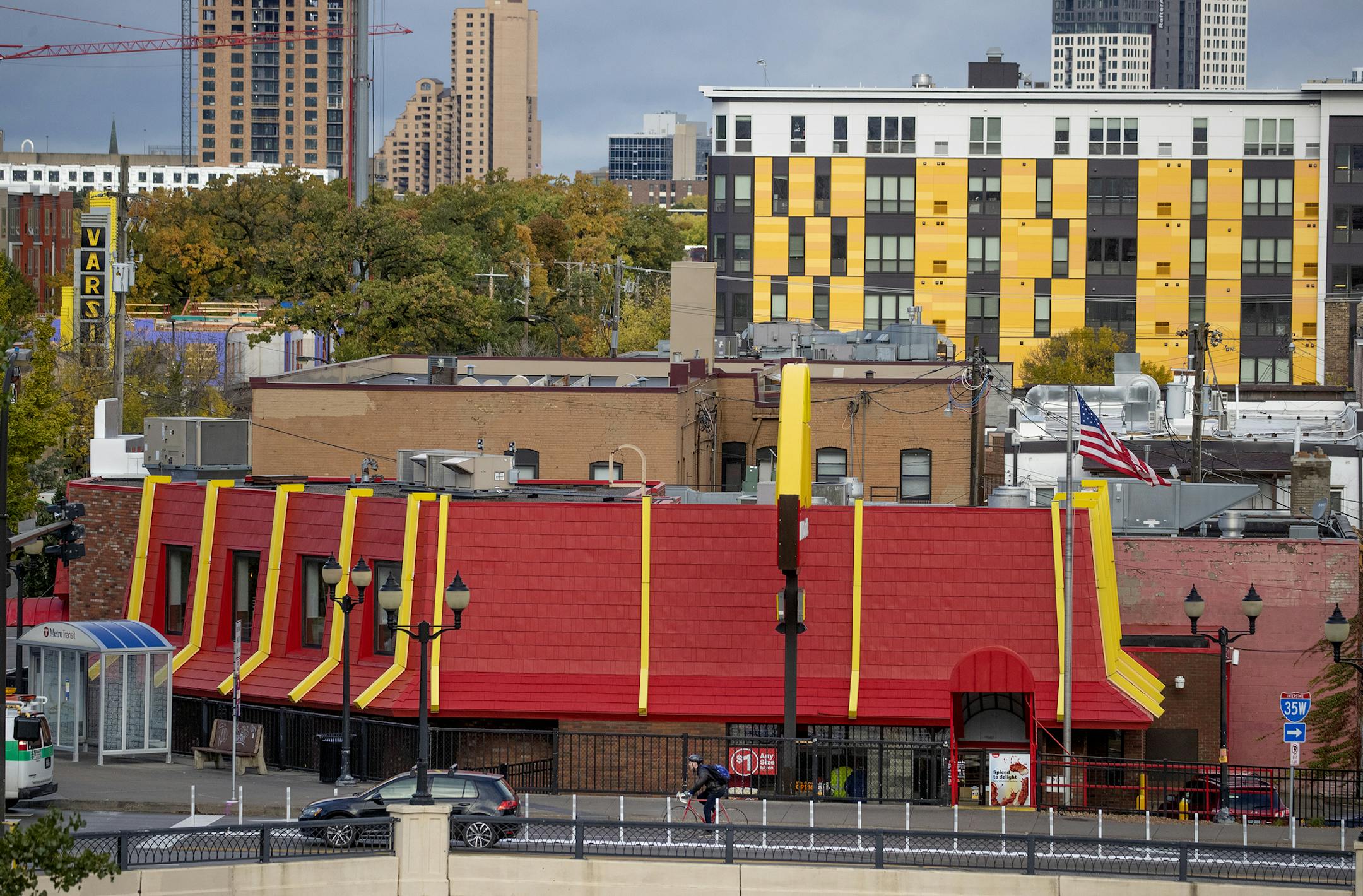
That latest proposal called for replacing a two-story, 1970s-era McDonald's and several other buildings with a 25-story apartment tower in an area where the maximum height limit is just four stories.
In a staff report submitted to the Minneapolis Planning Commission in late August, the developer also proposed building a smaller option: A 16-story tower. Both proposals would include 350 to 370 units, likely geared toward students, along with a variety of amenities.
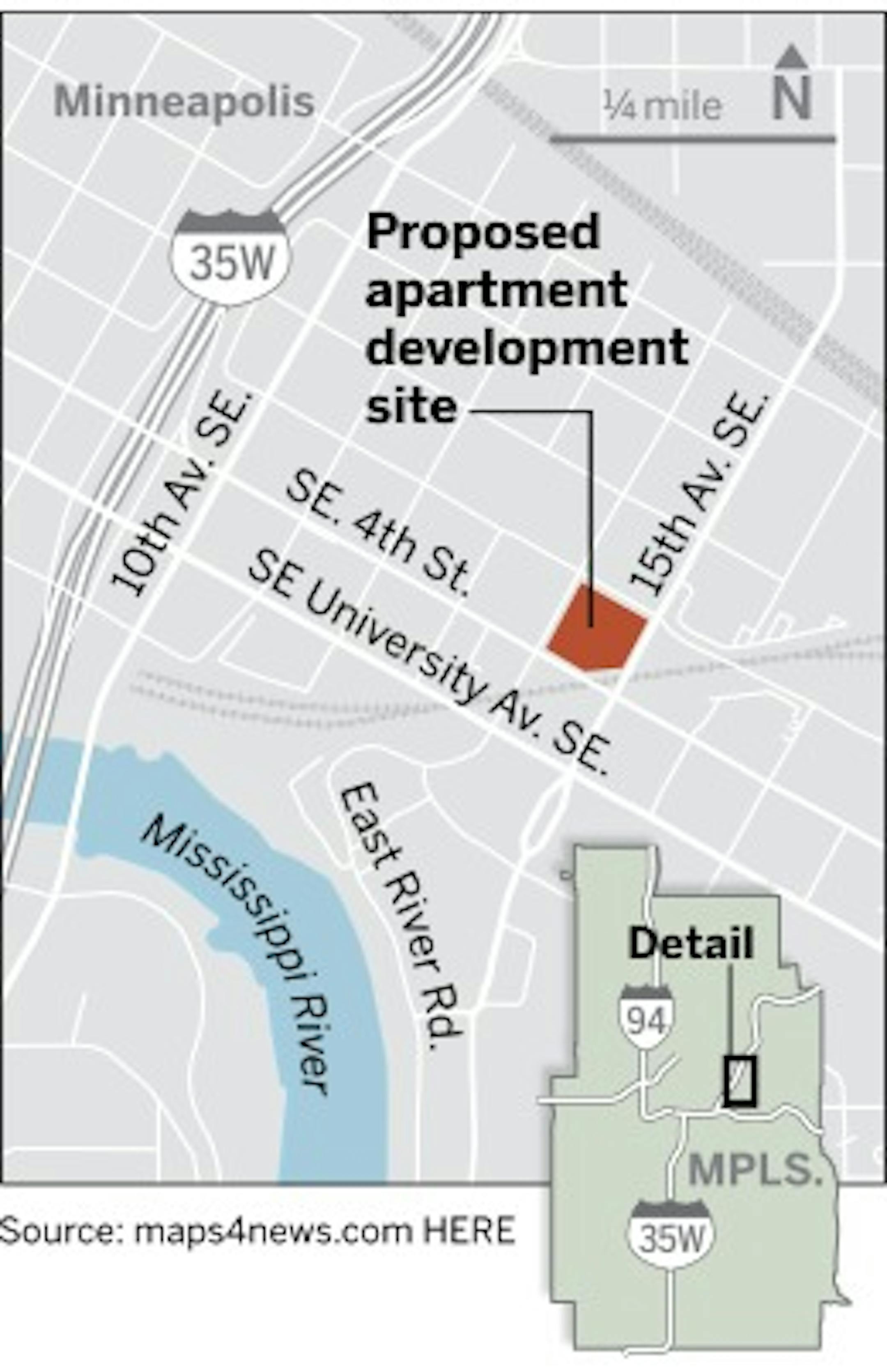
The developer has rolled out a new plan that calls for a nine-story building with 300 rental units and 211 parking stalls proposed in two levels of underground parking. It also includes 23,000 square feet of commercial space, including three commercial spaces that would face SE. 4th Street and a large commercial space fronting SE. 5th Street. The proposal will be presented to the city planning commission's committee of the whole on Thursday.
"We went through a comprehensive review of our plan to address questions and concerns raised during the community review process, including those pertaining to height and affordability," said Ryan Sadowy, senior director of development for CA Ventures.
"We believe we have refined the plan in a way that maintains project viability, aligns with the broader objectives set forth in the Minneapolis 2040 Comprehensive Plan, and allows us to deliver the numerous public benefits we have promised to neighbors during this process."
Documents submitted to the city call for enhanced transit shelters, pedestrian upgrades, bicycle amenities, public art, reduced-rate commercial spaces and district parking.