

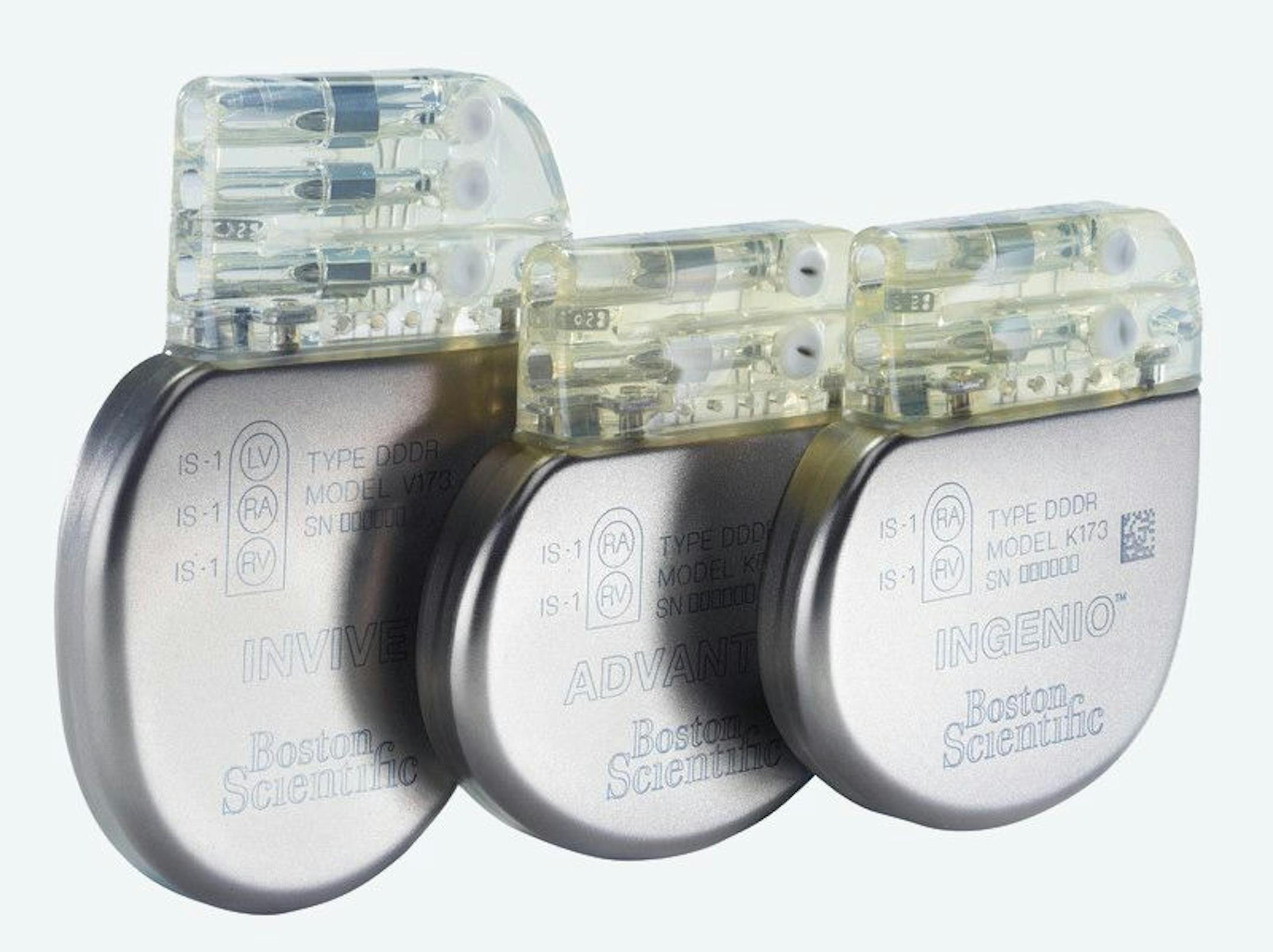
Boston Scientific Corp. on Monday announced U.S. Food and Drug Administration approval and commercial launch of a new generation of pacemakers, including models that regulate the heart rate in response to physical activity.
Called RightRate, the technology uses a sensor to monitor patients with a condition known as chronotropic incompetence. The condition may cause people to feel tired when walking or climbing stairs.
An estimated 42 percent of pacemaker patients suffer from chronotropic incompetence, according to Boston Scientific.
Analyst Rick Wise of Leerink Swann called the approvals "encouraging" news for Boston Scientific and "a good thing to have in your pocket as you walk into the biggest (heart rhythm) meetings of the year."
The Heart Rhythm Society is meeting this week, and Wise said FDA approval of Boston Scientific's new generation of pacemakers has a chance to help the company gain some market share.
The devices, Boston Scientific's first new pacemakers in a decade, are called the Ingenio and Advantio pacemakers and the Invive cardiac resynchronization therapy pacemakers. The first Ingenio pacemaker was implanted Thursday at Cleveland Clinic.
In April, the Natick, Mass.-based company announced European approval and launch of the three devices. Boston Scientific employs about 5,000 people in Minnesota.
Pacemakers are designed to speed up the heart when it beats too slowly -- usually less than 60 beats per minute -- depriving the body of sufficient oxygen. The Ingenio and Advantio pacemakers feature the new technology designed to regulate the heart rate in response to physical activity.



