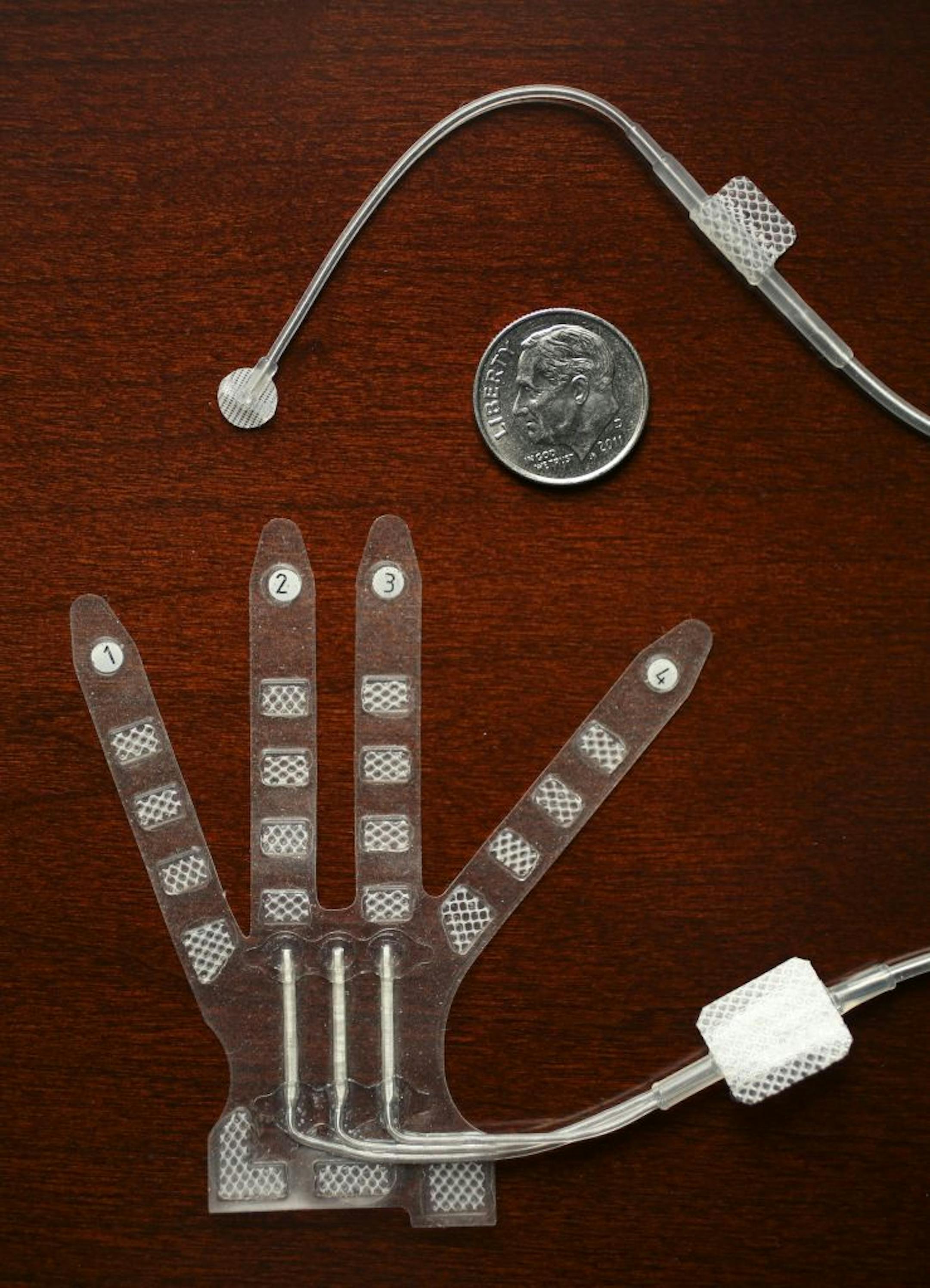
While dozens of medical device makers are racing to treat medication-resistant hypertension by burning nerves inside arteries in the kidneys, Minneapolis firm CVRx is coming at the problem from a different direction.
Its implantable pacemaker-type device stimulates pressure sensors in the carotid arteries -- essentially fooling the brain into lowering blood pressure. The system is minimally invasive, adjustable and reversible -- and the results from it are dramatic, said CVRx President and CEO Nadim Yared.
"It's a beautiful system because, at the end of the day, we do not decide how to lower blood pressure," he said. "We let the brain decide."
The device has been approved to treat hypertension in Europe. CVRx is hoping to win U.S. approval. But CVRx also is hoping to show the U.S. Food and Drug Administration that its Barostim neo device is safe and effective in treating heart failure as well. Early data are encouraging and clinical trials in Europe, Canada and the United States are continuing or getting underway, he said.
"It works," said Yared, who came to CVRx five years ago from GE Medical.
How it works
The human body has a system for sensing changes in blood pressure and other blood flow. While much of this system is located in the brain, there are also pressure sensors within the walls of the carotid arteries, blood vessels in the neck that supply blood to the brain. Called baroreceptors, these sensors measure and report blood flow to the brain, which then make adjustments depending on the body's needs.
For example, higher blood pressure is good for exercising, while lower blood pressure is appropriate during sleep or other periods of reduced activity.