

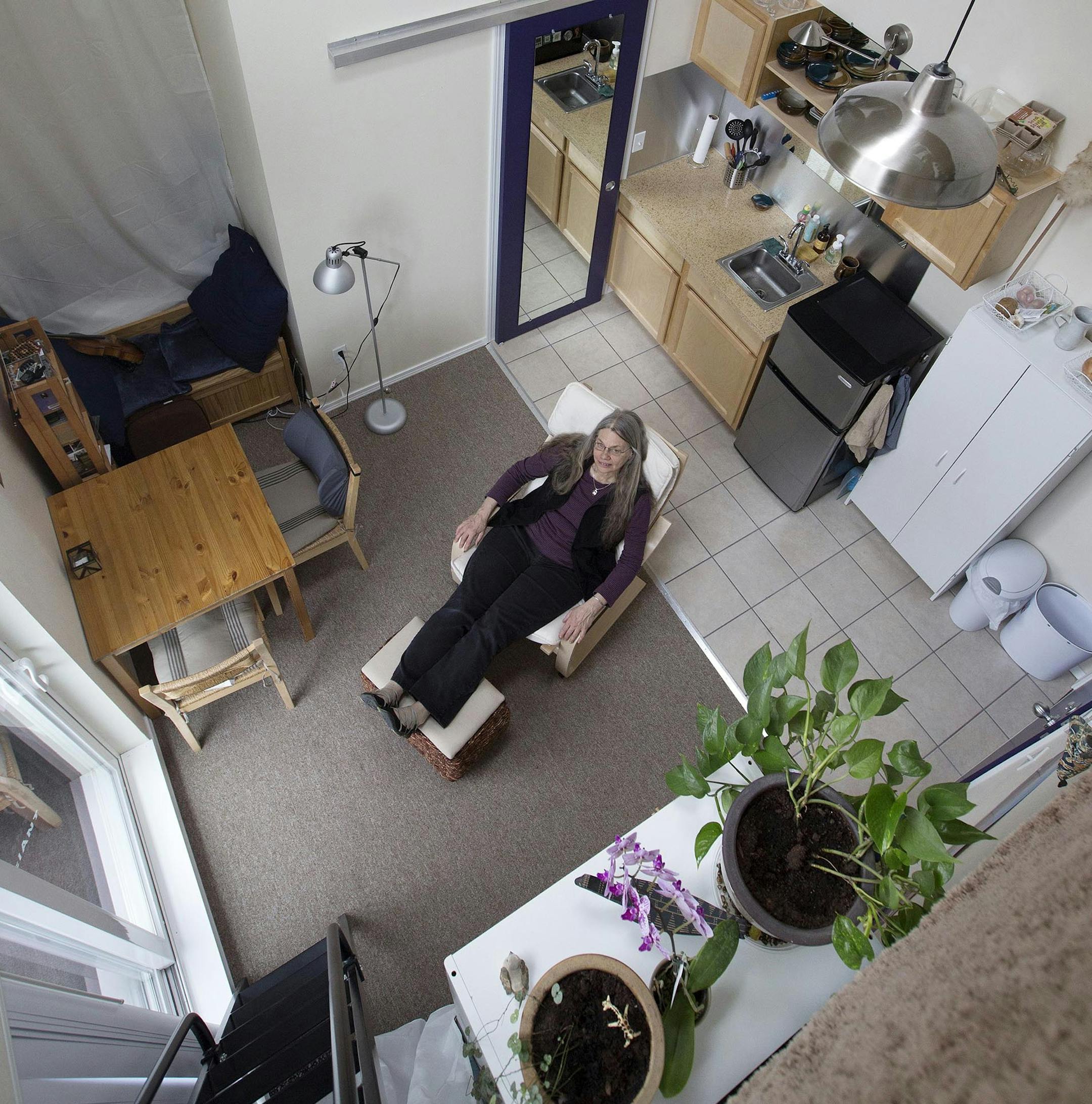
SEATTLE – Judy Green was well-suited to move into a 10- by 10-foot apartment in Seattle's University District.
Green spent the previous decade on a boat before finding a home in one of the nearly 50 microhousing buildings that have sprung up in Seattle over the past several years.
The units are tiny, typically 150 to 250 square feet, about the size of a hotel room. Six or eight residents share a kitchen. And the rent is lower than the average studio or one-bedroom apartment, about $600 to $900 a month compared with $1,200 and up.
Although it's popular with young urban singles and students, microhousing, also known by the brand name aPodments, is stirring controversy as well.
Some contain as many as 64 units, but because they're in dense neighborhoods served by transit, they aren't required to provide any parking. And in some cases, the buildings avoid design and environmental review and notice to neighbors that usually is required for big, multifamily projects.
Developers say that with microhousing, they're filling a need for lower-priced housing in a city where it's expensive to live. And they say they have no trouble renting out the units.
"People want to live in walkable neighborhoods with easy access to shops and transit," said Jim Potter, chairman of Kauri Investments, which has partnered with other developers to build six microhousing projects in Seattle, with several more planned. He's been asked to develop projects in Portland, Ore.; California; and New Jersey.
The buildings are popular, he said, because people want an affordable alternative to shared living.



