

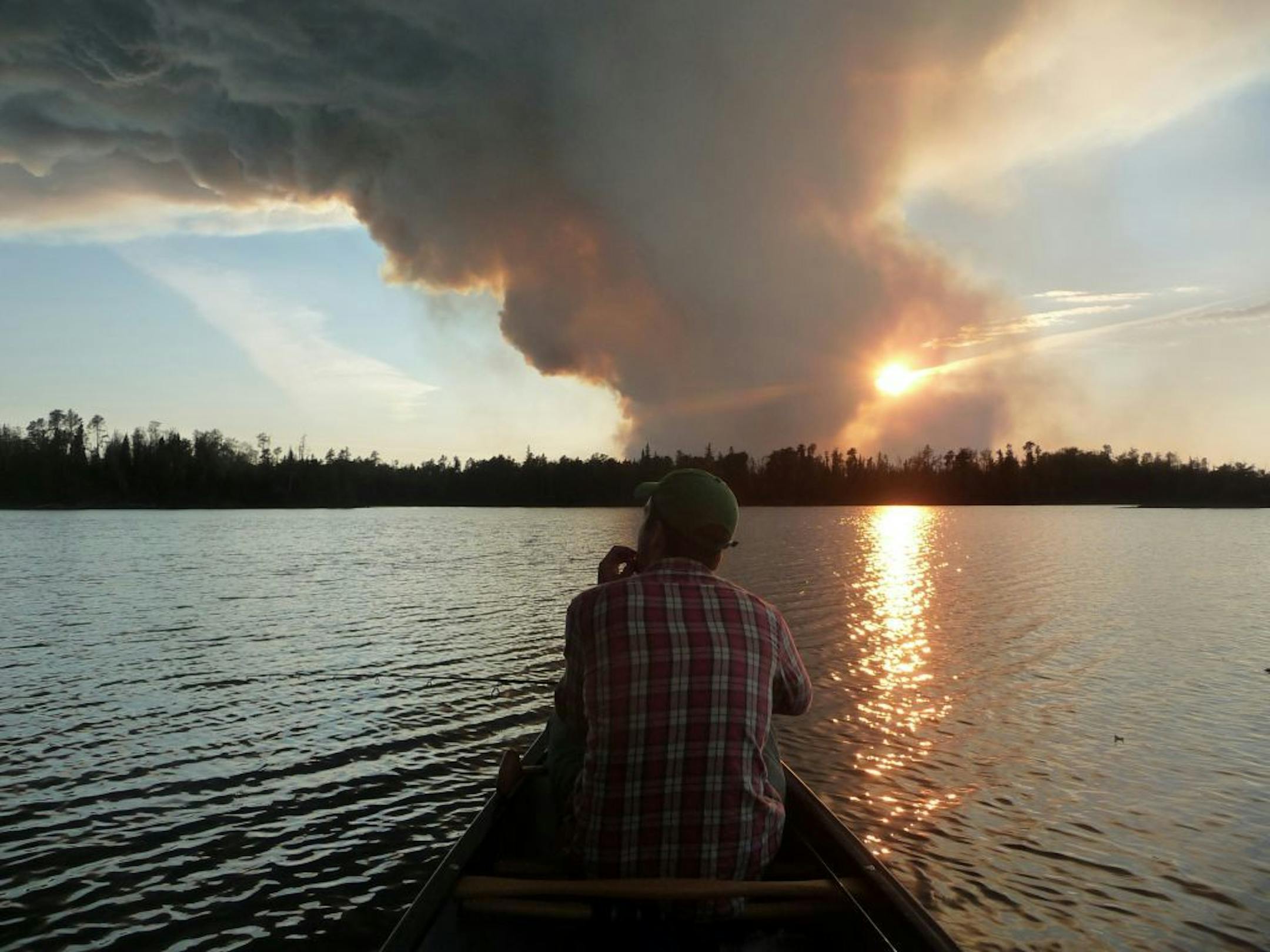
When lightning sparked the forest fire near Pagami Creek on Aug. 18, U.S. Forest Service officials took a wait-and-see attitude. Because the fire was burning inside the Boundary Waters Canoe Area Wilderness and didn't threaten private property, allowing the blaze to grow was consistent with the "let-burn" policy in the designated wilderness.
Oops. Bad call. Unexpected warm temperatures and high winds fanned the flames. The fire front raced 16 miles in a single day. By mid-September, it had burned nearly 150 square miles and was advancing toward settled areas outside the wilderness.
More than 500 firefighters, including elite hotshot crews, struggled to subdue it. Smoke choked residents in Milwaukee and Chicago. And -- imagine this -- rural citizens with age-old resentment of the federal government grew furious that the Forest Service didn't snuff the fire when it was small.
Perhaps the Pagami Creek fire was destined to become one of the largest wildfires in the wilderness region since the Superior National Forest was created in 1909 -- regardless of decisions the Forest Service made. After all, the summer of 2011 had been painfully dry in far northern Minnesota. Short of cutting down all the trees and creating a suburban landscape of sod and asphalt, there's no way to truly fireproof a forest.
But the Pagami Creek fire is only the most recent in a series of catastrophic blazes that got out of hand, such as the 57-square-mile Ham Lake fire of 2007, and the similar-sized Cavity Lake fire of 2006. The pattern illustrates the weakness of federal fire policy.
More fundamentally, the fires underscore the wrongheadedness of our long romantic fantasy about wilderness.
"Let-burn" is perhaps an unfair name. The policy is more complicated than that. Federal land managers evaluate any fire they learn about on the basis of location, weather and forest dryness to decide whether to snuff it or let it burn for awhile. And to be fair, the Forest Service has shown some management assertiveness by starting "prescribed burns" in the 1999 blowdown area of the BWCA to reduce the tonnage of tangled tree trunks.
But with that exception, the wilderness-area fire policy is rooted in avowed passivity. The Forest Service won't start any fires at all -- even when conditions are favorable -- in a location that would benefit the health of the forest and produce desirable results for wildlife. That would be "unnatural." So, instead, land managers rely solely on fires that start "naturally," by lightning.


