
Opinion | How much do you know about treaty rights or tribal sovereignty?

A recent community conversation in Cloquet, part of the Rural Voice series of discussions, sought to facilitate understanding.

October 11, 2025 at 8:29PM
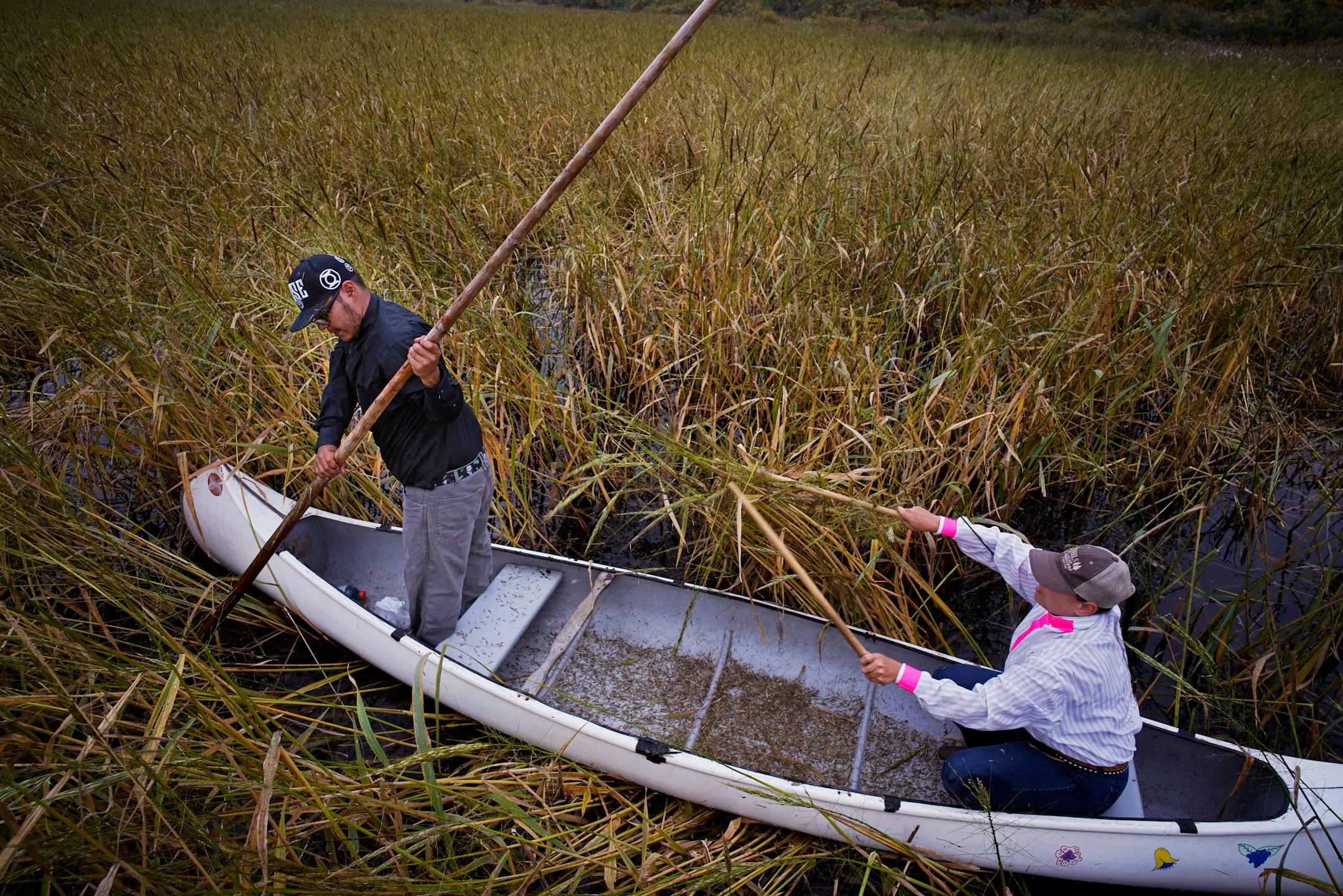
"Under the terms of the 1854 treaty between the federal government and Anishinaabe bands in the area, our ancestors ceded millions of acres in northeastern Minnesota. Part of what they got in return was a promise that they and their descendants would have perpetual rights to hunt, fish and gather on those lands," Charles Smith writes. Above, wild rice is harvested at the Rice Lake National Wildlife Refuge in Aitkin County. (Richard Tsong-Taatarii/The Minnesota Star Tribune)

Opinion editor’s note: Strib Voices publishes a mix of guest commentaries online and in print each day. To contribute, click here.

•••

Every day, thousands of vehicles heading north on I-35 pass a sign reading “1854 Treaty Boundary.” Located near Sturgeon Lake, it’s one of 12 such signs planted along the approaches to Minnesota’s Arrowhead region.

The point of the signs may be obscure to travelers. But at a recent community conversation in Cloquet, there were plenty of people ready — even eager — to clear it up.

“We gave up great amounts of land in exchange for rights,” explained Mike Winow, a Fond du Lac Band enrollee.

I myself had been exercising those rights earlier that day, harvesting wild rice. When I left early to attend the discussion in Cloquet, one of our band’s game wardens reminded me that “there is nothing more important than wild rice at this point in time.”

I had to agree, but I had promised to be at Fond du Lac Tribal and Community College for the season opener of Rural Voice, a series of facilitated conversations intended to elevate rural perspectives that often go overlooked. Even by that standard, those of us in attendance at Fond du Lac have reason to feel especially forgotten.

Native attendees who spoke up during the event expressed frustration at having to explain — again and again — why we have hunting and fishing rights that our non-Native neighbors lack.

Roland Hill, from the Red Lake Nation, said he is often asked that question. “People will ask me, ‘Why do you get to go elk hunting in two weeks? Why do you get to do that and I can’t do that?’”

He answers by asking a different question: “Why do you have all the titles and deeds to the land in Minnesota?”

“We granted everybody who weren’t Indigenous people those rights, for people to live here, for people to work here, for people to build businesses here — for everybody to be here,” Hill said. “We were the grantors of the rights. And we retained our rights to the land.”

Under the terms of the 1854 treaty between the federal government and Anishinaabe bands in the area, our ancestors ceded millions of acres in northeastern Minnesota. Part of what they got in return was a promise that they and their descendants would have perpetual rights to hunt, fish and gather on those lands.

Those rights remain in effect. That doesn’t mean they go unquestioned.

“Our treaty rights are nonnegotiable,” said Taysha Killsenemy, a Fond du Lac community member. “These are our inherent rights that our ancestors fought for, long before us, for us to be able to stand here today and talk about who we are as people, where we come from.

“All of that is involved in the idea of ‘land back,’ which isn’t about giving the land back. That’s not a notion that we’re asking. We’re asking for our relationship to the land back. And each and every single one of you being here tonight is a part of that, so I’m so excited to hear that you’re here, ready to learn.”

But many non-Native people are not so ready to learn about treaty rights or tribal sovereignty, suggested Blair Powless, an instructor at the college. “I’m always surprised that people don’t understand sovereignty,” he said.

“I think the misperception is intentional,” he continued. “I think the people have been miseducated, because if you’re educated too thoroughly on the terrible things that were done to Native communities and Native nations in order to found the United States nation, you’re not going to be too happy being a citizen of a nation that would behave in that manner.”

Powless said that a good way to understand tribal sovereignty is to think about other world nations, and “the right of any nation to be sovereign and to govern itself and its own people and make its own decisions. And then when you think of Native nations, the Anishinaabe nation, for instance, then it makes perfect sense that they should have the same sovereignty that any other nation is allowed to have.”

It was good to hear so many speakers explain why holding tight to our land and traditions is an important part of maintaining our tribal identity.

“You say treaty rights, but it’s our relationship with the land that matters,” said Wayne Dupuis, who last June was elected secretary-treasurer for the Fond du Lac Band. “It’s eating the walleye, the wild rice” — he added the Anishinaabe words, “the manoomin, the ogaa, the waawaashkeshi” — “those things give gifts to us. And it’s our relationship to the land that’s important and will sustain us.”

Killsenemy reminded everyone that treaty rights convey a responsibility to use them or lose them. “We’re here because of the sacrifices that were made before us by our ancestors,” she said. “We are the hopes and prayers of those people … whether you’re Indigenous or non-Indigenous. Long before you were even a thought in your mother’s mind, you were the prayer on the voices of children hundreds of miles from home, sitting in boarding schools, speaking in a language that was outlawed. And we need to honor that. It doesn’t have anything to do with how the government or other people may perceive us.

“Our treaty rights are who we are.”

Charles Smith is a member of the Fond du Lac Band and a consultant for Indigenous Business Advisors. For more about Rural Voice, visit ruralvoice.org.

about the writer

about the writer

Charles Smith

More from Commentaries

See More
card image
card image