

Our driver waved the car behind us to go around. We were chugging up a slight hill in a little white tuk-tuk, past blooming fields of mustard flowers that looked like they'd been caught in the line of fire at an all-yellow paintball game.
Our open-air electric vehicle had only been rolling a few minutes out of downtown Napa before we hit the picturesque countryside, with the kind of California Wine Country vistas that visitors come to expect: manicured vineyards, dazzling green knolls and peaks poking up in the distance.
Windmills and red barns dotted rolling hills that heaved larger as we drove along, with the rickshaw revving to take us up to one of Napa Valley's oldest family vineyards. The landscape kept our speed in check, but there was no reason to go any faster. We were barely leaving Napa city limits.
Napa Valley is a well-trod destination for wine lovers, with a reputation for luxury. Exalted wineries and polished resorts blend into one another, and the area has collected its own galaxy of Michelin stars. To explore, many visitors will choose one of the ultra-charming small towns — Yountville, St. Helena, Calistoga — to base themselves as they fan out to wineries up and down the valley.
That was my plan, anyway. But the search for affordable accommodations for a recent friends' trip led me away from those well-heeled towns, with their $1,200-a-night hotel rooms, to a spacious Airbnb in the unexpectedly vibrant county seat of Napa. The small city was our literal last resort, but it shouldn't have been.
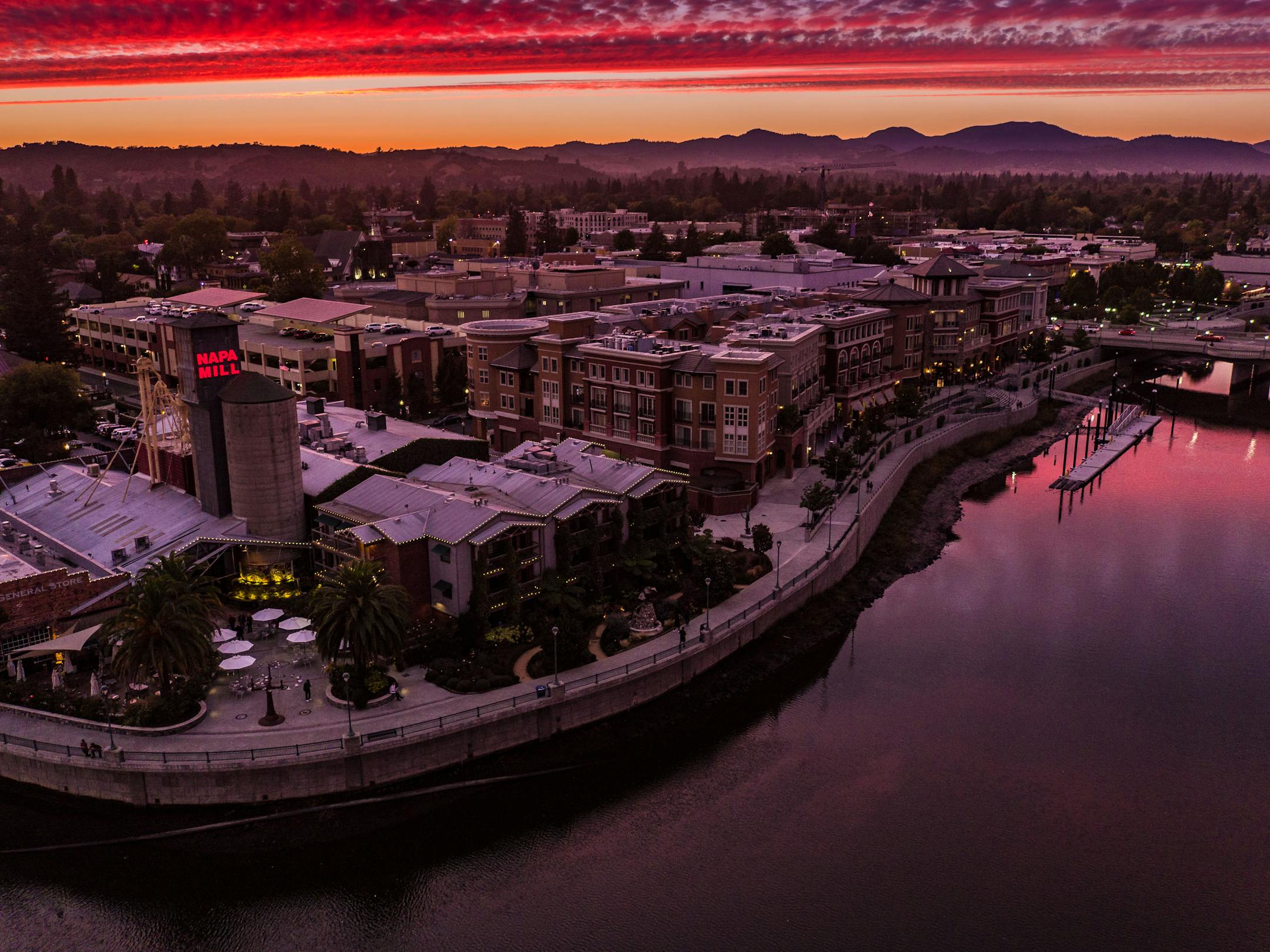
Once a sleepy town with some grungy quarters, Napa had long been a Wine Country afterthought, a place to pass through on the way "Up Valley." Not anymore. What's referred to locally as "downtown Napa" has become a destination in its own right, a compact, walkable city filled with top-tier restaurants, a buzzing market, hip hotels and public art.
For oenophiles, downtown Napa is a generous home base. More than four dozen tasting rooms and wine bars are clustered in the city's core, and just beyond the business district are some less-trafficked grape-growing regions. Spending time here, instead of just passing through, gives visitors an off-the-beaten-path feel for one of America's busiest wine destinations. But even wine industry professionals admit the city's rapid transformation has taken them by surprise.
"Napa used to be the place that you stopped to get your oil changed," said Adam McClary, a former Minneapolis bartender and restaurant manager, who moved to Napa in 2008 to launch a winery, Gamling & McDuck. "The restaurants were not that great. There were no wineries. It was just another little city."


