

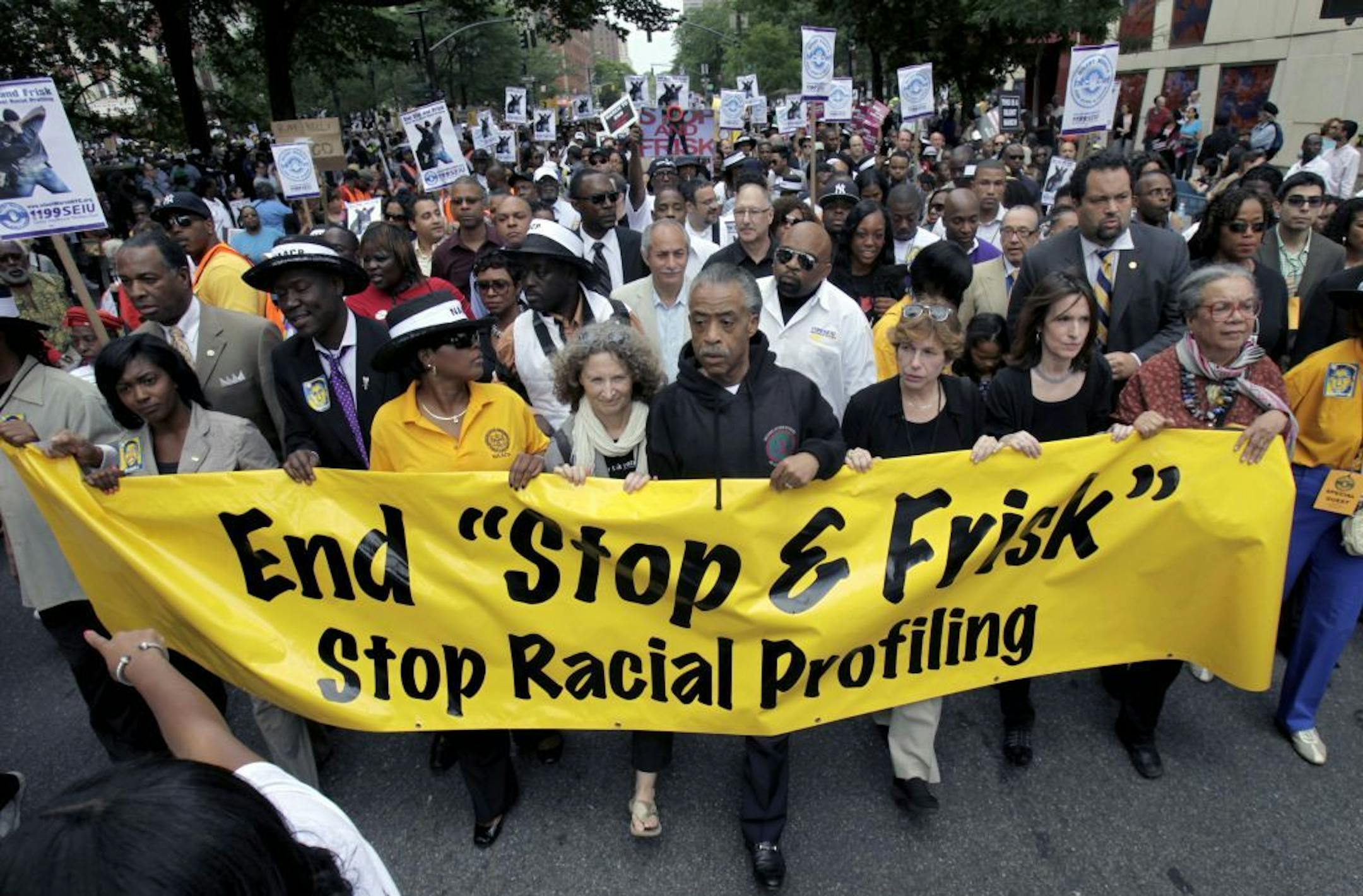
In an emphatic defense of civil liberties, federal judge Shira A. Scheindlin on Monday declared that significant portions of New York City's controversial "stop and frisk" policing tactic — at least as it's been employed throughout the Bloomberg administration — were unconstitutional.
While the policy accompanied a steep decline in the homicide rate in recent years, the unfortunate reality is that the city's use of stop-and-frisk has come to represent the largest racial profiling operation in the United States, with African-Americans and Hispanics accounting for more than 80 percent of the 4.4 million stops over eight years. That's undermined the trust residents place in law enforcement, especially in minority communities.
Both reasonable and practical, Judge Scheindlin's 195-page ruling ultimately afforded civil rights the primacy they deserve. "The goals of liberty and safety may be in tension," she wrote, "but they can coexist — indeed the Constitution mandates it."
Despite the firestorm the ruling has already ignited in City Hall — where, within hours of the decision, Mayor Michael Bloomberg, true to form, vowed to appeal — the judge didn't outlaw New York's use of stop-and-frisk, a tool the Supreme Court has supported.
She merely found that the New York Police Department, in its particular application of the practice, had violated both the plaintiffs' Fourth and 14th Amendment rights — the first guarantees freedom from unreasonable searches and seizures, and the second guarantees equal protection under the law to every person, regardless of race.
As a corrective measure, the judge ordered an "immediate" change to the policy and the appointment of an outside lawyer to monitor the NYPD's use of stop-and-frisk.
Perhaps the most valuable piece of the opinion, however, was its condemnation of what the judge called City's Hall's "deliberate indifference" to the racial disparity in law enforcement techniques. "In their zeal to defend a policy that they believe to be effective," the judge wrote of New York's leaders, presumably Bloomberg and Raymond W. Kelly, his police chief, "they have willfully ignored overwhelming proof that the policy of targeting 'the right people' is racially discriminatory."
Less than a month after George Zimmerman was acquitted on charges of manslaughter and second-degree murder for killing 17-year-old Trayvon Martin, and after President Obama's moving response in the days that followed, those words have a special resonance.


