

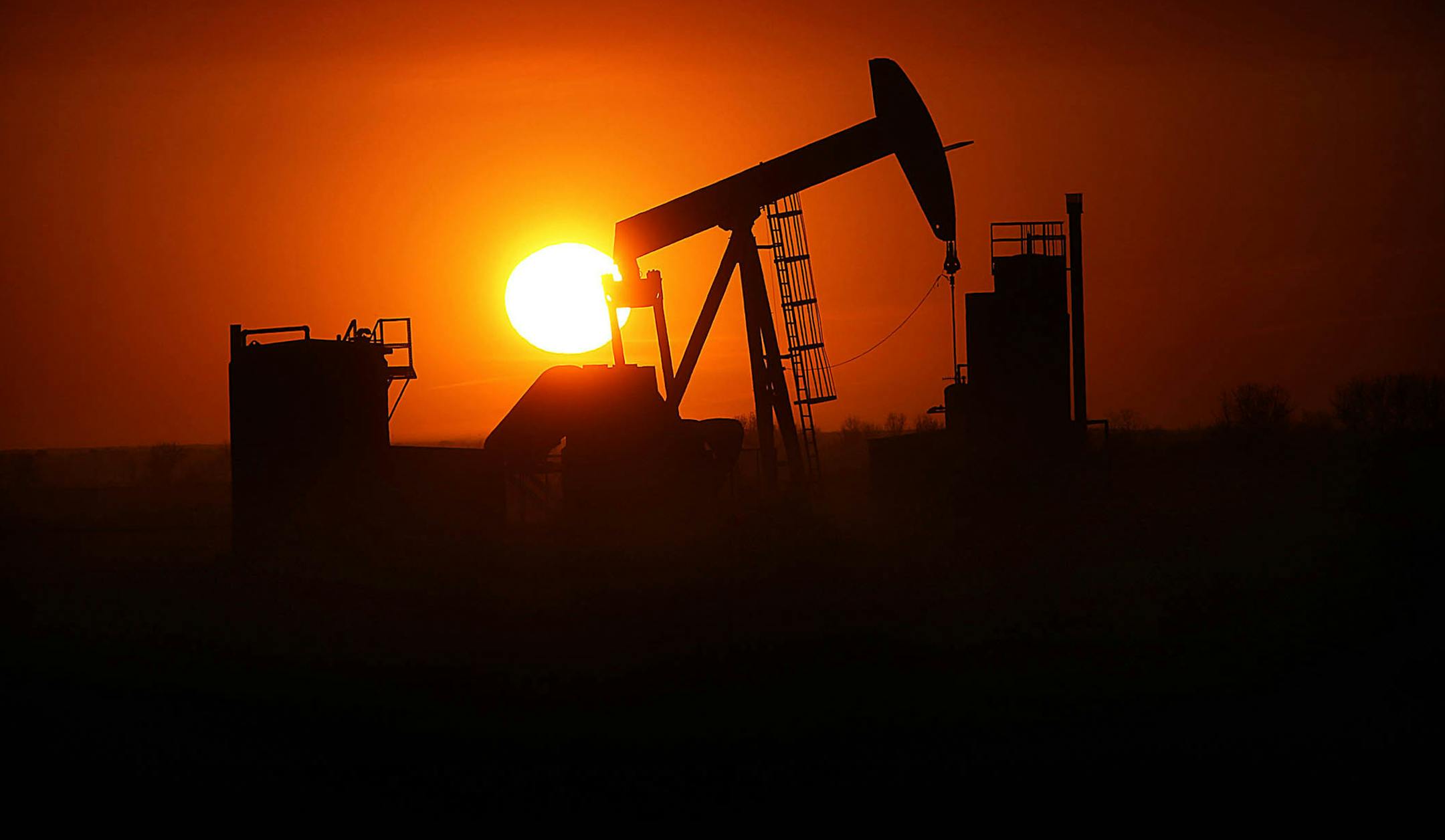
North Dakota's oil output declined for the second consecutive month as just one new well was completed in February and some producers pumped less oil and gas to meet flaring rules, state officials said Tuesday.
"It was an unusual event," Lynn Helms, director of the North Dakota Mineral Resources Department, said of the back-to-back monthly decline in production, which last happened in 2011.
Oil production in the state likely will fall through May because of the drop in the number of drilling rigs to 91 this month, less than half the number operating a year ago, he added.
Output was just under 1.18 million barrels per day in February, a drop of 50,435 daily barrels since December, when the state hit a 1.2-million-barrel-per-day record high.
Helms said the falloff in drilling has happened faster than projected, driven by low oil prices that have cut capital investment by oil companies. The output of newly completed oil wells always declines, so new ones must be drilled constantly or an oil field's production steadily drops.
After North Dakota's news, light sweet crude oil futures for May closed the day up 3.2 percent at $53.55 per barrel on the New York Mercantile Exchange.
Helms attributed most of February's drop of 14,000 barrels per day to producers cutting back production to meet new regulations on flaring, or burning of natural gas at wells that are not connected to pipelines. Under regulations that gradually get stricter, producers are allowed to burn no more than 23 percent of gas output or face state-ordered cuts in production.
The number of uncompleted wells in North Dakota rose to an estimated 900 at the end of February, Helms said, as drillers decided to hold off on the final step — hydraulic fracturing, or injecting water, sand and chemicals to free gas and oil in shale layers. Helms added that he expects a surge of fracking in June if sustained low prices trigger a state law that cuts oil production taxes.



