

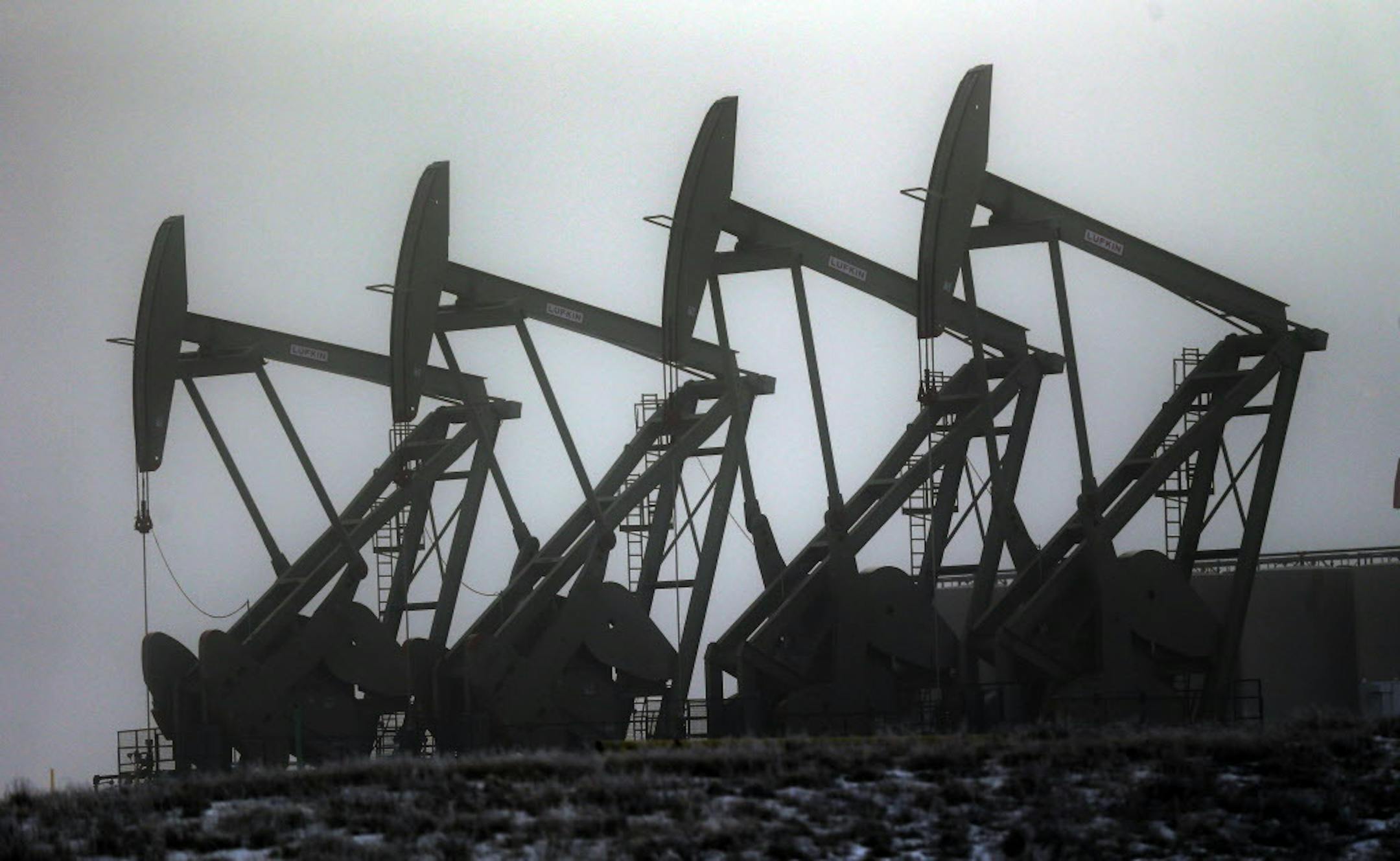
North Dakota's oil production fell by 1 percent in December, though the outlook continues to be relatively optimistic.
The nation's second-largest oil-producing state, North Dakota pumped 1.18 million barrels per day in December, down from nearly 1.2 million in November, according to data released Thursday by North Dakota's Department of Mineral Resources.
That marked the first month-to-month decline in production since July. Still, the number of drilling rigs in North Dakota continues to rise, a positive sign for future production. There are currently 57 rigs operating in North Dakota, up one from January and up three from November.
"Current operator plans are to add five to 10 rigs in the second and third quarters of 2018 depending on workforce and infrastructure constraints," Lynn Helms, director of the state's mineral resources department, wrote in his monthly report.
With a tight national economy, oil industry contractors have had trouble finding enough workers. Oil production in North Dakota and across the country has accelerated over the past six months, and the bullish trend is expected to continue, barring a price collapse. The federal government forecasts production of more than 10 million barrels a day on average in 2018, which would break a record set in 1970.
Agreements by OPEC and Russia have put a cap on global oil supply, while a relatively hot world economy has boosted demand.
The result: West Texas Intermediate (WTI) — the U.S. bench-mark crude price — has risen to around $65 a barrel in recent weeks, its highest price since hitting $60 a barrel in mid-2015. WTI closed at just over $61 per barrel Thursday.
North Dakota's natural gas production also fell a bit in December, coming in at 2.08 million MCF per day, down from 2.1 million MCF per day in November, which was a record. (An MCF is 1,000 cubic feet of gas).



