

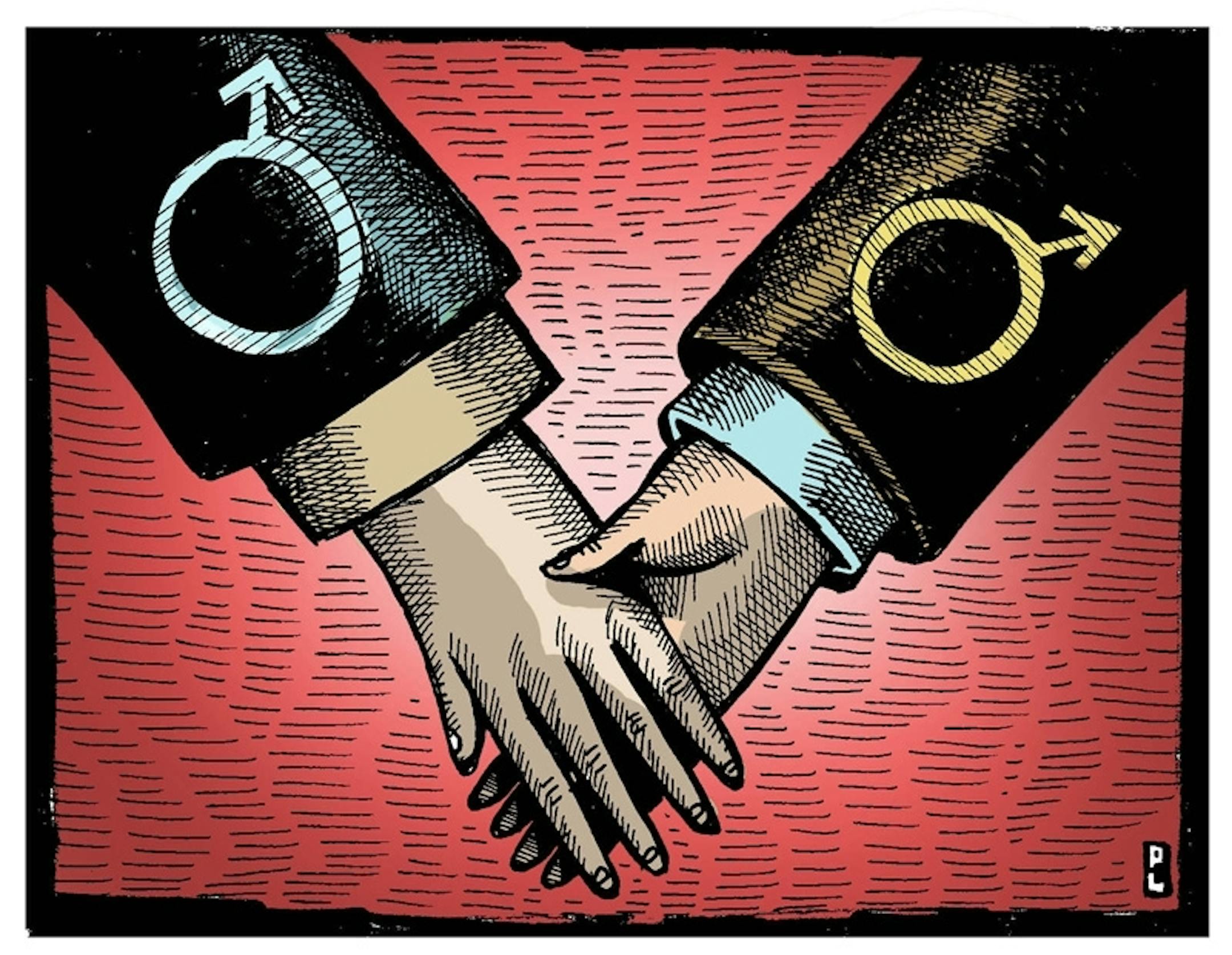
My opinions on the same-sex marriage debate had mostly settled. I had been involved in many discussions about how society should handle gay rights, and had come to think that the fairest thing would be to recognize gay relationships in exactly the same ways that society recognizes straight relationships.
I would ask people: Really, how different are they? I found out.
In 1994, I married the girl I'd first fallen for in seventh grade. About 10 years later, he explained that he was actually not a girl. Honestly, it explained a lot of things.
Human identity resides in the brain; you have a sense of self that can disagree with the rest of your body. You might feel thinner or fatter than your body is; you might also feel more male or female than your body is.
Scientific studies of this phenomenon have generally concluded that transgendered people (people who think they are of a different gender than their body appears to be) are reporting something that is true of their brain, even if it's not true of the rest of their body.
Attempts to raise people with a particular gender that doesn't match their brain consistently fail. People know who they are, although they sometimes have difficulty expressing this awareness in words.
I won't deny that we talked for a bit about whether my spouse's gender meant we might not actually be married. But we're both pretty devout Christians (though not in the modern American mainstream), and we have strong feelings about marriage. We had said "until death do us part" -- not "until things get sorta weird."
Neither of us wanted to give up over something trivial, so that was that. We filed the question whether we were a gay or a straight couple under "things we agree to disagree about." (He thought we were gay; I thought we were straight.) We went on with our shared life together.


