

my job
By Laura French • jobslink@startribune.com
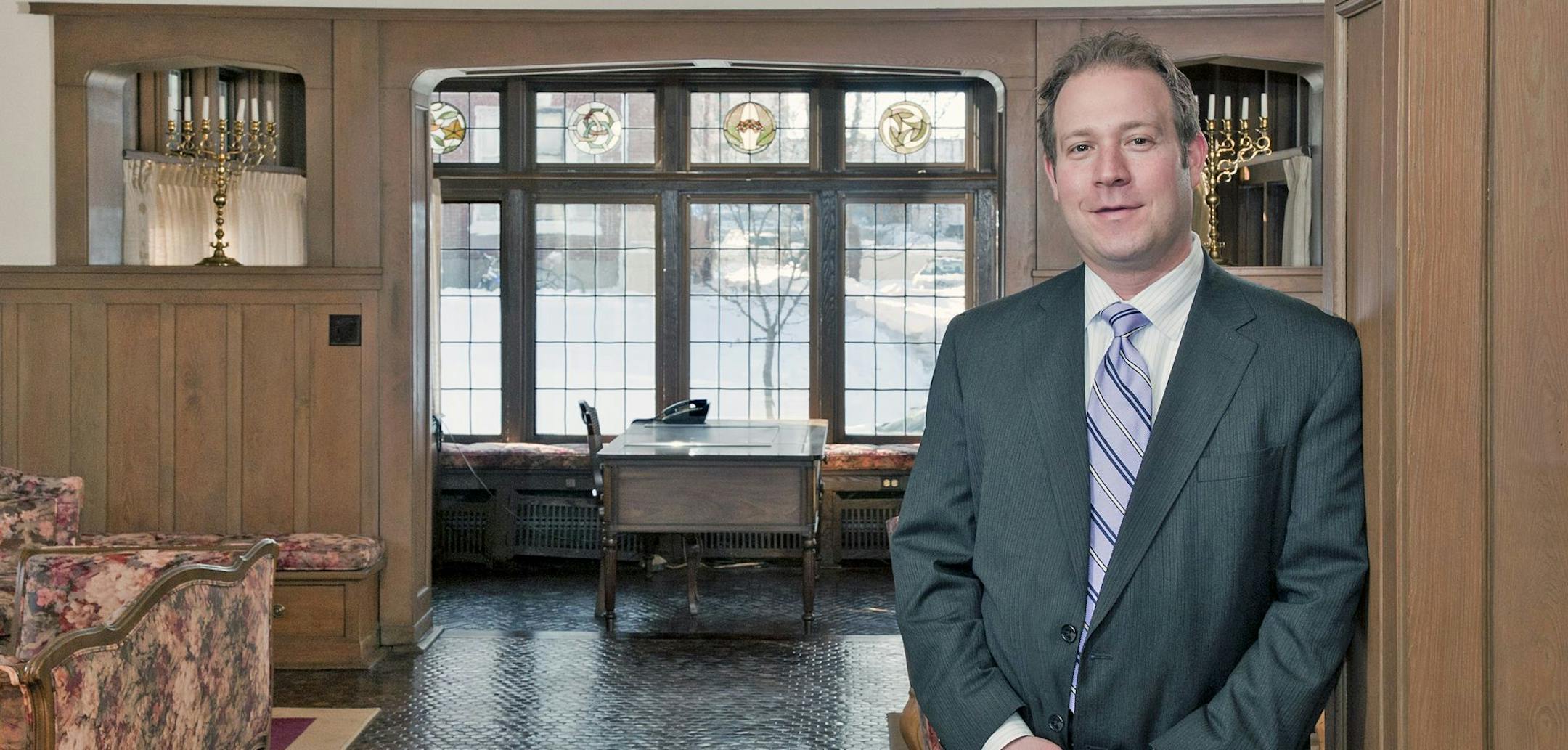
Although his father owned a funeral home in Ohio when he was growing up, Michael Epstein's parents never tried to steer him into the business. "I give them credit for that," he said.
Nevertheless, by the time he got to high school, he realized he had an interest in the industry. He came to the University of Minnesota, which has one of the country's leading Mortuary Science programs. He worked for a number of funeral homes in the Twin Cities, then moved to Atlanta and worked for both Jewish and non-Jewish funeral homes. "I met different types of people from different cultures. That set the stage for everything I've done since — I learned from such a diverse group of people," he said.
Epstein said people's reaction to his profession varies according to their personal experience. "Someone who's had the really fortunate luck of not dealing with a funeral service is more likely to have the 'eew' reaction. People who have dealt with a funeral director and have had a good experience, they're more likely to be open.
"We get a lot of questions that are, 'Do you dress dead bodies?' That isn't really the core of what we do. Our main thing is to meet with families and figure out how they want to honor their loved one. We want to give them direction, but we want it to be how they want it to be."
Because Hodroff-Epstein is a small company, Epstein said, "Everyone on our staff is a fully licensed funeral director. We find the term all-encompassing. It does include the death part. We go to the hospital in the middle of the night and transport, we clean the bodies and dress people and casket them. Larger funeral homes will have people whose job is just preparing the body."
Most, but not all, of the funerals Epstein arranges are Jewish. In most cases, the exceptions are when a non-Jewish spouse wants a Jewish funeral. However, Epstein said, "There are some people who have been to a Jewish funeral and they like the way the funeral is conducted. The Jewish aspect is that we don't embalm, we don't do viewings. All of our caskets are made out of wood. It's doing the least disturbance to the earth."
What is the biggest challenge to being a funeral director?
I can remember my dad carrying a roll of quarters to find a pay phone and check in: "Has anyone called for me?" It truly involves your entire life. If it's someone in the community you've dealt with, you have to be there for them. Your schedule is that there is no schedule.


