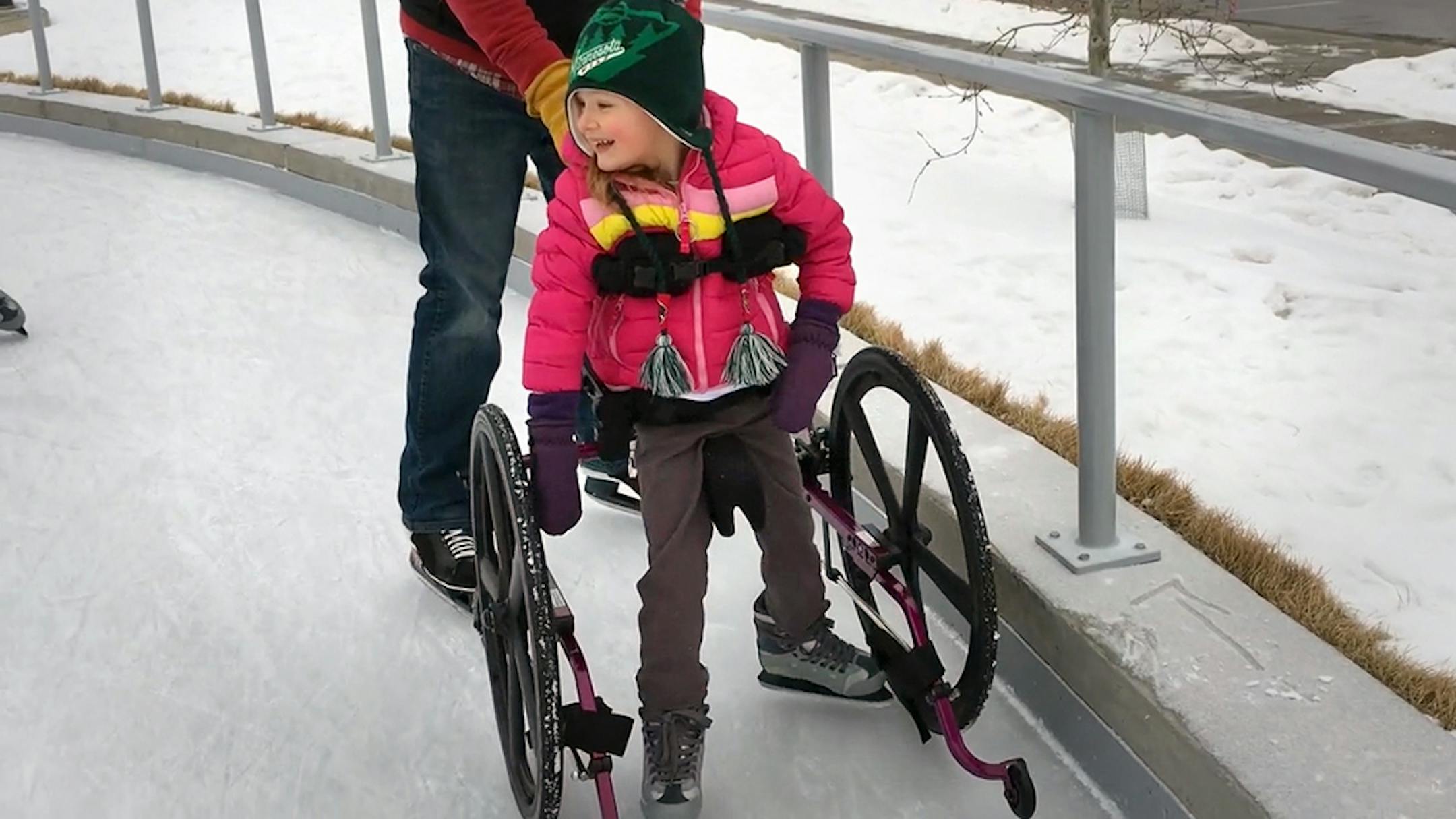
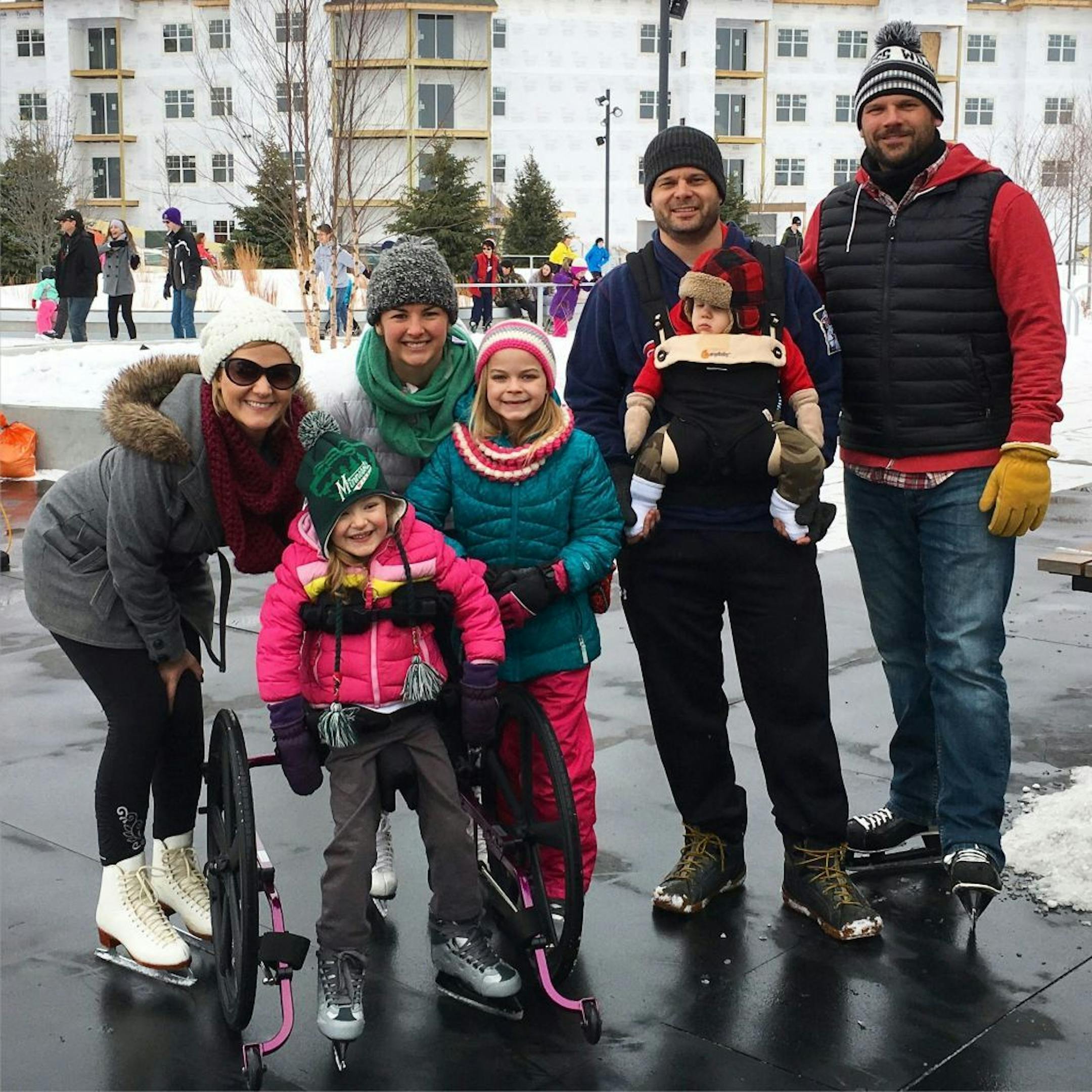
My 5-year-old had been asking to go ice skating for weeks. She told me her preschool classmates put paper plates on their shoes and skated around the classroom. She wanted to skate, too, she said. With real skates.
As I lifted Lila's 35-pound body from her 300-pound wheelchair, I smiled and said, "Sure, honey, we can do that."
Throughout the next week, we'd pretend to skate around the living room — me dragging her across the smooth hardwood floors in her socks, singing Taylor Swift songs and tossing her into the air as my back would allow.
We took breaks to watch the U.S. Figure Skating Championships on TV and I'd think back to my childhood when I idolized Kristi Yamaguchi.
In true Minnesota fashion, I had a pair of skates on my feet shortly after I learned to walk. Growing up in northern Minnesota, I played hockey on the backyard rink with my older brother and taught my little sister how to do "shoot the ducks" and sit spins. Before figure skating lessons, I would buff the black hockey puck scuff marks from my white skates. They never stayed white for long, thanks to my brother's ability to talk me into always being the goalie.
Skating is part of the fabric of growing up in a state where outdoor ice is endless and indoor rinks are a dime a dozen. When you grow up loving something so much, you want your children to experience the same rite of passage.
I racked my brain trying to figure out how I would give my daughter this experience. Lila can't walk, let alone skate. Did I promise her the impossible?
Adaptive skating options