
MPCA asks neighbors for ‘trust’ in lieu of details about investigation of battery recycling plant

Gopher Resource, on Yankee Doodle Road in Eagan, is accused of breaking national lead standards earlier this year.

The Minnesota Star Tribune
August 18, 2025 at 7:59PM
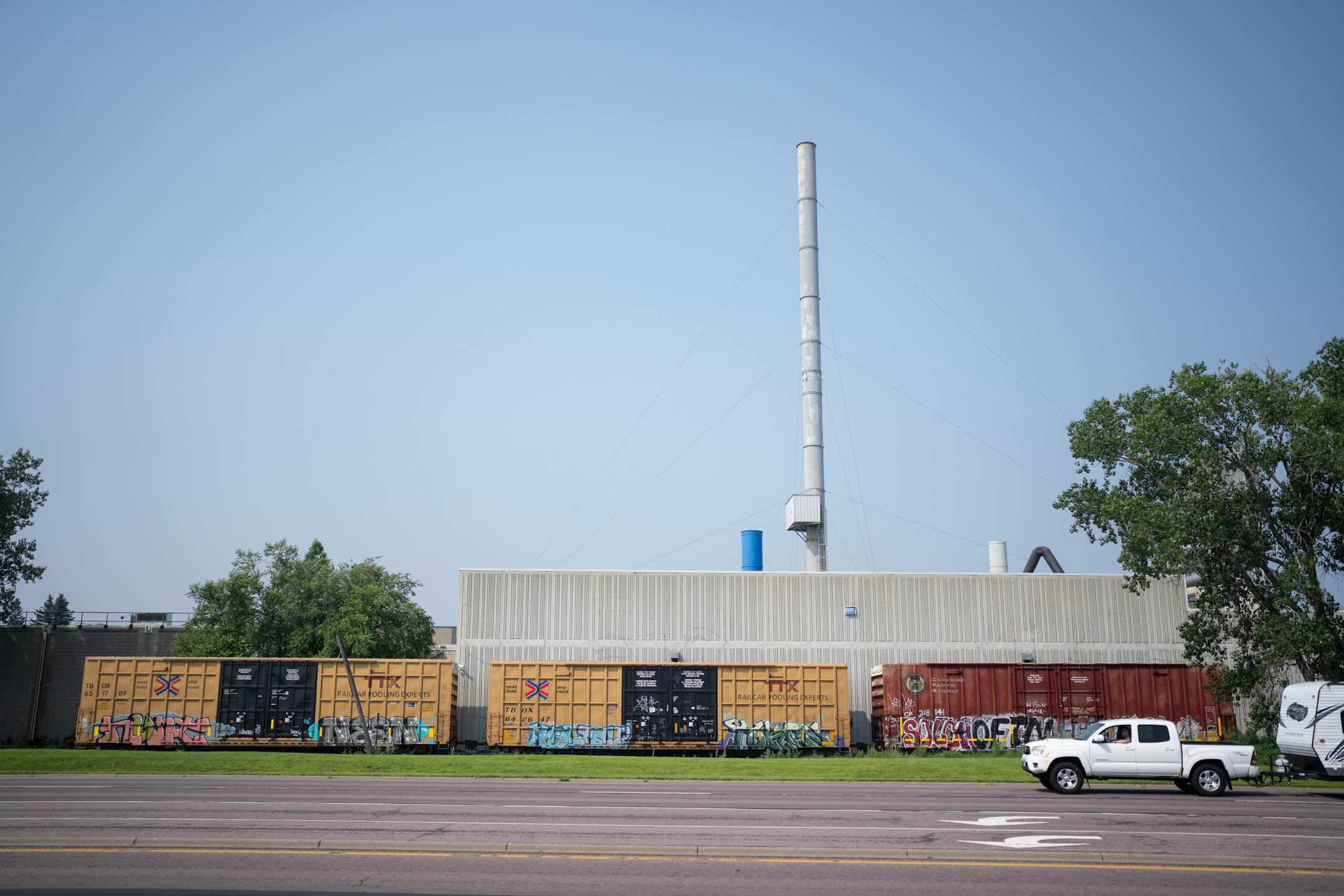
The lead battery recycler Gopher Resource on Thursday, July 31, 2025 in Eagan, Minn.
The lead battery recycler Gopher Resource on July 31 in Eagan. (Renée Jones Schneider/The Minnesota Star Tribune)

One by one, people who live near a battery recycler in Eagan told state officials how they might have protected themselves if they had known the plant was spreading toxic lead in their neighborhood.

At a meeting last week, one woman said she might have tested her blood for lead. Another would have avoided taking walks by the plant. Parents talked about keeping their kids inside.

“Right now we are receiving alerts three months later. That’s not useful in protecting ourselves or our children,” said Mark Kreidler, who has a 9-year-old son and lives in the Bur Oaks neighborhood near Gopher Resource, the battery recycler.

The Minnesota Pollution Control Agency claims Gopher Resource broke national standards for lead in the air over January, February and March. The agency did not send out mailers to neighbors about the issue until early July. A spokesman for the agency wrote in an email it takes weeks to confirm data showing that a site is breaking lead rules, which are calculated on a three-month average.

MPCA officials have appeared at three community meetings since, but the agency continues to frustrate neighbors by saying it cannot share everything it knows about Gopher Resource.

“It’s kind of like when the police are doing an investigation into a serious crime, right? They can’t tell you all those details because they need it in order to build a case,” Courtney Ahlers-Nelson, a division director at MPCA, said to the Eagan crowd last week. “So there are things, unfortunately, I’m not telling you today, and this is where I ask for your trust.”

The state agency has declined to release key documents related to the case, saying they are not public because there’s an open civil investigation into Gopher. There was also no public alert about pollution problems at Gopher Resource that were resolved a month before the lead emissions.

Don Gemberling, spokesman for the transparency group Minnesotans for Open Government, said the agency has the discretion to reveal more.

“The PCA really does take a very restricted view of what it can and cannot release,” Gemberling said. “It works to their advantage. It’s very hard to find out what the heck they’re really doing.”

How the problem started

Gopher Resource, at 685 Yankee Doodle Road, has operated since 1948. Neighbors nearby have said that for years, they’ve experienced sour smells, disruptive noises and occasional yellow smoke from the site. The MPCA has not said what actually caused the excessive lead emissions this year, only that the issue has since been fixed.

A Q&A posted online mentions the company shut down “malfunctioning equipment” to stop the emissions issue.

The Minnesota Star Tribune requested a copy of an initial January report made by Gopher to state officials and a Notice of Violation issued in May to the company, which lays out the state’s allegations in detail. In both cases, the MPCA responded that these documents are not public.

Minnesota’s Data Practices Act says investigation data can be released if it “will aid the law enforcement process, promote public health or safety or dispel widespread rumor or unrest.”

Gemberling gave the hypothetical example of a large release of radiation at one of the state’s nuclear reactors.

“You’re telling me they couldn’t release that information to the public because it was under investigation what happened? Absolutely not,” Gemberling said.

Asked about that part of the law, Dan Ruiter, a spokesman for MPCA, wrote: “The data practices act classifies civil investigative data as protected not public data to ensure confidentiality and protect the integrity of a civil investigation process.”

MPCA has released some data showing the levels of lead their air monitors captured from January to March of this year, and have said the limits were exceeded on 13 days during that period.

“We maintain an open and constructive relationship with MPCA and work closely with them to address and resolve matters as they may arise,” a statement from Gopher Resource said.

DFL state Sen. Jim Carlson, who represents Eagan, said it is important for regulators to be careful about the information they release.

“One of the things that they need to do is make darn sure that they have their data in order, because there will be a lawsuit” if the state pursues aggressive enforcement, he said.

In a separate case, MPCA has been sued twice in the past 15 months by Northern Iron, a metal foundry in St. Paul. The business has been accused of infractions so serious the state is trying to revoke its permit.

In the second of those suits, Northern Iron alleged the state improperly revealed an investigation into soot on neighboring homes, including details that were not public under state law.

MPCA is seeking to dismiss that lawsuit.

What’s in the neighborhood

Neighbors have also been alarmed to learn for the first time about issues at Gopher the state resolved just before the latest pollution case.

On Dec. 2 MPCA fined the company for several violations, including a failure to control lead dust when a trailer behind the facility collapsed in 2021, a failure to maintain baghouses that filter lead out of the air and a failure to quickly respond to alarms warning air filtration might not be working.

MPCA posts documents about completed cases like this one on its “What’s in My Neighborhood” website. But no notice was sent to the community, and several neighbors had not learned of the case until after the latest allegations.

MPCA’s final, nonforgivable fine for the incident was $8,450, under the $10,000 threshold when the agency automatically alerts the media to enforcement cases.

“It’s very strange that there’s certain instances of lead exposure in our neighborhood where we’re notified, and in certain instances, we’re not notified,” said Dave Satre, who grew up in the Bur Oaks development across Dodd Road from Gopher.

Cory Boeck, manager of the Land and Air Compliance Section at the MPCA, said during last week’s meeting that state law limits the fines the agency can levy.

“It’s frustrating for us that as soon as we close the December enforcement action out, now we hear from our monitoring folks, there’s yet another event,” Boeck said.

Kreidler has asked for continuous air monitoring to protect the neighborhood. He said in an interview that he had some constructive conversations with MPCA staffers. Officials said during the meeting that a new monitor would require funding from the Legislature, but that in other situations, companies that produce pollution or the cities they are in have helped with the cost.

But, he said, “I feel like we still have a long ways to go. ... They acknowledge, ‘Yeah, it’s too late,’ but there’s no solutions.”

about the writer

about the writer

Chloe Johnson

Environmental Reporter

Chloe Johnson covers climate change and environmental health issues for the Minnesota Star Tribune.

See Moreicon

More from Environment

See More
Rising above the treeline (Top of this photo), on the shore of Birch Lake, the Twin Metals Copper Nickel Mine Plant site and Tailings Management site is part of the proposed plan. ] In theory, the copper-nickel mine Twin Metals wants to build in the headwaters of the Boundary Waters Canoe Area Wilderness is a zero-discharge mine — a closed loop that will endlessly recycle millions of gallons of water, including rainwater and the polluted process water it uses to extract ore and
Brian Peterson/The Minnesota Star Tribune

The copper-nickel mine is controversial for its proximity to the Boundary Waters Canoe Area Wilderness, and the Biden Administration had canceled its leases.

card image
card image