
Opinion | Mary Moriarty has kept her promises — and Hennepin County is better for it

Here’s data on what she’s accomplished. Though she won’t be seeking re-election as county attorney, voters should want someone like her in that role.

August 12, 2025 at 8:30PM
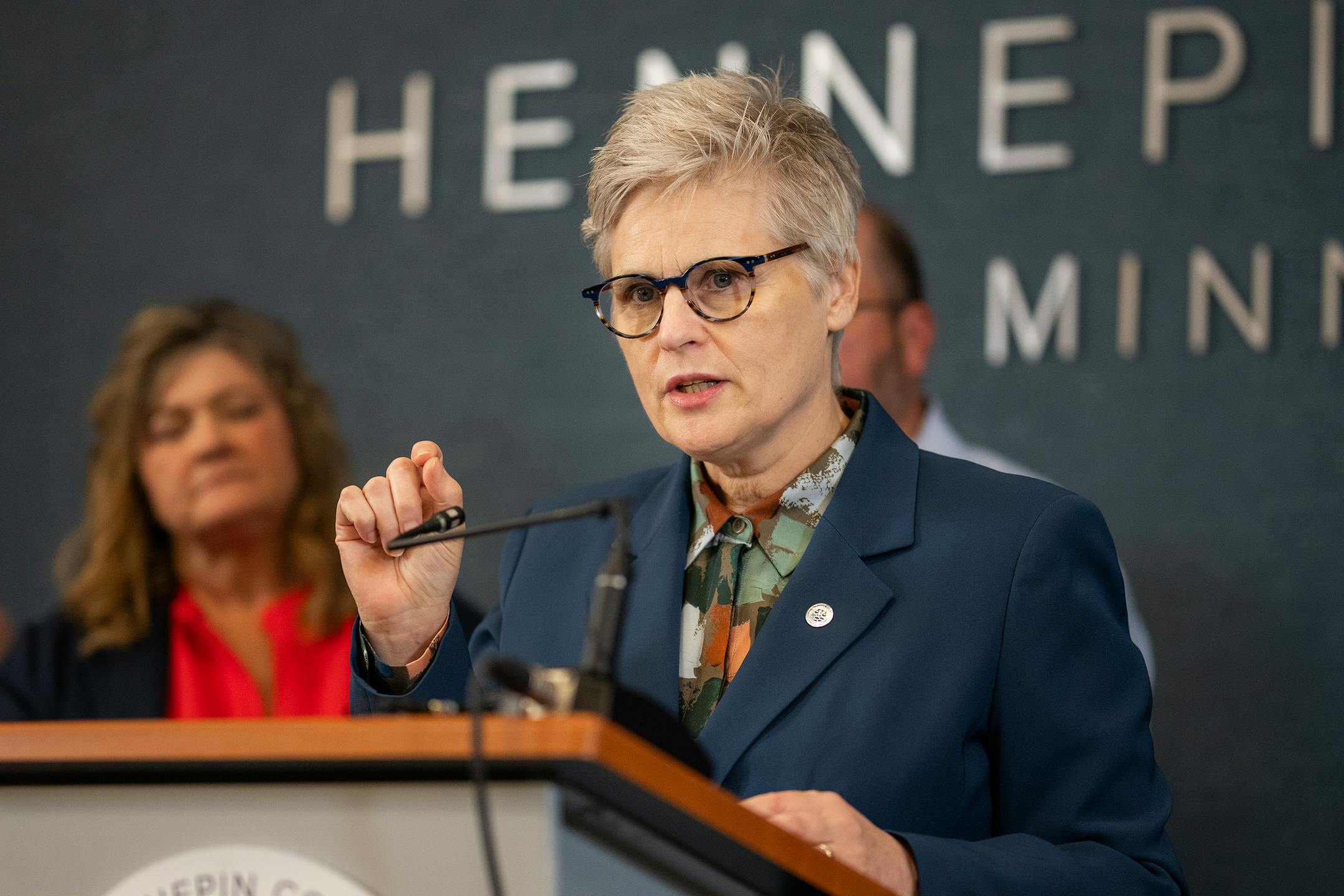
Hennepin County Attorney Mary Moriarty addressed ways of improving traffic safety including preventive measures at the H.C. Government Center in Minneapolis, Minn., on Wednesday, June 25, 2025.
Hennepin County Attorney Mary Moriarty. "Moriarty’s administration has rejected the false binary that you must either support victims or embrace reform. Her office has proven that you can — and must — do both," Perry Moriearty writes. (Richard Tsong-Taatarii/The Minnesota Star Tribune)

Opinion editor’s note: Strib Voices publishes a mix of guest commentaries online and in print each day. To contribute, click here.

•••

When Mary Moriarty announced her candidacy in 2021, she was clear about what she would do as Hennepin County attorney. She saw a criminal legal system that was not serving victims, was perpetuating deep racial disparities and, despite years of “tough on crime” rhetoric, was not making us safer. And she promised something different: data-informed, trauma-responsive prosecution focused not on sound bites or politics, but on safety, equity and justice.

The voters backed her vision by a resounding 16-point margin.

Now, as Moriarty announces that she will not seek a second term, we should be clear-eyed about what her administration has accomplished in just 2½ years — and what we will be losing if we abandon this vision.

Improving public safety

Moriarty’s critics — many of whom have been amplified by the Minnesota Star Tribune to an eyebrow-raising degree — have assiduously avoided answering one simple question: Does her approach make us safer? According to nearly every relevant data point, this answer is yes.

Violent crime in Hennepin County is down — sharply. From January to June of this year, homicides dropped 27% compared with 2024, and they are down 53% from their 2021 peak. Carjackings have dropped 59% since 2022. Aggravated assaults and sexual offenses are also down more than 10% from their peaks in 2022 and 2023. These aren’t just numbers — they are real families, real neighborhoods and real communities experiencing less violence, trauma and loss.

This progress is neither universal nor incidental. It’s the product of coordinated efforts across sectors, with the Hennepin County Attorney’s Office at the center. Under Moriarty’s leadership, the office designed and implemented a youth auto theft intervention program in partnership with law enforcement, Hennepin County Behavioral Health and community groups that has become a national model. Year to date, youth motor vehicle theft referrals are down 59% compared with 2023.

That’s not just fewer stolen cars — it is fewer young people caught in a juvenile system that, according to criminologists, often increases rather than reduces recidivism. The County Attorney’s Office knows this well: Young people who entered its Diversion Program in 2023 recidivated at a rate 21% lower than those charged in court. Debunking longstanding myths that deterrence requires harsh punishment, Moriarty has shown us that accountability does not have to be cruel and that prevention is more powerful than punishment.

Supporting victims

Moriarty’s administration has rejected the false binary that you must either support victims or embrace reform. Her office has proven that you can — and must — do both. The County Attorney Office’s Domestic Abuse Service Center now operates in a trauma-informed space, serving more than 5,000 survivors last year. In a program considered a model by prosecutors across the country, Moriarty has also expanded access to U and T visas for victims of crime and human trafficking, certifying more than 370 in just the first half of 2025 (compared with just seven during the same period in 2023) and making it easier for victims to report crimes without fear of retaliation.

Under Moriarty, the County Attorney’s Office established Minnesota’s first Worker Protection Unit to hold employers accountable for stealing from their employees. And for those of us concerned about the systemic stain of wrongful convictions, Moriarty created the state’s first county-level Conviction Integrity Unit, which has already contributed to exonerations and is training prosecutors to prevent future injustices. These are concrete achievements that have made a real difference in the lives of hundreds of people.

Confronting racial inequity

In a startlingly disingenuous column published by the Star Tribune in May, contributor Andy Brehm railed against Moriarty’s consideration of race in plea bargaining, declaring: “Dermatology should have no place in it.” The problem, of course, is that race does, and always has, had a place in it.

Moriarty was elected in part because she, unlike so many others, refused to ignore the glaring racial inequities that have long plagued our system. The data is extensive, and here is just some: Between 2019 and 2023, law enforcement submitted cases to the County Attorney’s Office involving defendants of color at four times the rate of white defendants — a disparity that crime commission rates cannot begin to explain.

Rather than offer platitudes, Moriarty acted, implementing a policy that acknowledges and counterbalances the racial bias that studies have long shown has an often-unconscious, but very real, effect on the administration of justice. This is not about being “ultra-woke,” as the summary above Brehm’s column alleges. It is about the fundamental notion that justice must be equitable to be legitimate.

What kind of system we want

For too long, this country has celebrated prosecutors who define success as convictions. Moriarty has been different. She has brought innovation to a role too often marked by stagnation. She has made the County Attorney’s Office a partner in building safety, not just reacting to harm. And she has never forgotten that legitimacy and humanity, which engender public trust in the system itself, are essential to public safety.

Moriarty’s decision not to run again is a loss for Hennepin County. But it’s also an opportunity for all of us to reflect on what kind of justice system we want. If we want fewer victims, safer communities, and a system that is both effective and equitable, then we need a leader like Mary Moriarty — and a willingness to support that leader when she does exactly what she said she would.

Perry Moriearty is a professor of law at the University of Minnesota Law School. She teaches criminal law and juvenile justice and co-directs the Child Advocacy and Juvenile Justice Clinic. She is not related to Mary Moriarty.

about the writer

about the writer

Perry Moriearty

More from Commentaries

See More
card image
Leila Navidi/The Minnesota Star Tribune

In government leadership, young people need to be ready to accept the torch, but previous generations can’t slow down their leg, or delay the pass.

card image
card image