

If you're keeping tabs on tomorrow's election, there's a good chance you're using your smartphone and social media to get the latest news.
Twenty-eight percent of registered voters use cell phones to track political news and campaign coverage, according to a Pew Research Center report released today. That's up from 13 percent in 2010.
Voters are also more likely to follow candidates and political figures on social media (Facebook and Twitter) than they were four years ago. Sixteen percent do so now, compared with just 6 percent in 2010.
And the uptick in political cell phone usage isn't just a young adult trend. Pew found that voters age 30 to 49 jumped into mobile politics in a big way, nearly matching the 20-somethings' smartphone and social media usage for political news.
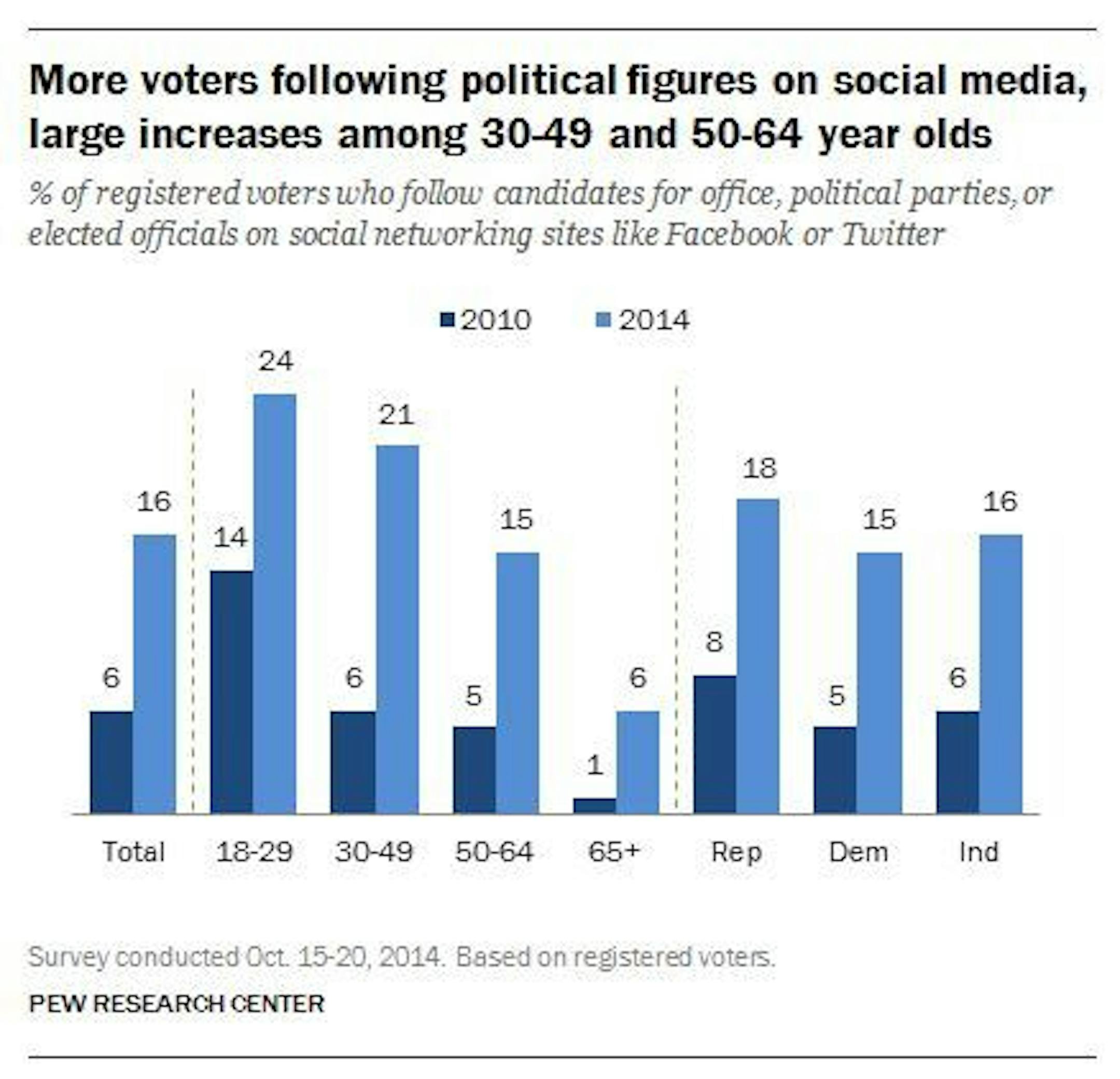
Democrats and Republicans were both likely to be engaged with digital campaigns. Those who follow candidates on social media were also more involved in traditional campaign activities like volunteering and donating money.
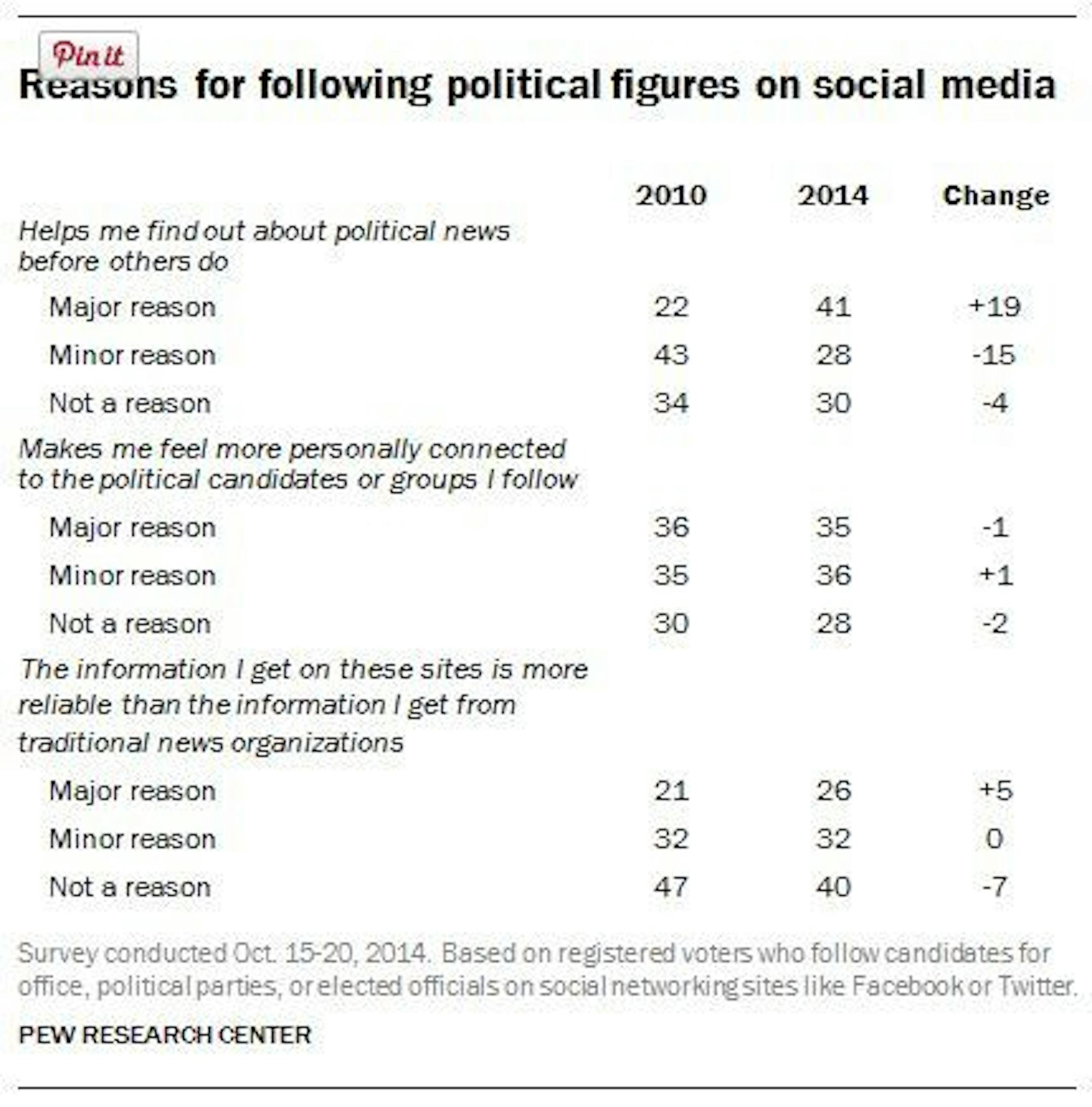
Voters from both parties said a "major reason" for using social media was the ability to form deeper connections with candidates. As for other "major reasons" for following politics on social media, among Republicans and Republican-leaning Independents, 50 percent cited getting news quickly and 33 percent said the news on social media was more reliable than what they they get form traditional news outlets. Among Democrats, 35 percent cited the need to know quickly and 20 percent said social media news was more reliable than what they could get through traditional outlets.
Perhaps a sign that politicians are getting better at social media: 78 percent of Americans surveyed said the political content on social media is mostly interesting and relevant while 20 percent said it was not. In 2010, 67 percent thought it was interesting and relevant while 32 percent did not.


