
Modern mixes it up

Blu Dot furniture designer and his wife give their early 1900s Prairie-style home a modern vibe.

May 19, 2009 at 6:27PM
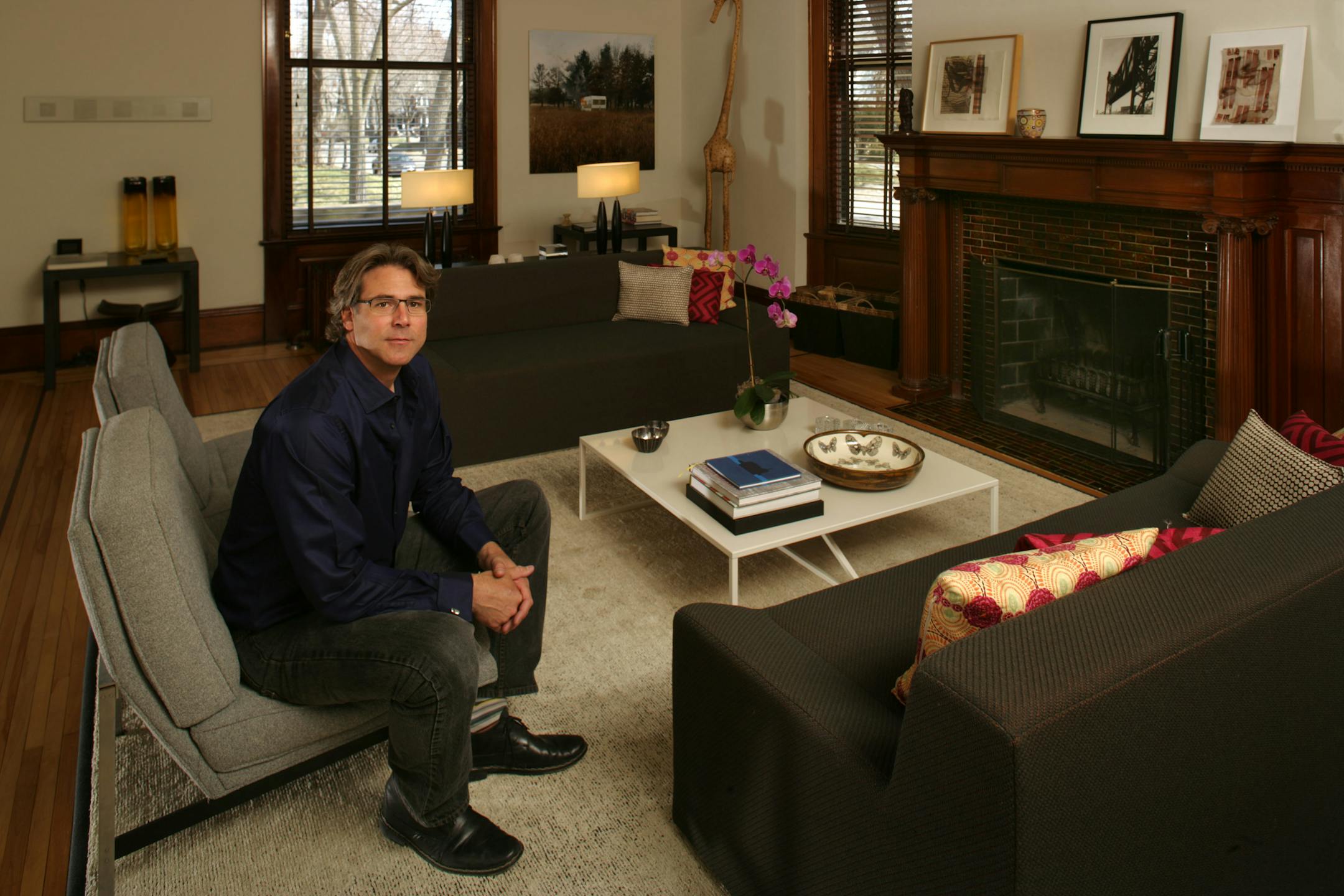
Maurice Blanks, co-founder of Blu Dot, a modernist furniture design company in his Minneapolis living room. The room's decor combines soft textures with splashes of bright colors to make it more visually inviting.
Maurice Blanks, co-founder of Blu Dot, a modernist furniture design company in his Minneapolis living room. The room's decor combines soft textures with splashes of bright colors to make it more visually inviting. (Paulette Henderson — Star Tribune/The Minnesota Star Tribune)

Maurice Blanks lives in a century-old Prairie-style home in Minneapolis' Lowry Hill neighborhood. But it hasn't been easy for him to restrain his contemporary urges as he and his wife, Sally, have remodeled and restyled the home's interiors over the past six years.

"It's in my DNA," said Maurice, co-founder of Blu Dot, a Minneapolis modernist furniture design company.

The couple bought the 5,500-square-foot brick home in 2003 when Maurice moved from Chicago to Minneapolis to be closer to Blu Dot, which sells home furnishings on its website, and has more than 10 mini-stores across the country, including one in Roam in Minneapolis.

The Blankses were attracted to the traditional house because of the scale of the rooms and the smartly designed floor plan.

And, despite its age, the home's dark woodwork and architectural details weren't overly embellished, but clean and simple, which provided an ideal backdrop for their design plans.

"Our aesthetic is contemporary," said Sally, who is on the board of Midway Contemporary Art, a Minneapolis nonprofit. "But we appreciate older architecture and design and feel the two can work together."

Today much of the home's interior emulates the couple's function-first sensibility, from the sleek renovated kitchen designed by Maurice, an architect, to the Mylar dining room light. But the trick was finding the right balance between harder-edged modernism and venerable traditional elements.

"Our goal was to create a definite modern style," said Maurice, "but one that is still in harmony with the existing house." That meant staying away from cold, industrial materials, such as concrete countertops in the new kitchen, he said.

The Blankses have two young daughters, so although the home's furnishings have a contemporary spin, they made sure they also were comfortable and durable, with easy-to-clean fabrics.

Maurice's rule of thumb when mingling spare modern design with turn-of-the century character?

"Don't get hung up on style. You can mix different periods in history," he said. "It will all work together if the scale, color and texture have something in common."

KITCHEN The Blankses gutted the original kitchen and designed a new kitchen and mudroom by borrowing space from an existing back porch.

Traditional: They chose specific materials, such as the carrera marble in the countertops, center island top and backsplash, that were originally used elsewhere in the home, such as an upstairs bathroom. The paneled cabinet doors were designed to match those in the original butler's pantry, and crown molding visually connects the space to the other rooms. "It still feels like part of the house, not a newly designed kitchen," Maurice said.

Contemporary: The stainless-steel appliances play off the silverly gray veining in the carrera marble. The industrial aluminum pendant light fixture would look right at home in an urban loft.

DINING ROOM

While they didn't remodel the original dining room, the Blankses integrated a few thoughtfully chosen contemporary pieces to lighten the room's period style.

Traditional: The dark-stained oak wood trim and beamed ceiling gives the room character, as well as a masculine feel. To soften that they added a pale pink wallpaper with a vintage floral pattern punctuated by mod metallic dots. "We're not wallpaper people," said Sally. "But it had an organic feel and belonged there."

Contemporary: Maurice designed the 12-foot-long ash table to complement the large scale of the dining room, then he stained it to match the rest of the home's woodwork. The room's most striking feature, a reflective Mylar light fixture by Dutch designer Jurgen Bey for Moooi, combines unexpected futuristic and vintage qualities. (When the light is off, only the contemporary cylinder is visible. When he light is on, it illuminates the glass chandelier inside.)

LIVING ROOM The goal was to make the generous living room feel lighter, brighter and comfortable for the family and guests.

Traditional: The original dark-stained wood floors, woodwork and fireplace surround provide a period backdrop to the room's mostly modern furnishings.

Contemporary: The Blankses reupholstered faux leather Blu Dot couches with a warm textural fabric, which provides a contrast to the high-sheen coffee table designed by Blu Dot. They also added a patterned area rug to brighten the room. Colorful pillows break up the mostly muted color scheme. "We like the serenity of a monochromatic palette," said Sally. "We only use little splashes of color and pattern to bring life into the room."

EAMES DEN The original den had lots of dark wood trim as well as built-in bookcases and a wood bench against the wall.

Traditional: Maurice modified the existing built-in wood bench to make it deeper and more comfortable for watching a fire or TV. To bring in color and texture, he upholstered the bench in a retro Charles and Ray Eames fabric originally introduced in 1947. The accent colors in the fabric match the terra-cotta fireplace surround.

Contemporary: A midcentury modern floor lamp, designed by Isamu Noguchi, adds vertical interest to the room's strong horizontal lines.

Lynn Underwood • 612-673-7619

about the writer

about the writer

Lynn Underwood

Reporter

Lynn Underwood is a reporter for the Star Tribune's Home & Garden section covering remodeling, design, trends, new housing, architecture and gardening. She also writes for the Variety section.  

See Moreicon

More from Business

See More
card image
Scott Amundson

The longtime owners of the ranch-style home employed the original architect’s son, who also grew up two doors down, to create a more open layout with better views of a backyard pond.

card image
card image
