

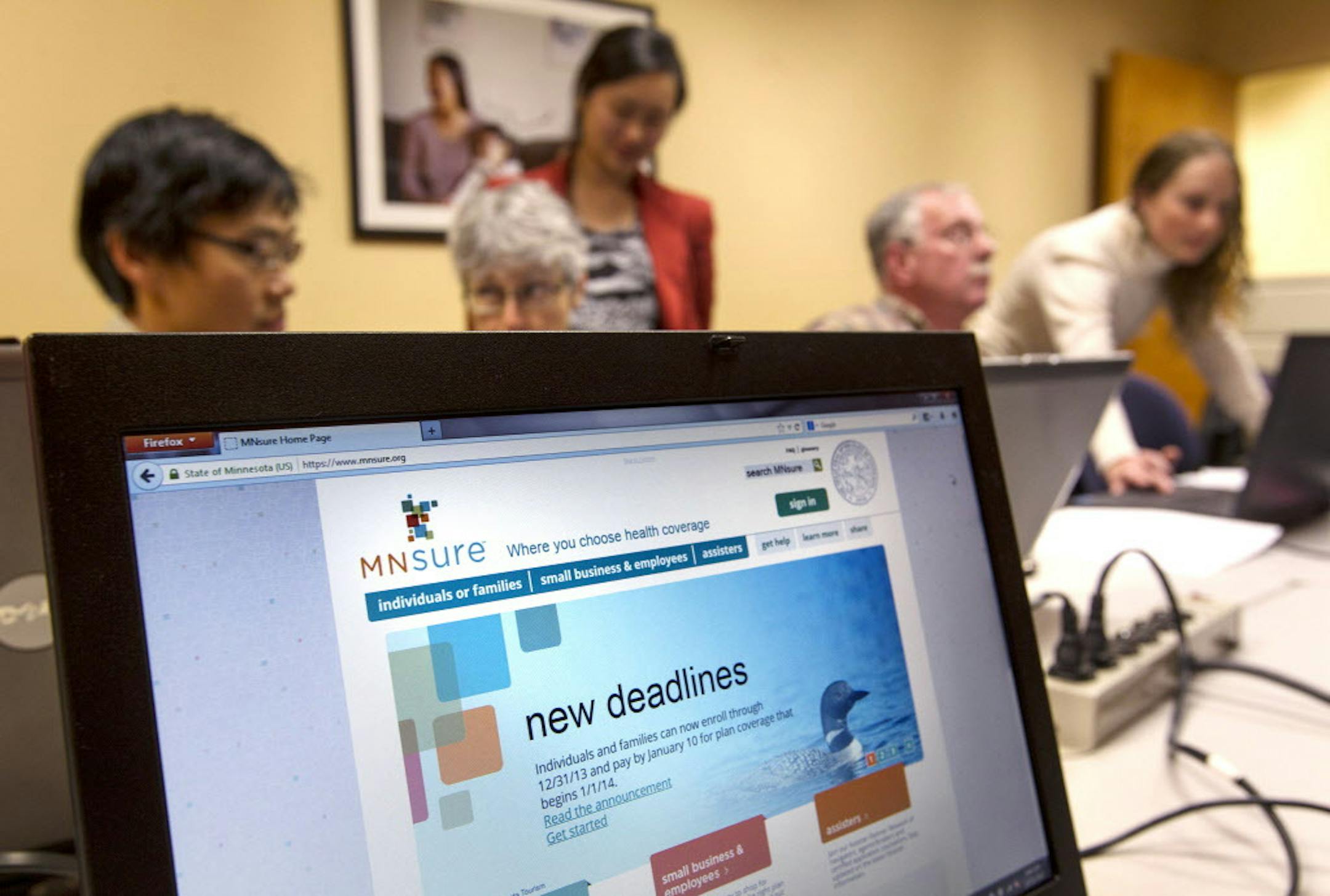
A 40-year-old in the Twin Cities who wants the cheapest MNsure premium on a "silver"-graded policy could pay just $181 per month next year — the lowest such rate in the state.
Around Rochester, meanwhile, a 40-year-old who buys the low-cost silver option would pay $282 per month — about 56 percent more.
Figures released last week by MNsure, the state's health insurance exchange, suggest that rates in southeast Minnesota will continue to be the state's highest next year. But, as the second year of enrollment approaches, the gap with much lower prices in the Twin Cities is shrinking.
Something similar appears to be happening across the country, said Cynthia Cox, a researcher with the California-based Kaiser Family Foundation.
"The cities where the premiums were the lowest last year are seeing steep increases, and the areas where the premiums were the highest last year are coming down," Cox said. "It looks like there's an evening-out in premiums, although there's only less than a third of states so far that have made this data available."
There's nothing new in geographic variations in what people pay for health coverage, but the federal Affordable Care Act that created the exchanges has made differences much easier for consumers to see.
The rates are for policies in the state's individual health insurance market, for people who don't get insurance from an employer or the government. As of May, about 6 percent of all state residents bought policies in the individual market — either through the private market, MNsure or the state's high-risk pool.
After MNsure released rates in 2013, the discrepancy between what similar consumers in Rochester and the Twin Cities must pay for comparable policies prompted some state legislators to propose legislation to try to reduce the differences.


