

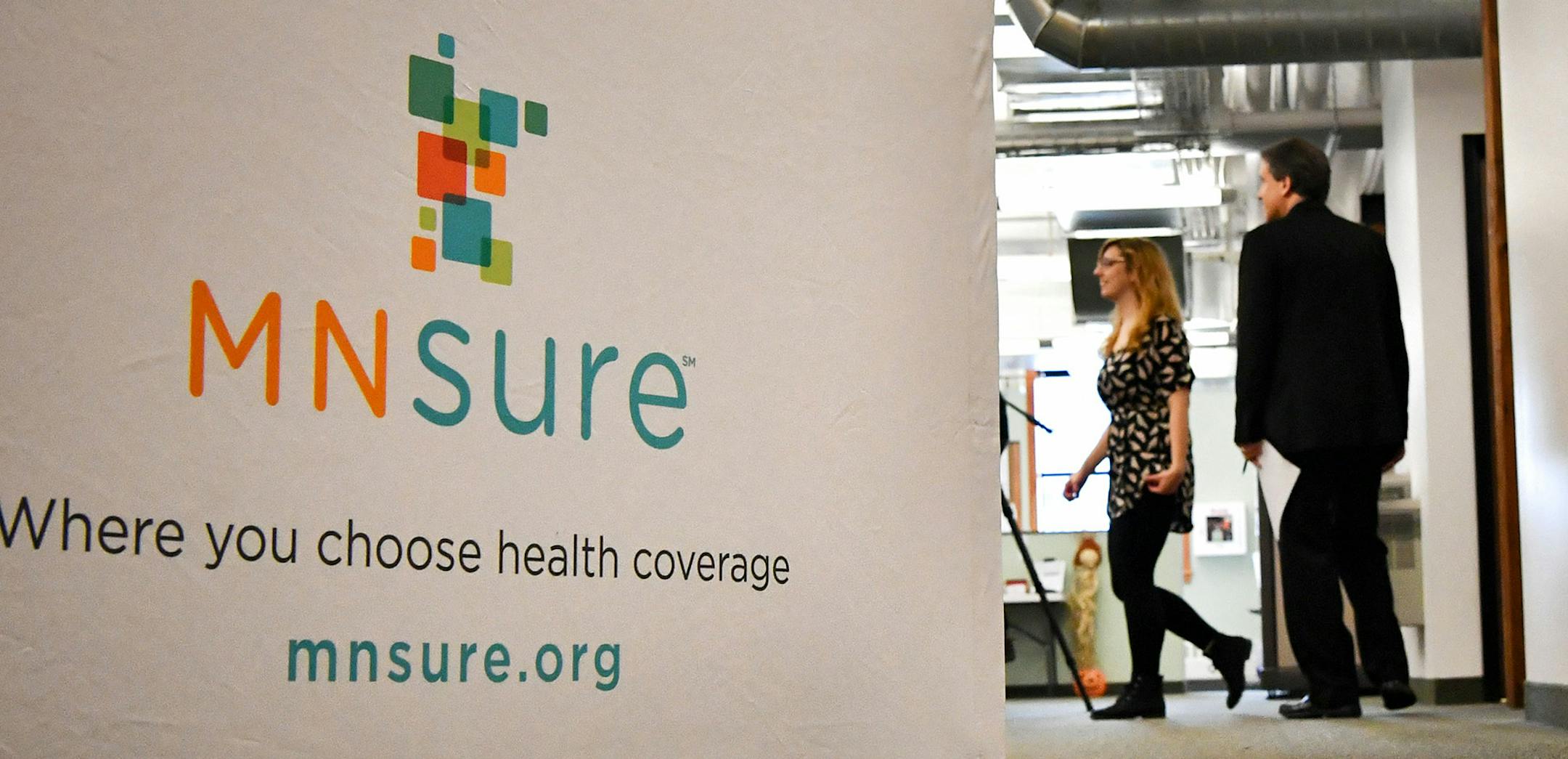
State IT officials say they're taking steps to prevent a repeat of the alleged "robocalling" that DFL Gov. Mark Dayton blamed for long waits at the MNsure call center during the start of last year's open enrollment period.
Efforts to safeguard the phone system are just one part of planning for open enrollment, which MNsure is preparing for despite ongoing debate in the U.S. Senate to repeal and replace the federal Affordable Care Act (ACA).
Allison O'Toole, the MNsure chief executive, said during a board meeting Wednesday in St. Paul that none of the Senate proposals put to a vote thus far would have blocked individual market shoppers from tapping tax credits through MNsure for 2018 coverage.
"We will be open for business this fall, offering plans, comparison shopping and tax credits for consumers," O'Toole said. But she acknowledged uncertainty with the legislative effort, saying: "I don't have a crystal ball."
Minnesota launched the MNsure exchange in 2013 to implement the ACA. It's an option for people who buy coverage in the individual market, which primarily serves people under age 65 who are self-employed or don't get coverage from their employer.
The health law called for the creation of new online health insurance marketplaces like the MNsure exchange, which is how Minnesota consumers at certain income levels tap tax credits provided under the ACA.
When open enrollment for 2017 coverage started last year, the MNsure call center was overwhelmed resulting in very long waits for consumers seeking help. In December, the state's MN.IT department said an investigation concluded automated call systems known as "robocalling" could have caused the problem, and sent the case to the FBI for review for potential criminal activity. A spokesman said the bureau does not typically confirm whether FBI initiated an active investigation.
As MN.IT officials told board members Wednesday about preparations for the upcoming open enrollment period, which is currently scheduled for Nov. 1, board member Peter Benner asked about steps to prevent a repeat of last year's problem. Bill Pal-Freeman, a MN.IT official, didn't offer specifics, but said: "We have actually been actively working about making sure we do have a good fallback plan in case we do have unplanned volumes."
![Allison O'Toole, MNsure CEO. ] GLEN STUBBE * gstubbe@startribune.com Friday, October 28, 2016 Insurance advisors are burning the midnight oil in advance of Tuesday's launch of open enrollment in the state's individual market. It's a particularly complicated time for the roughly 250,000 state residents in the market, many of whom could see significant changes in their ability to visit certain doctors and hospitals at in-network rates. Costs are skyrocketing for everyone, which means the state's M](https://arc.stimg.co/startribunemedia/CRPVUC2H5FWD7TUZTKLT4NOOLA.jpg?&w=1080)



