
Opinion | The culprit behind our precarious state? A stagnant population.

Minnesota’s flat population growth means we can’t spend our way out of trouble. It’s time to reframe.

October 19, 2025 at 8:29PM
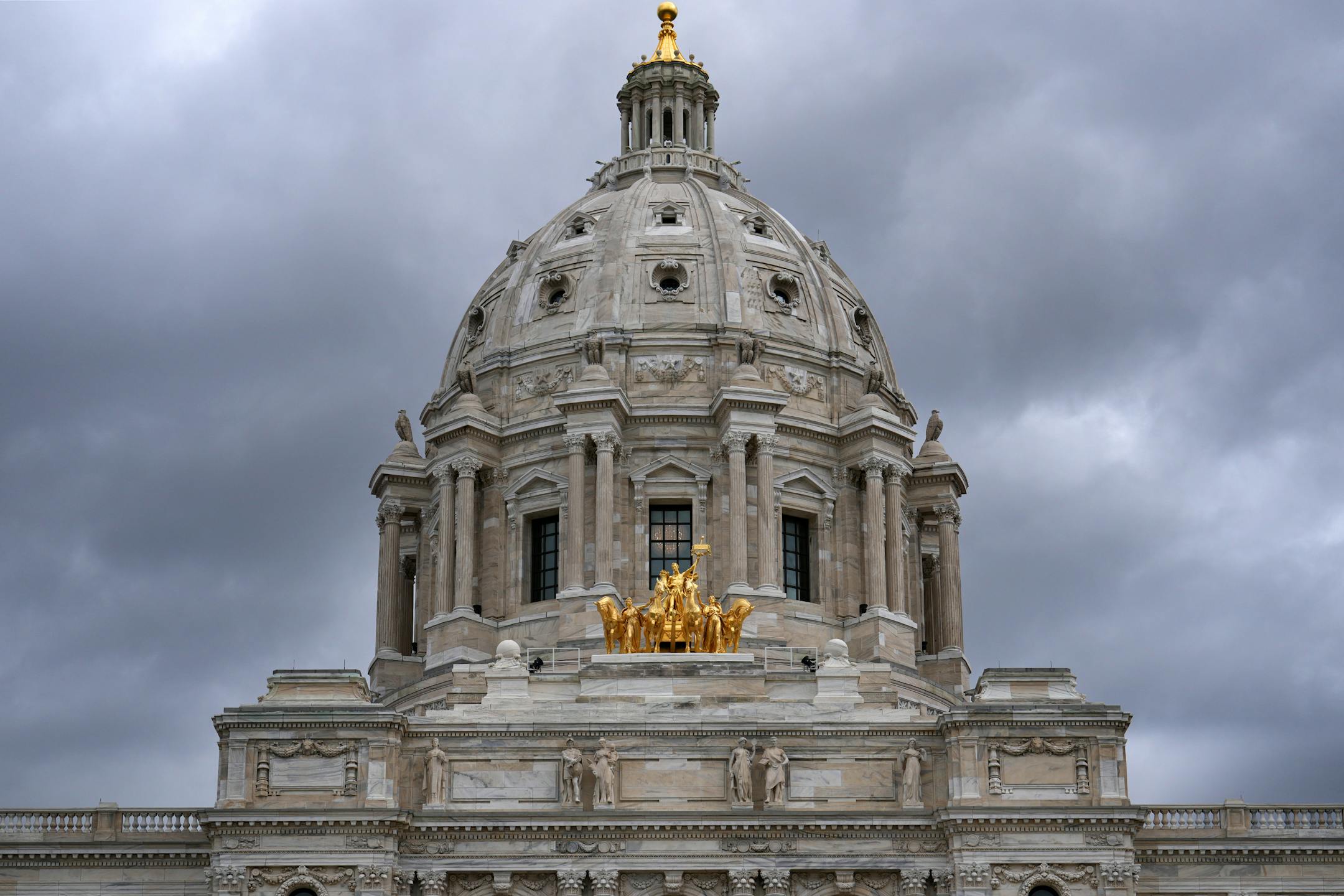
The Minnesota State Capitol during the final weekend of the legislative session in 2025. (Anthony Soufflé/The Minnesota Star Tribune)

Opinion editor’s note: Strib Voices publishes a mix of guest commentaries online and in print each day. To contribute, click here.

•••

Sam Rayburn, the longest-serving speaker of the U.S. House of Representatives, was a fount of political aphorisms. One of his best: “Any jackass can kick down a barn, but it takes a carpenter to build one.”

If Rayburn were alive today, he would see a country with many more jackasses than carpenters.

It’s true that sometimes a barn needs to be kicked down. Two provocative documentaries, “A Precarious State” and “The Fall of Minneapolis,” have racked up enormous viewership by highlighting the problems of the state’s largest city. Yes, they rely on hyperbole and and sometimes false or misleading claims. But they have this in common with each other and with other recent criticisms of the city and state: They reflect the sentiments of many Minnesotans.

Minneapolis and the state are in need of some carpenters to build solutions based on reality. That starts with Minnesota’s most important reality, the state’s stagnant population growth. The state is projected to have roughly the same population 50 years from now as it has today.

Solutions must be measured against this demographic reality. The reality of low or no population growth means Minnesota isn’t going to hire its way out of problems. It can’t rely on funding formulas that are premised on more Minnesotans paying more taxes. That’s especially true when the state relies on a tax system that taxes work and savings when the fastest growing demographic by far — those age 65 and older — mostly have stopped earning wages and are spending.

The solutions for Minnesota won’t come from doing things the same way and expecting better results, but from redefining the problems to reflect reality.

For example, making Minneapolis safer is often seen as a hiring challenge: More cops equal more safety. To hire more police, Minneapolis raised salaries by 20% and launched aggressive campaigns to recruit officers from other agencies and enroll new cadets into the training academy. Those efforts have pushed the size of the Minneapolis Police Department to just above 600. In 2019 the Minneapolis Police Department had 900 officers.

A statewide population that isn’t growing isn’t going to produce those 300 new officers. And it’s not just Minneapolis. Law enforcement agencies throughout the state are scrambling to recruit and hire new officers.

The solution is to redefine the challenge. It’s not a hiring problem, it’s a deployment dilemma that can be resolved. Minnesota has 400 local, county, state and specialty law enforcement agencies. How can all those resources best be used to make the entire state safer?

Regional police departments might replace the scores of small, local agencies. Putting multiple agencies under one roof would reduce overhead, put more cops on patrol and create more flexibility in deploying them. A visible police presence in downtown Minneapolis on a weekend night does more to strengthen both the reality and perception of public safety than a late-night speed trap on a suburban residential street to enforce a 25 mph zone. And if that speed trap really is vital, traffic cam technology will do the job.

Make the state Bureau of Criminal Apprehension the go-to agency for investigating all serious and complex crimes in the state. Redesign the State Patrol to be a rapid response team, moving quickly with substantial resources to where the need exists.

Yes, there are barriers to redesigning law enforcement agencies, from elections and union rules to community pride. There is precedent, though. Mutual aid pacts and partnerships already exist and are effective. Bold leadership is needed to take the next step, to make sure the right cops — and the right numbers — are deployed as needed, not as limited personnel allow.

Education suffers the same short-sightedness. The basic formula for state funding of schools worked well when enrollments were growing. Add one kid to a classroom and the school district receives another $7,500, the base per-pupil state aid this year. Costs don’t increase by that much, so the district now has resources to pay staff better salaries and hire more teachers.

In most Minnesota districts today enrollments are declining, and that’s not likely to change. No surprise, then, that districts around the state are facing enormous deficits, and they lose students and the money that goes with them.

Change what the state subsidizes. Instead of butts in seats, make academic outcomes the focus. Not a dumbed-down target like high school graduation rates, but a meaningful metric. Assure parents that every student graduating from a Minnesota public high school will be able to read, write and do math at least at a 12th-grade level.

What would that take? Again, a reimagining and realignment of resources. Rather than 330 school districts across the state — a relic of a day in which travel and communication were not as accessible — consolidate to put more money into classrooms and less into district headquarters. Integrate new technology into every classroom, including state-of-the-art online programs supported by AI.

The short answer is this: Define the cost of the education by the outcomes students and parents deserve, then design and fund those outcomes, not the number of students taking up space in a classroom.

Or consider that Minnesota is one of a handful of states that still deliver many health and human services programs through the counties. We also are among the states with the largest number of counties, 87.

The problem isn’t just inefficiency, but how the resources available to counties are placing an unaffordable burden on property owners. Counties and cities rely mainly on property taxes. With costs rising, tax levies rapidly are approaching 10% increases across the state. And if things don’t change, the 2026 tax year will be considered the good old days. The changes coming to Medicaid and federal nutrition programs in 2027 will put an even bigger burden on Minnesota counties and, consequently, on the state’s homeowners.

There is time to change, but not by tinkering around the edges. Minnesota needs to reform its delivery of social services and change how it taxes. A tax system based on consumption would be far more efficient in the Minnesota of the future when there are fewer workers and more consumers. It can be designed so it is progressive and fair and more easily apportioned to other units of government without the inherent inequity of property taxes.

And so it goes in one policy after another. Yes, many Minnesota barns need to be kicked down. But criticism without solutions and solutions that don’t reflect reality come up short on both the Rayburn and common-sense scales. Minnesota can’t afford to be a state of all jackasses and no carpenters.

Tom Horner is a public affairs executive. In 2010, he was the Independence Party candidate for governor. He writes at tomhorner.substack.com.

about the writer

about the writer

Tom Horner

More from Commentaries

See More
card image
Anthony Souffle/The Minnesota Star Tribune

Decades ago, the National Guard was called in to help desegregate schools in Arkansas. It could be used again today to stabilize schools amid fears about ICE enforcement.

card image
card image