
Opinion | How the Minnesota Council of Churches repeated its oldest mistake

It’s a pattern: Institutions pledging to confront racism, only to retreat when the political climate becomes too fraught.

December 31, 2025 at 10:59AM
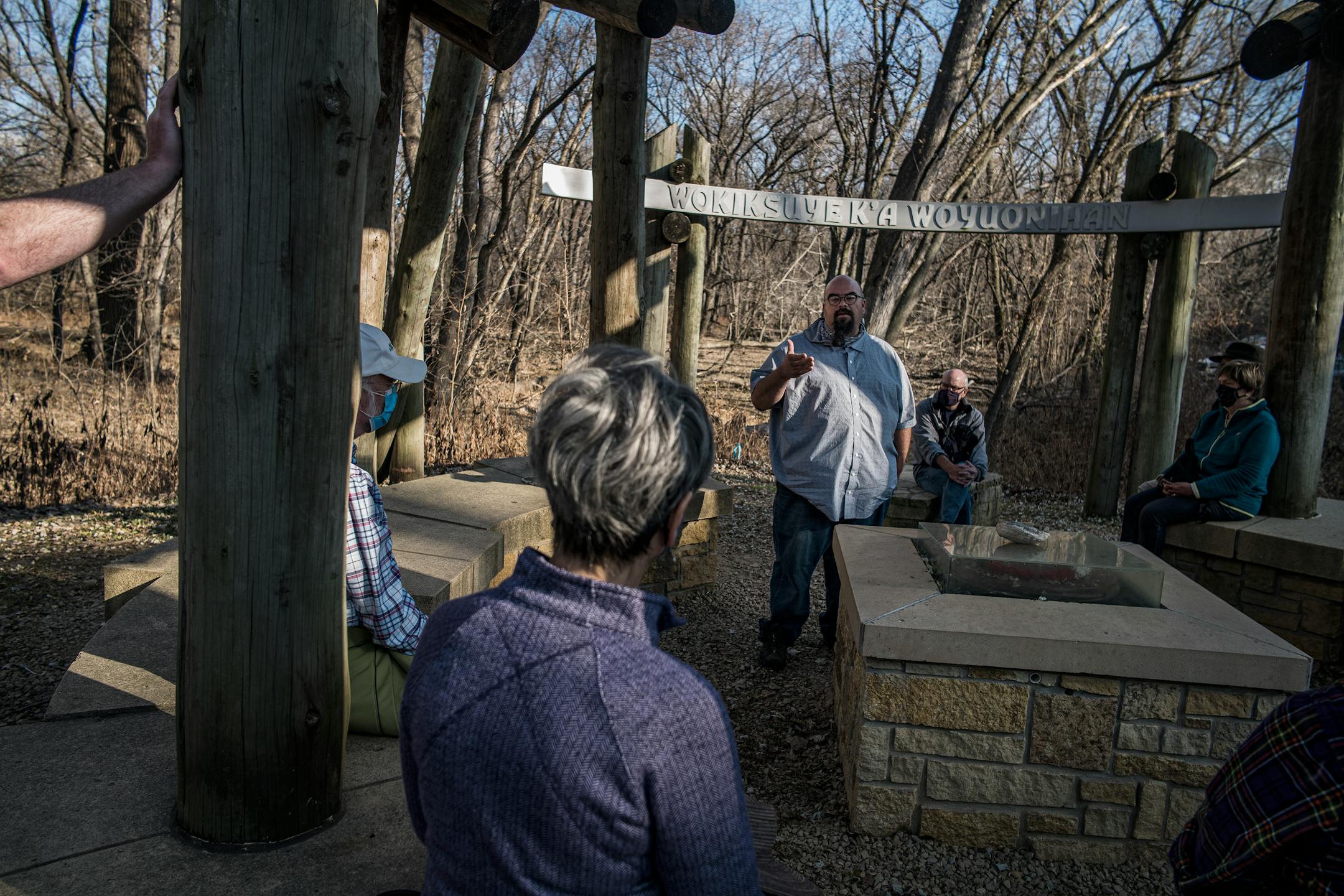
The Rev. Jim Bear Jacobs discusses the history of Fort Snelling State Park memorial for the 1,600 Dakota people imprisoned there after the 1862 Dakota Conflict during a 2020 tour. Last month, Jacobs was told his position at the Minnesota Council of Churches was being eliminated. (Richard Tsong-Taatarii/The Minnesota Star Tribune)

Opinion editor’s note: Strib Voices publishes a mix of guest commentaries online and in print each day. To contribute, click here.

•••

In 1993, the Minnesota Council of Churches announced a bold intention: to support congregations in becoming “deliberate and intentional about their identity as an anti-racist institution.” Those words — spoken by Lou Schoen, then-director of the council’s Commission on Life and Work — signaled what could have been a transformational era of truth-telling within Minnesota’s faith communities. Yet within two years, the council quietly stepped back from that work, overwhelmed by the weight of the commitment it had made.

It would take another quarter-century — and the murder of George Floyd in 2020 — before the council reclaimed that promise in a more public and determined way, launching an ambitious statewide “Truth and Reparations” initiative intended to address historical harms with honesty, humility and moral clarity around Black and Indigenous communities in Minnesota. The Minnesota Council of Churches pledged that truth telling would be the centerpiece of its work. And the public face, moral compass and community anchor of that commitment was the Rev. Jim Bear Jacobs, a citizen of the Stockbridge-Munsee band of the Mohican Indians and the council’s program co-director of racial justice.

Last month, just days before Thanksgiving, Jacobs was told his position was being eliminated. This was on the heels of the council’s other co-director of racial justice, the Rev. Pamela Ngunjiri, leaving the organization.

It was a stunning decision — one that represents not only the removal of a respected leader, but the repetition of a long and painful pattern: institutions pledging to confront racism, only to retreat when the costs become too high, the discomfort too great or the political climate too fraught. For faith institutions, this retreat is especially damaging. When corporations backpedal on diversity pledges, we call it cynical. When churches do it, we must call it what it is: a betrayal of spiritual values rooted in justice, shared humanity and truth.

Jacobs knew this history well. Through his “Healing Stories” work and his Sacred Sites tours, he reminded Minnesotans that healing begins with honesty — that trauma, when brought into the light, loses its power to divide. “Stories heal because they make invisible pain visible,” he taught. “The listener and storyteller are both healed by their acts.” His work invited congregations to confront genocidal violence against Native peoples, treaties broken by the state and the complicity of the American church — especially the white church — in upholding systems of white supremacy.

He was also clear about the stakes, especially for faith communities. “We have to be the prophetic voice for our time, now,” Jacobs said in 2023. “I hope that we can.”

The Minnesota Council of Churches, with this decision, has shown that it cannot — or will not.

Institutions of faith have long been entangled in a cycle of shallow commitments followed by abrupt, painful retreats. They make sweeping statements in moments of crisis, but when the work grows difficult, when the energy wanes, or when the political winds shift, they abandon the very communities they pledged to serve. That cycle is as old as the church in America, and as contemporary as this dismissal. For Jacobs — who has devoted his life to exposing these historical harms — the irony is tragic.

The council’s decision is more than an administrative restructuring or a budgetary adjustment. It is a repudiation of the values it claimed to uphold. And it comes at a moment when truth-telling about race is under assault nationwide — when DEI programs are being dismantled, when the teaching of Black and Native histories is being censored, and when leaders who dare to speak uncomfortable truths are punished for doing so.

The council pledged in 2020 that it would not be part of that retreat. Now it has chosen to join it.

It is true that the work of racial justice is larger than any one individual. But it is also true that people of color have disproportionately borne the weight of this labor for generations. Jacobs stood in that long lineage — as a healer, a truth-teller, and a steady presence in a state still wrestling with the legacy of its violence against Indigenous and Black communities. His departure leaves a vacuum that cannot be easily filled.

Racial justice work is always either an invitation or an indictment. The Minnesota Council of Churches now finds itself on the wrong side of that divide. Its decision raises a painful but necessary question: What becomes of a truth and reparations initiative when the truth teller is pushed out? And where does the trail of broken promises lead when the institution that vowed to confront its history instead chooses silence?

Minnesota deserves answers. And Jim Bear Jacobs deserved better.

Yohuru Williams is a distinguished university chair, a professor of history and founding director of the Racial Justice Initiative at the University of St. Thomas in St. Paul.

about the writer

about the writer

Yohuru Williams

More from Commentaries

See More
card image
Richard Tsong-Taatarii/The Minnesota Star Tribune

It’s a pattern: Institutions pledging to confront racism, only to retreat when the political climate becomes too fraught.

card image
card image