
Opinion | Why, as leader of a faith community, I did not sign this gun petition

It wasn’t because I don’t support a ban on assault weapons.

October 9, 2025 at 9:13PM
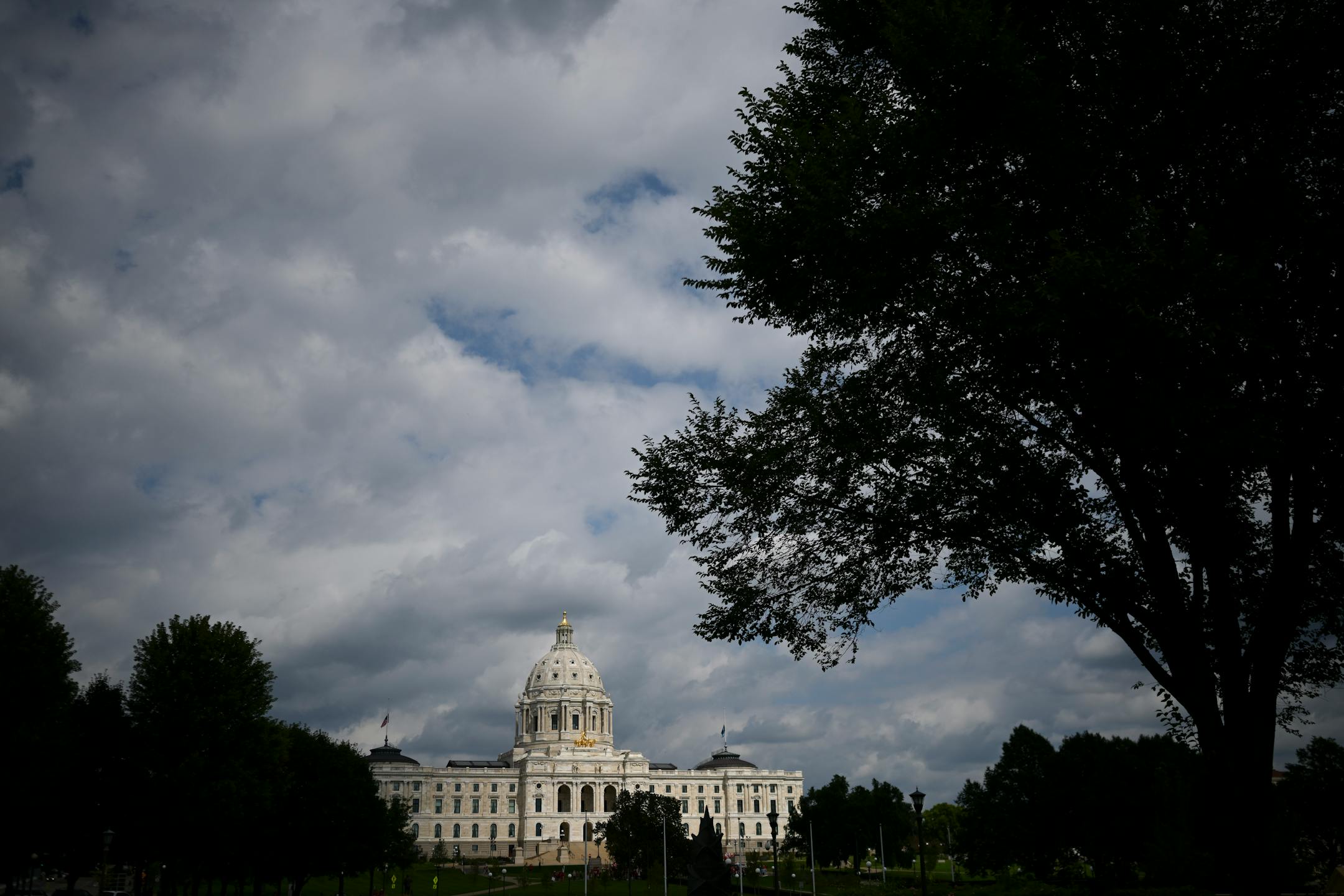
"In a closely divided Legislature, my fear is that this petition [to ban assault weapons] will appear as one more required gesture of those on one side of the issue that ultimately drives those on the other side further away," David Lose writes. "For this reason, in place of demands for immediate passage, I would invite legislators to immediate, legitimate and respectful conversation regarding any and all means by which we can combat the specter of violence that increasingly lurks over our schools and places of worship." Above, the Minnesota Capitol during a rally to demand action on gun violence prevention on Sept. 1 in St. Paul. (Aaron Lavinsky/The Minnesota Star Tribune)

Opinion editor’s note: Strib Voices publishes a mix of guest commentaries online and in print each day. To contribute, click here.

•••

I was recently asked to add my name to a letter to Gov. Tim Walz, which has been signed by more than 500 other faith leaders, to demand passage of a ban on assault weapons.

I chose not to sign it.

Not because I do not support such legislation, but rather for two interconnected reasons. First, I was not invited to sign as an individual citizen but as a leader of a faith community. Yet my faith community is not of one mind or voice on this issue. A congregation of 16,000 believers, Mount Olivet Lutheran Church, where I serve, is one of the few large “big tent” congregations in the country where people across the political spectrum find common ground in worshiping our Lord and serving our neighbors.

At this politically divisive moment in history, ministry can at times be challenging, even frustrating, as any word or action by one of our pastors can be (mis)read as fraught with partisan sentiments. And, at this politically divisive moment in history, ministry in such a context can at other moments be mysterious and beautiful and has never seemed more important. To help this ministry flourish, the pastors at Mount Olivet are committed to preaching, teaching and leading in a way that will not give our members reason to fear that, if we knew how they voted, we might not welcome them to our fellowship. For me, signing this petition risks violating that commitment.

I suspect that to some this approach seems, at best, like prudent diplomacy to manage a complex system and, at worst, a nerveless attempt to keep the peace at all costs. But to us, it represents an attempt to offer an alternative to the current and increasingly violent us/them pull of partisan politics. This is not, in other words, a plea for “centrism,” but rather a rejection of a dysfunctional dichotomy that refuses to imagine people of divergent political opinions can gather together, talk together and work together for the common good.

The theological and practical convictions operating at Mount Olivet are rooted in the Apostle Paul’s admonition to early believers living in Rome: “Do not conform to the pattern of this world, but be transformed by the renewing of your mind. Then you will be able to test and approve what God’s will is — God’s good, pleasing and perfect will” (Romans 12:2). The “pattern of this world” of late is one of constant and acrimonious division spawned by, and simultaneously feeding into, what economist Arthur Brooks describes as a “culture of contempt.”

This highlights the second reason I chose not to sign this petition, as it states: “We are writing to demand that you act with moral clarity and courageous leadership by immediately calling a special legislative session to pass a ban on assault weapons and high-capacity magazines.” My issue isn’t with the goal, but the tactics.

I understand the frustration, even righteous indignation, that prompts faith leaders to “demand” change, particularly in light of the tragedy and trauma of the school shooting at Annunciation Church that left two children dead and 24 children and three adults wounded. I get that. But what is demanded? Not simply calling a special session, but that lawmakers act “with moral clarity and courageous leadership,” implying that anyone who does not agree with the petitioners lacks moral vision and courage. The slide from moral indignation to condescending contempt — at least in the eyes and ears of anyone who may disagree — is as swift as it is uncompromising and will likely only push opponents to greater entrenchment in their previously held positions.

Which is perhaps the most problematic element of “the pattern of this world.” Increasingly, the issues of the day are rarely framed as policy issues or even moral ones, but rather as identity issues. Both sides of the political aisle are expected to line up, tow the party line and disavow any conversation, let alone compromise, with opponents.

We are currently at a near century-long low for political cooperation. Consider that Franklin D. Roosevelt’s Social Security Act passed in 1935 with about 90% Democratic support and 75% Republican support, while the Civil Rights Act advocated by Lyndon Johnson in 1964 passed with roughly 60% Democratic support and 75% of Republican votes. More recently, that kind of cooperation is impossible to find. President Barack Obama’s 2010 Affordable Care Act passed without a single Republican vote, and President Donald Trump’s 2017 tax-reform bill passed with no Democratic support. All of which leads to the no-holds-barred, power-at-any cost approach that encourages a deeply divided public to view political opponents not as adversaries but as enemies.

The failure of the moment is that the issue of banning assault weapons, along with any other conversation about gun safety, cannot be engaged as an issue regarding the welfare of our children (in recent years we are averaging more than a school shooting a week) or of public health (of late, death by firearms is the leading cause of fatalities among children under 19) or even constitutional law (when the Second Amendment was drafted, a trained soldier could fire no more than three or four shots per minute from a muzzleloading pistol or rifle). All of these considerations pale in comparison with the imperative to demonstrate one’s party loyalty by ignoring or disparaging any other point of view.

We desperately need an alternative. So while I respect those who signed the petition and pray that their effort will make a difference, I doubt that it will. In fact, in a closely divided Legislature, my fear is that this petition will appear as one more required gesture of those on one side of the issue that ultimately drives those on the other side further away. For this reason, in place of demands for immediate passage, I would invite legislators to immediate, legitimate and respectful conversation regarding any and all means by which we can combat the specter of violence that increasingly lurks over our schools and places of worship.

The conversation I imagine is not for the faint of heart. It requires, at a minimum, the ability to recognize the complexity of an issue, a commitment to see the humanity of your opponent, a good-faith effort to listen and understand the values and arguments of your interlocutor, an awareness of the predispositions you hold, a willingness to change your mind on the basis of evidence, and a resolve to continue in conversation until you find some common ground. It requires, that is, the attempt to follow Jesus’ directive to “love your enemies.”

Naive? Impractical? Unlikely to succeed? Perhaps. Yet I believe it is precisely what is demanded if we are to reverse the culture and politics of contempt that characterizes our broken political system and to thereby seek, once again, a more perfect union. It is, in short, the essential ingredient if we hope for the renewal of our individual and collective minds.

David Lose is senior pastor of Mount Olivet Lutheran Church in Minneapolis.

about the writer

about the writer

David Lose

More from Commentaries

See More
card image
Aaron Lavinsky/The Minnesota Star Tribune

There are options, but it’s up to the City Council to decide whether to pursue authority to levy any new taxes at the Legislature.

card image
card image