
Opinion | We’ve made distracted driving far too easy

It’s not enough to blame drivers. We must consider the environments through which they travel.

November 24, 2025 at 7:32PM
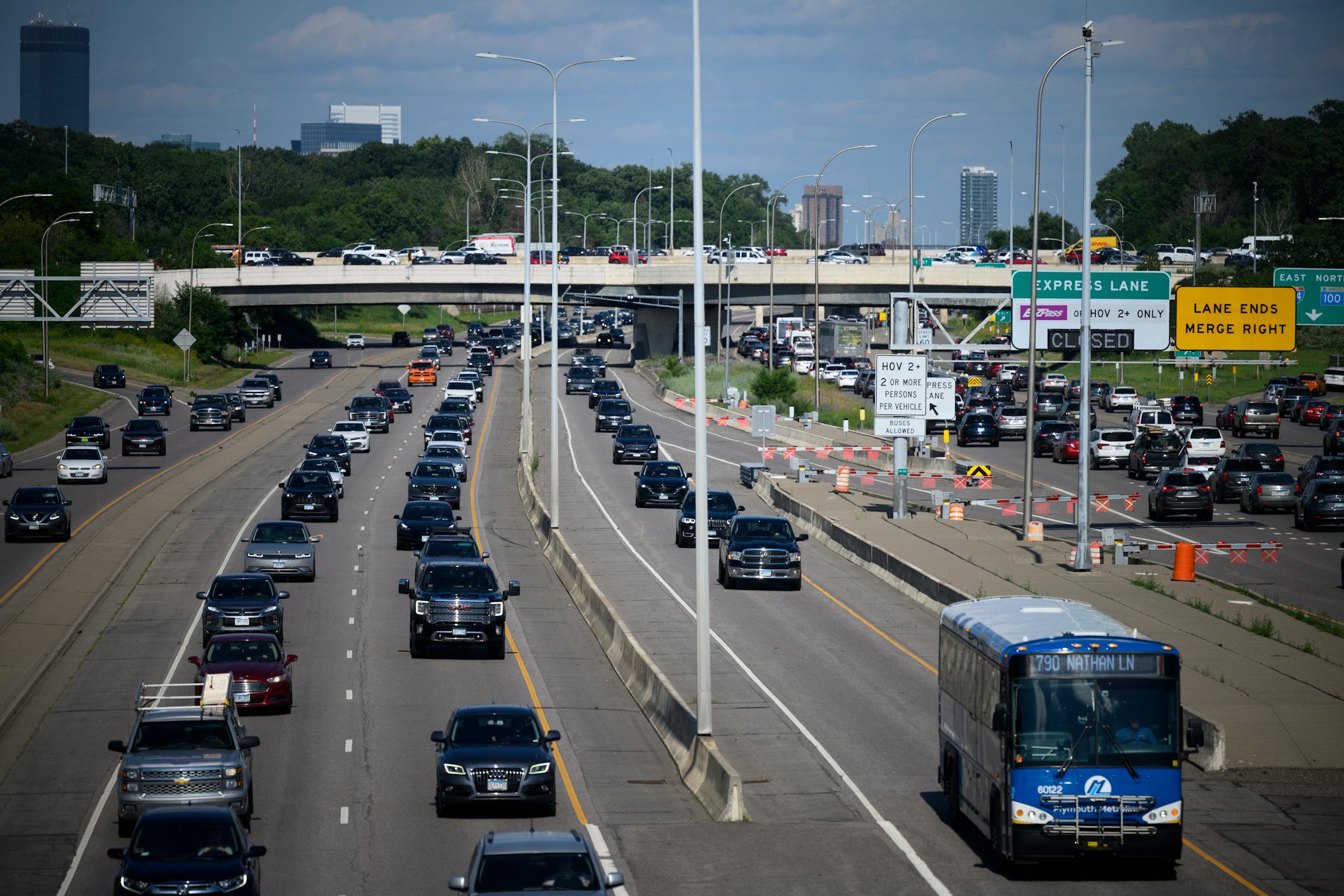
Traffic moves along I-394 West during afternoon rush hour June 26, 2024, in St. Louis Park. (Aaron Lavinsky/The Minnesota Star Tribune)

Opinion editor’s note: Strib Voices publishes a mix of guest commentaries online and in print each day. To contribute, click here.

•••

Distracted driving is a scourge in the Twin Cities. Within the state, distracted driving is one of the “Big 4” primary behaviors behind all vehicle collisions. In the last eight years alone, only speeding has caused more fatal and serious injury crashes. Distracted driving results in a staggering 39% more serious injury crashes statewide than even drunken driving, often viewed as the ultimate danger on the road (25,263 vs. 18,185).

This is not just about the rise of smartphones: Research shows that our built environment enables distracted driving. Urban planners and policymakers share responsibility for these outcomes. We should stop solely blaming drivers and start insisting on road designs that reinforce engagement.

Vehicle crashes are not “accidents.” The word itself, when used to describe traffic incidents, removes the concept of fault. It frames collisions as a kind of inevitability rather than the preventable results of human error that they largely are. The problem is not simply that people drive distracted, it’s that we as a society have made it far too easy to do so.

Before transitioning into urban planning, I spent several years consulting as a transportation operations civil engineer-in-training. I worked with cities, counties and state agencies to evaluate and improve their roadways using approaches such as Transportation System Management and Operations (TSMO) and Intelligent Transportation Systems (ITS). These frameworks aim to maximize existing streets for safety, accessibility and inclusivity of all users.

The uncomfortable truth is that, for generations, civil engineers, urban planners and policymakers often intentionally did the opposite. We designed roadways that prioritized maximum automobile movement, building roads that were forgiving to drivers and hostile to everyone else.

Transportation professionals decades ago certainly could not have foreseen the extent of modern distractions or the rise of the attention economy. Even so, it is not enough to tell drivers now to “just pay attention” or to treat their behaviors as an individual moral failure. It doesn’t change the critical flaw of making roadways that both forgive poor driving behavior and ignore the needs of other users.

Many well-studied changes show that thoughtful street design is key to reversing course. Narrower lanes that slow traffic, adding curb extensions to increase pedestrian access and visibility, and physically separating bike lanes from car traffic are a few examples. Minneapolis has proven this approach works. The city’s Vision Zero investments reduced fatal crashes by 29% in just one year after implementing these changes. In 2025, the National Center for Safe Routes to School awarded Minneapolis the Vision Zero for Youth U.S. Leadership Award for its work with Minneapolis Public Schools to improve safety for children walking and biking.

Even so, progress remains uneven across the Twin Cities. In St. Paul, the busy, high-speed arterial of W. 7th Street is aging and experiences yearly pedestrian deaths. Despite interim fixes, plans to reconstruct the corridor with a dedicated transit lane that would slow speeds and improve access have been abandoned. The contrast between Minneapolis’ Vision Zero success and St. Paul’s stalled W. 7th Street project demonstrates that when cities insist on planning strategies that demand driver attention, lives are saved.

Critics might argue that no amount of design can stop someone from looking at their phone, and there is truth to this. An article in Medium points out the reality: Most behavior is habitual rather than the result of a deliberate choice. Yet this doesn’t excuse us from addressing the surroundings where these behaviors occur. Curb extensions, for example, have been shown to reduce pedestrian/auto impacts as much as 60%, according to Safe Roads USA. This is just one design choice of many that has the power to turn a momentary driver mistake into a near-miss instead of another Big 4 statistic.

Planners already incorporate designs that “nudge” people toward safer choices, such as street trees that visually narrow the roadway. The goal is not to punish drivers, but to make roads less forgiving of distraction by aligning human psychology with physical design. Society accepts layered defenses like seat belts and guardrails because we acknowledge our human fallibility. As planners and policymakers we must embrace the same logic — insist on streets and communities that demand cognitive engagement behind the wheel.

William B. McKenzie is a master of urban and regional planning student at the University of Minnesota’s Humphrey School of Public Affairs.

about the writer

about the writer

William B. McKenzie

More from Commentaries

See More
card image
Alex Kormann/The Minnesota Star Tribune

To me, the run of stories in 2025 has an uncomfortably familiar sound, yet each episode has come and gone with barely a flicker of concern.

card image
card image