

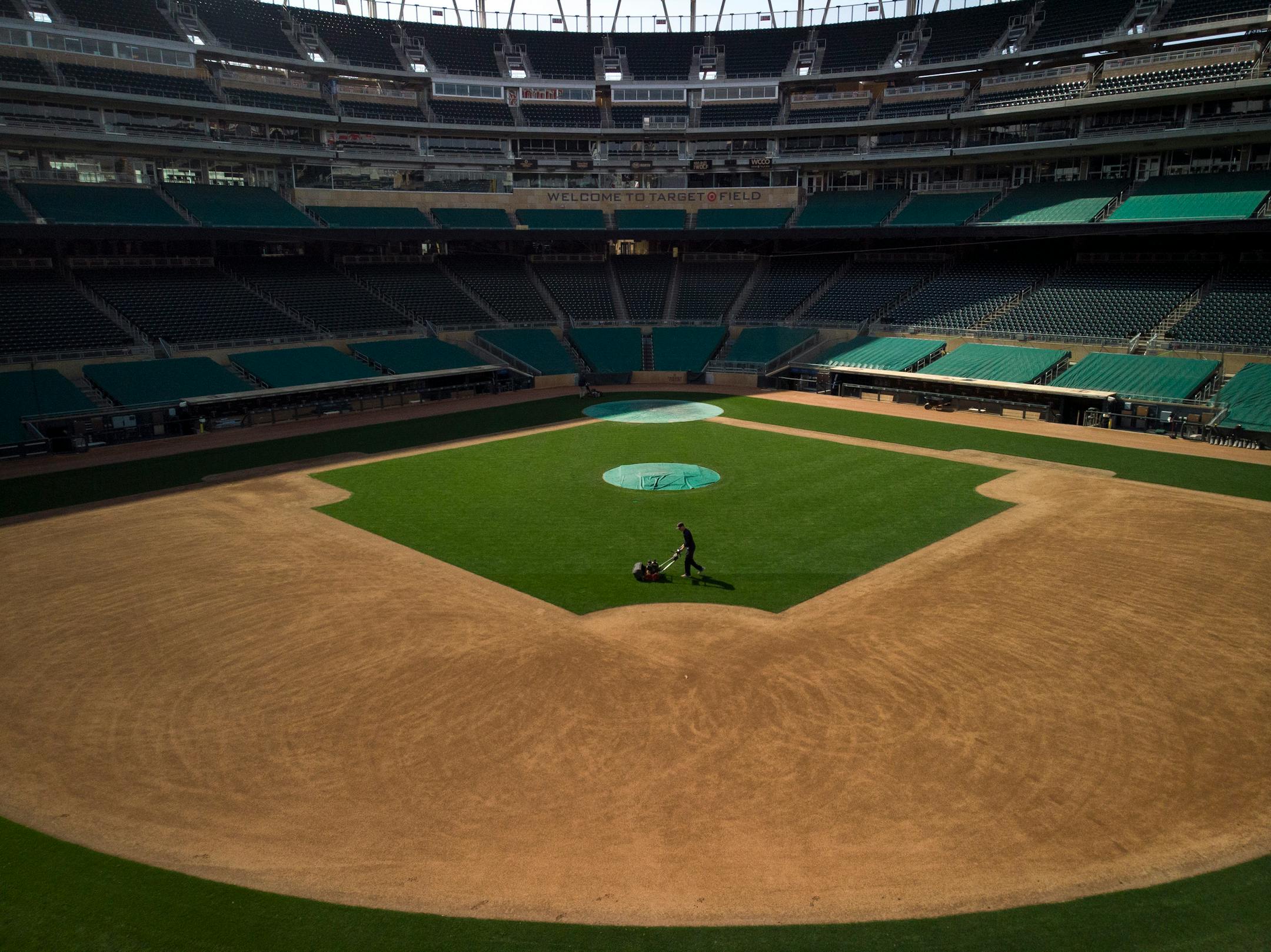
Major League Baseball, unable so far to find any points of agreement with its players about conducting a 2020 season, has reportedly begun considering a worst-case scenario. And the good news is that nuclear option isn't cancellation; it's actually playing regular-season games.
Just not many.
According to a report on ESPN, MLB owners have discussed conceding the players' central point — that agreeing to prorate their salaries on a per-game basis is enough of a financial rollback to allow a season to proceed. The wrinkle: Team owners, who insist they will lose a significant amount of money for every game played without fans in the ballpark, want that season to last "in the neighborhood of 50 regular-season games," according to the report.
That's less than one-third the 162-game length of a normal season, and even less than half of the 110 games the Twins played in the strike-interrupted 1981 season, the shortest in franchise history.
The motivation for such a proposal, which the network said MLB does not yet plan to present to the players, could be to demonstrate how unwilling some owners are to absorb additional losses in this pandemic-ravaged summer, losses that the union disputes would occur. Another ESPN report on Sunday cited MLB sources who say "there is a group of owners perfectly willing to shut down the season, to slash payroll costs and reduce losses."
But it could also be a negotiating ploy designed to hasten the process of compromise, a sign that the sport's executives recognize how little time remains to reach an agreement, organize and hold a training camp, and get on the field before the summer slips away.
MLB Commissioner Rob Manfred has the power, under an agreement the two sides reached shortly after the coronavirus crisis closed training camps, to unilaterally schedule a season of whatever length he chooses, paying players their agreed-upon 1/162nd of their contracted salaries for each game. Reminding players of that option and proposing a two-month season is calculated to add leverage to the owners' position. It also means even the failure to reach a new deal might not completely scuttle a season, as many players and fans fear.
Yet it potentially also turns last week's duel of proposals that headed off in wildly divergent directions — the owners asked for a sliding scale of additional salary cuts, the players suggested playing through October and expanding the playoff field into November and beyond — into a much simpler back-and-forth:


