That lunar eclipse last week seems totally appropriate, considering the eclipse-like rarity that Joe Mauer should experience Tuesday: For one of the few times since 2010, he will face a pitcher with a higher salary than his.
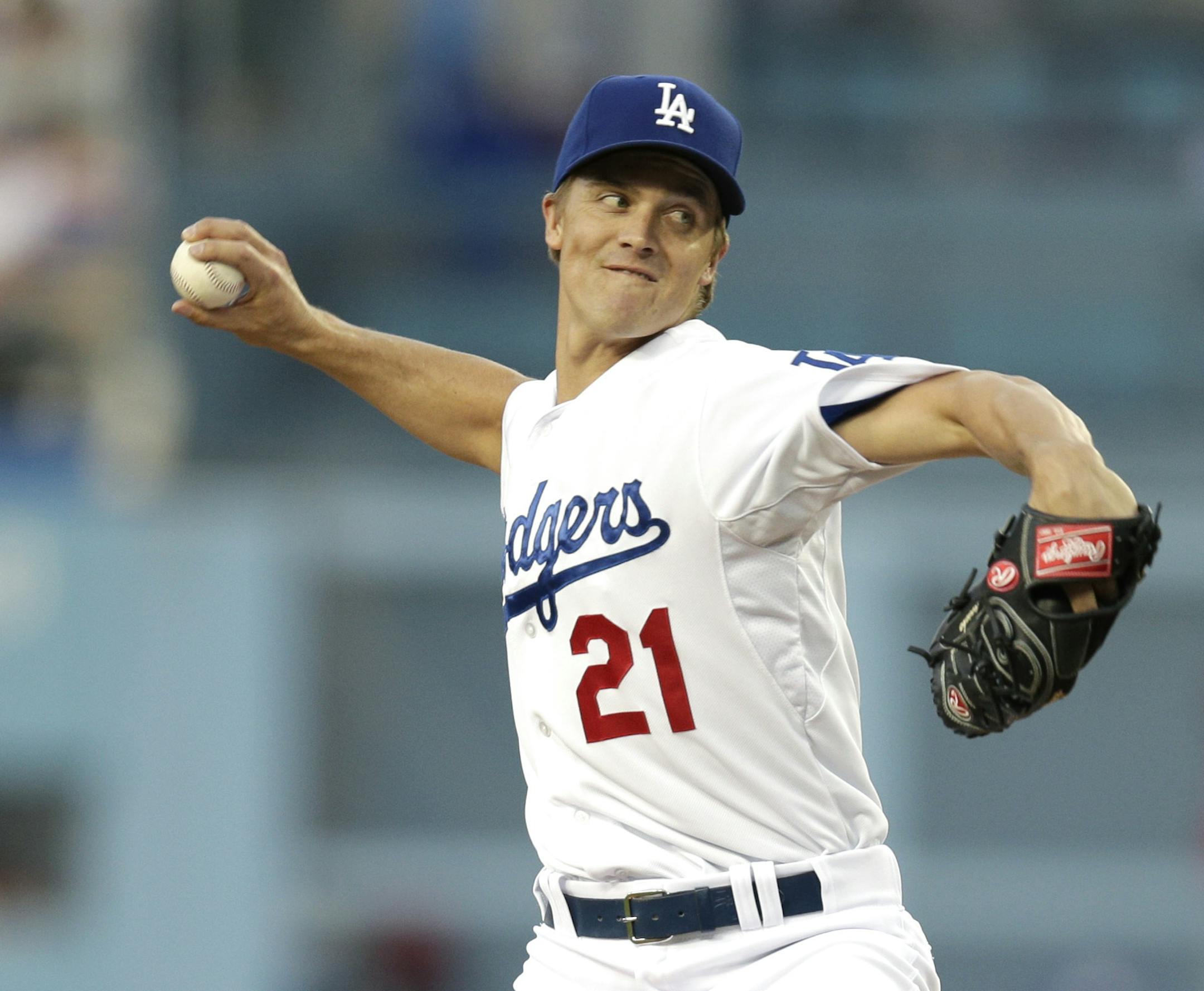
That it should happen against the Dodgers, who pay righthander Zack Greinke $24 million this year (plus a $2 million installment on his signing bonus), is not exactly a surprise. Los Angeles, fueled by baseball's richest TV contract, owns the largest payroll in American sports history: $234 million, according to figures obtained by the Associated Press, a staggering $30 million more than the free-spending Yankees.
That's also more than 2½ times as much as the Twins' $84 million payroll, and the comparisons are remarkable. The Twins might be paying Mauer $23 million per season — not since he faced Philadelphia's Cliff Lee last May has Mauer batted against a higher-salaried pitcher — but among his teammates, only Ricky Nolasco (at $12 million) also makes an eight-figure salary. The Dodgers? They have 10 players earning $10 million or more, including four — Greinke, Carl Crawford, Adrian Gonzalez and Matt Kemp — who top $20 million apiece.
And none of this counts injured ace Clayton Kershaw, whose $4 million salary this year came with an $18 million signing bonus, and escalates to $30 million or more for each of the next six seasons.
"It's a byproduct of our approach to put the best team on the field," Dodgers CEO Stan Kasten told USA Today last month. "There has been criticism inside baseball [for L.A.'s record-setting payroll], but that's OK.
"We're supposed to be contenders every year. We're the Dodgers."
Yes they are, and far from resenting the payroll gap, the Twins benefit from it. See, Los Angeles can afford to hand out all that cash — truthfully, the Dodgers probably could absorb salaries twice that high — because of their new SportsNet LA network, a Dodgers-centric channel that came with an $8.35 billion guarantee over 25 years from Time Warner Cable. That's $334 million in TV revenue per year — the Twins collect, oh, roughly $300 million less this year from Fox Sports North — before they sell a single ticket.
The Dodgers also will pay somewhere in the neighborhood of $14 million under baseball's "competitive balance tax," a device intended to penalize teams for excessive payrolls. But it's barely a blip on L.A.'s balance sheet.

![(left to right) Twin's Ricky Nolasco ptiched to the Royals in early innings.] Minnesota Twins vs Kansas City, Target Field, 4/12/14. Bruce Bisping/Star Tribune bbisping@startribune.com Ricky Nolasco/roster.](https://arc.stimg.co/startribunemedia/QDE7J4JDNNRCCOQXNLEBAUTBMY.jpg?&w=1080)