

Opinion editor’s note: Star Tribune Opinion publishes a mix of national and local commentaries online and in print each day. To contribute, click here.
•••
Minnesota’s abundant wildlife, clean water and rich green forests are some of its greatest assets, and we owe gratitude to the Minnesota Department of Natural Resources (DNR) for stewarding these resources. And yet, there is a looming problem the DNR must overcome to protect resources into the future. Nearly 45% of DNR administered lands — or 2.5 million acres, an area bigger than Yellowstone National Park — are managed to prioritize short-term profits without preparing for climate change.
These lands are held in the Minnesota School Trust. By law, all revenue from minerals, timber and real estate sales on School Trust land is invested in the Permanent School Fund, with interest and dividends from this fund distributed to school districts in Minnesota. In the last 10 years, $327 million has been allocated to Minnesota public schools from the Permanent School Fund. No funds are returned to tribal schools, even though 150,000 acres of highly profitable School Trust land is within reservation boundaries.
By law, School Trust lands must be managed for “long-term revenue” under “sound natural resource conservation and management principles.” As a forest ecologist and Minnesota resident, I’m concerned that the priority for short-term revenue without planning for climate change undermines sound management. Without adjustments to the management of these lands to climate change, I am skeptical the School Trust can support healthy future ecosystems and future generations of students.
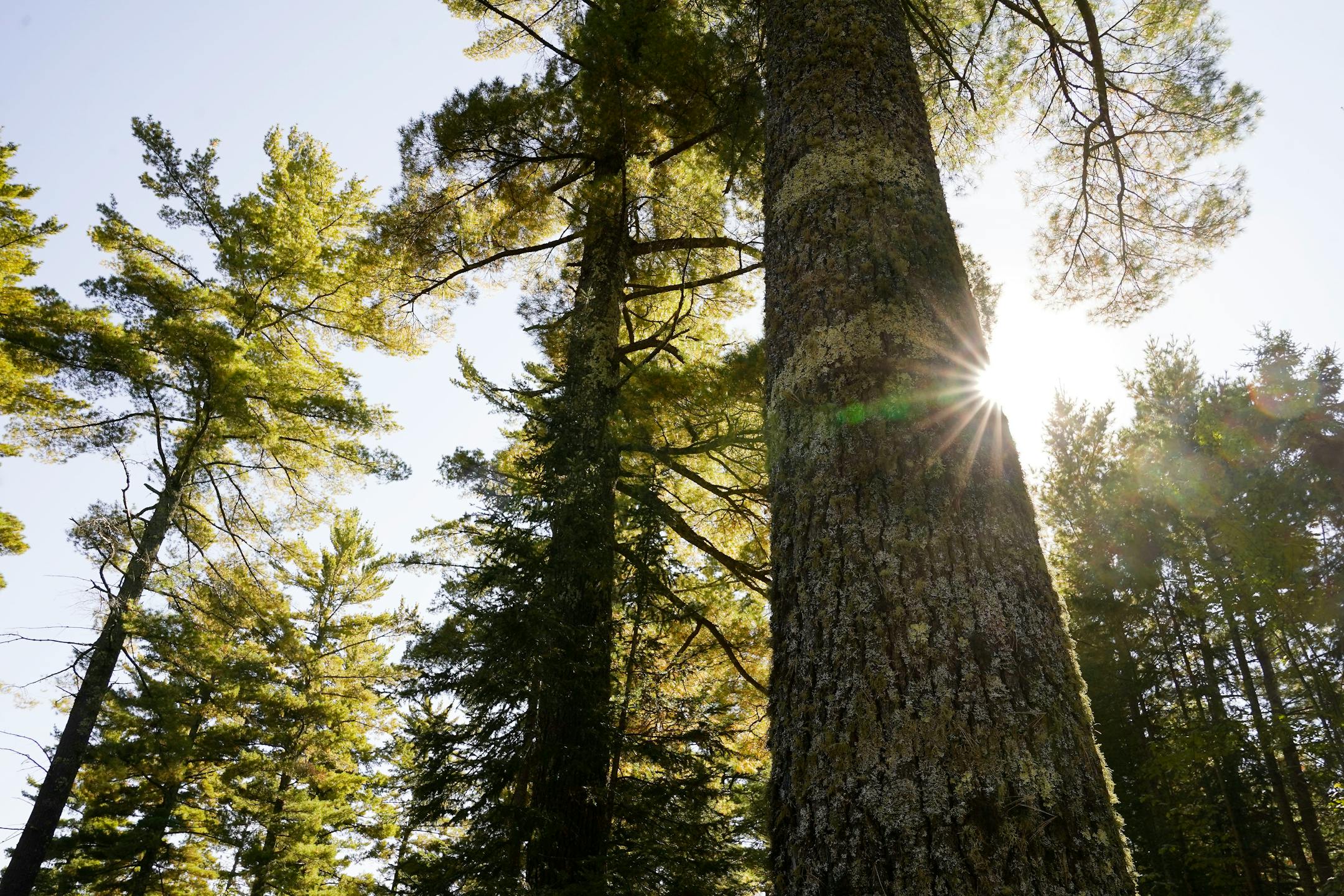
As we experience one of the warmest winters on record, it is worth remembering that climate change is already negatively affecting northern forests. Tree species like aspen, fir and spruce are declining with warming temperatures and also happen to be critical for School Trust revenue. School Trust land management that ignores adapting northern forests to climate change — by increasing plant biodiversity or planting warm-adapted tree species — will undermine future revenue potential and erode forest quality. Instead, vulnerable tree species are planted or grown on School Trust land, even though they cannot tolerate the warmer temperatures that will occur within the tree’s 50- to 60-year life. Further, there are no explicit climate adaptation plans for School Trust forests, and the most recent 25-year School Trust Asset Management Plan has few details about how to actually make School Trust forests climate-adaptive.
This lack of action to adjust management — and improve climate resilience — on School Trust lands is surprising given Gov. Tim Walz’s Climate Action Framework (CAF). The CAF has an entire section of recommendations for improving the climate resilience of working forests. And yet, on School Trust land, the state is not incorporating climate adaptation measures. In contrast, the federal government is meaningfully acting on climate change, as exemplified by the Superior National Forest’s new Forest Assisted Migration Plan that addresses the need for different tree species with a shifting climate. If the state’s forest management decisions are already out of date in their lack of climate adaptation measures, they will fall even further behind in the coming years. The actions we take on School Trust lands now have ecological and financial ramifications for decades to come. Without adaptation action, timber revenue for public schools will be lost with dying or dead forests, and public education will have less financial support within Minnesota.
To this end, Walz and the Legislature should work with the DNR to incorporate the Minnesota Climate Action Framework’s “Natural and Working Lands” recommendations at scale on School Trust lands. In addition, the Office of School Trust Land Management, the DNR’s School Trust administrator and the Legislative Permanent School Fund Commission should regularly consult organizations with deep climate adaptation expertise to guide their management decisions, such as the Great Lakes Indian Fish and Wildlife Commission, the Midwest Climate Adaptation Science Center and the Minnesota Climate Adaptation Partnership. Implementing knowledge from these organizations could vastly improve the health of northern forests in the face of climate change.


