
Opinion | The quieter toll of Gaza’s devastation: A loss of cultural memory

Preserving the stories of others deepens our understanding of what it means to be human.

December 23, 2025 at 7:30PM
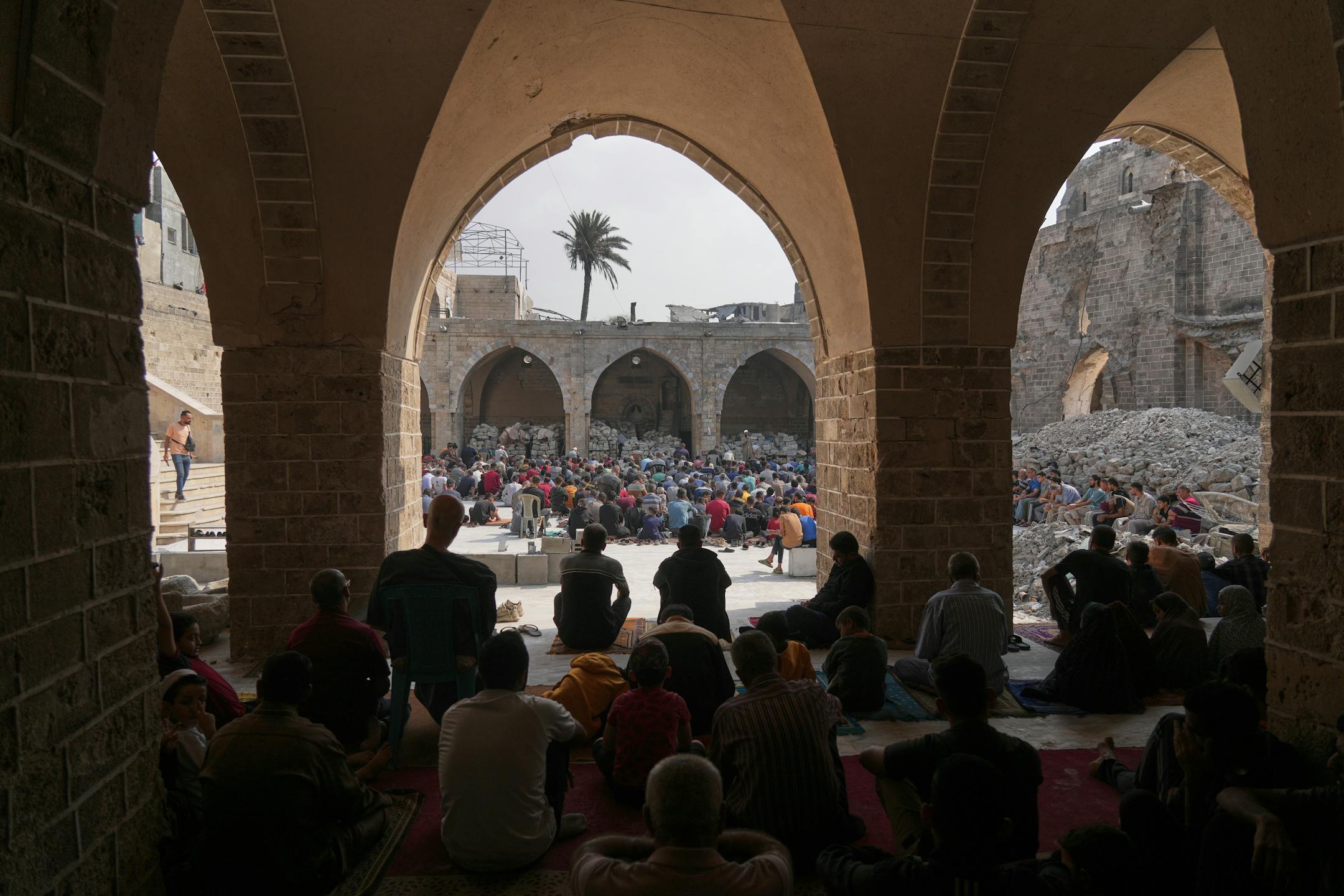
Palestinians attend Friday prayers amid the ruins of the Omari Mosque in Gaza's Old City on Nov. 7: The destruction of the site, writes Columba Andrew Stewart, is a reminder of how quickly centuries of history can disappear. (Jehad Alshrafi/The Associated Press)

Opinion editor’s note: Strib Voices publishes a mix of guest commentaries online and in print each day. To contribute, click here.

•••

As we gather for the holidays, a recent report from ABC News Australia stays with me. It describes the race in Gaza to salvage centuries-old books and manuscripts from beneath the rubble of the Great Omari Mosque, a cultural landmark that once held a 20,000-volume library. The images are heartbreaking: fragments of manuscripts, pages coated in dust and teams working to save what they can.

The human suffering in Gaza is immense, and attention rightfully focuses on that. But alongside the devastation is another loss — quieter but profound: the destruction of cultural memory. When the physical record of a people’s history is obliterated, so is a crucial part of their identity.

For those of us in Minnesota working in Collegeville, where the Hill Museum & Manuscript Library (HMML) is headquartered, this form of loss is familiar. For 60 years, HMML has collaborated with communities around the world to preserve their manuscript heritage when it is endangered — by war, political instability, environmental disaster, or the slow damage of time and limited resources.

In Gaza, our collaboration began in 2017, co-sponsored by the British Library. After training by HMML’s field director in Jerusalem, local librarians and community members digitized manuscripts at the Great Omari Mosque. This work continued until 2023. When the mosque was destroyed later that year, the site where our partners had worked was lost. A second project with a related library was halted by the war, but not before its manuscripts were photographed; only recently have our partners been able to send the images out. Because of these efforts, a portion of Gaza’s manuscript heritage now survives — accessible to scholars, to Gazans themselves wherever they find themselves and to future generations. When conditions allow, we hope to return and support local communities in safeguarding their cultural heritage.

According to the ABC report, salvage teams have recovered part of the mosque’s manuscript collection, along with loose pages and partial bindings. Their work is a testament to resilience. Yet the destruction of the site remains a stark reminder of how fragile cultural memory can be — and how quickly centuries of history can disappear.

Here in Minnesota, we understand the value of memory. We keep stories alive at holiday tables. We cook from recipe cards in the handwriting of grandparents. We tell children where our families came from and which traditions shaped us. These rituals speak to a deeper truth: Memory grounds us and connects us.

Now imagine losing all of that at once — no photographs, no family papers, no school records, no library. For communities experiencing conflict or displacement, the loss is immediate and personal, affecting an entire culture.

We have seen this in Syria, Iraq, Lebanon, Ethiopia and Ukraine — places where conflict or disaster has threatened centuries of cultural heritage. Even amid destruction, we encounter courage: partners risking their safety to protect manuscripts, safeguard digital files and preserve the threads of a community’s story.

This work has taught us a truth that resonates during the holidays: When people safeguard their cultural memory, they safeguard their dignity, their resilience and their future.

What can we do here at home? We can stay informed. We can teach our children to value cultures beyond their own. We can support organizations, locally and globally, that protect cultural heritage. And we can remember that preserving the stories of others deepens our understanding of what it means to be human.

As we move toward a new year, I carry both sorrow for what has been lost and gratitude for those who continue — often against great odds — to preserve the stories that matter. Despite the destruction in Gaza and elsewhere, communities are striving to protect their heritage. HMML stands with them, offering tools, training, collaboration and solidarity grounded in humility and respect. We do not tell their stories; we help them ensure they can.

The holidays are a season of light in a dark time. As we gather with loved ones, may we stand with those whose holidays are marked by loss, whose libraries and homes lie in ruins, and whose memories survive only because someone took care to preserve them.

Because when cultural memory is at risk anywhere, hope must be defended everywhere.

Columba Andrew Stewart is executive director/CEO of Hill Museum & Manuscript Library in Collegeville, Minn.

about the writer

about the writer

Columba Andrew Stewart

More from Commentaries

See More
card image
Jehad Alshrafi/The Associated Press

Preserving the stories of others deepens our understanding of what it means to be human.

card image
The family of Harper Moyski, far right, poses with their Christmas tree at the Annunciation tree lot in December 2024.