

Opinion editor’s note: Strib Voices publishes a mix of guest commentaries online and in print each day. To contribute, click here.
•••
On Dec. 6, in response to a City Council discussion about whether Minneapolis should take responsibility for sidewalk shoveling, the mayor’s office said it had worked extensively with Public Works and concluded that assuming this responsibility would take crews away from plowing streets, alleyways and bike lanes.
That framing suggests an unavoidable tradeoff. In reality, it overlooks how people actually move through the city — and who is left out when sidewalks and intersections are treated as secondary infrastructure.
Walking is not optional. It is how people reach buses and trains, cross neighborhoods, access businesses and age in place. Sidewalks and curb ramps form the foundation of transit use and pedestrian safety. When they are impassable, transit becomes inaccessible in practice, regardless of how well streets or bike lanes are maintained.
Minneapolis has invested heavily in curb ramps and pedestrian infrastructure, much of it funded through federal programs and governed by the Americans with Disabilities Act (ADA). Under Title II of the ADA, cities are required to ensure that facilities in the public right-of-way — including curb ramps — remain accessible. Yet after snow emergencies, these ramps are routinely buried under snowbanks left by city plows.
At that point, accessibility exists only on paper.
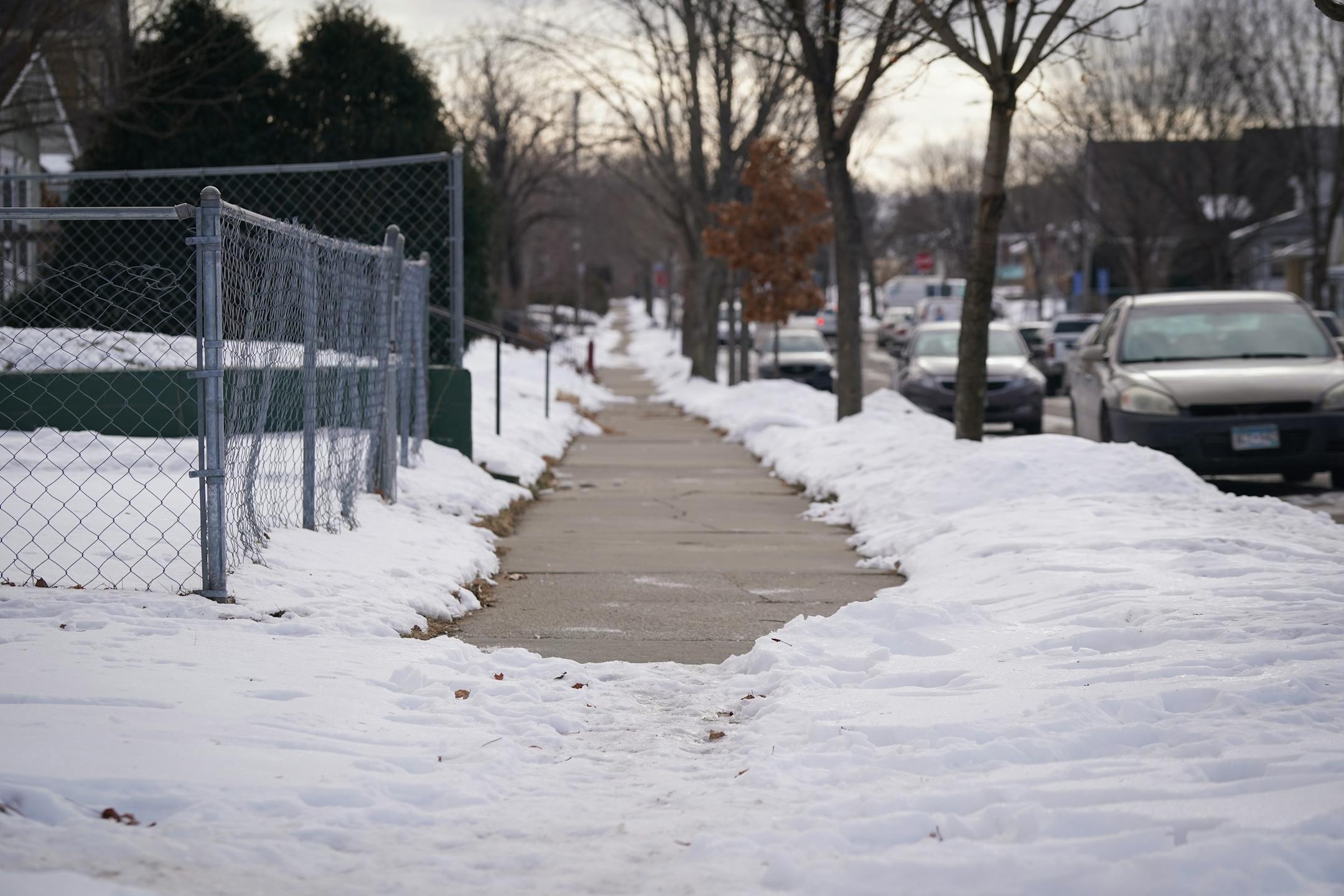
The city currently places responsibility for clearing sidewalks and corner ramps on adjacent property owners, as outlined in Minneapolis ordinances governing sidewalk maintenance. In practice, this creates uneven and inequitable outcomes. Snowplows deposit dense, compacted snow at corners — precisely where curb ramps are located. Many residents, particularly elderly homeowners or those with disabilities, simply cannot remove it. The people who most need accessible crossings are the ones most affected when those crossings are blocked.


