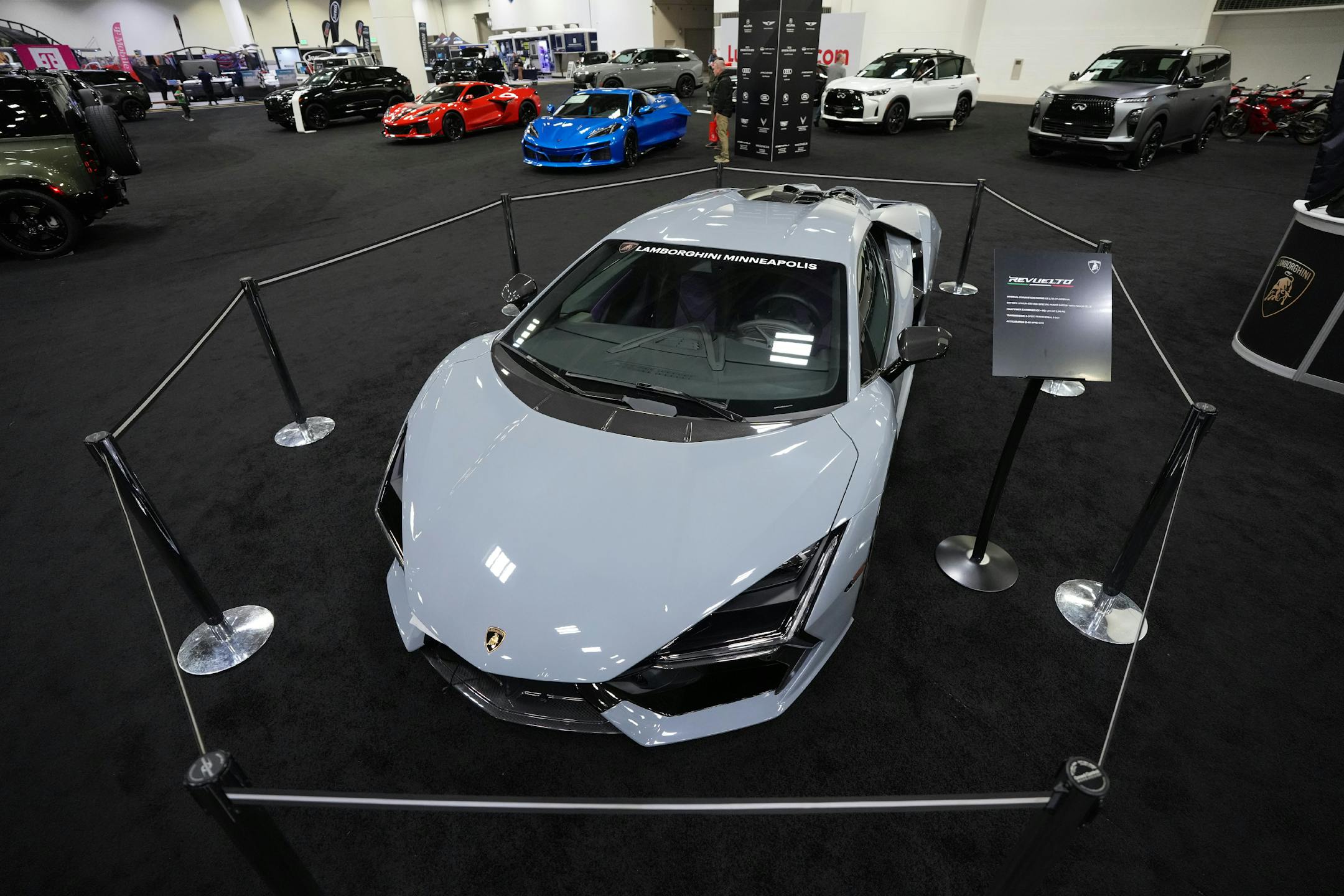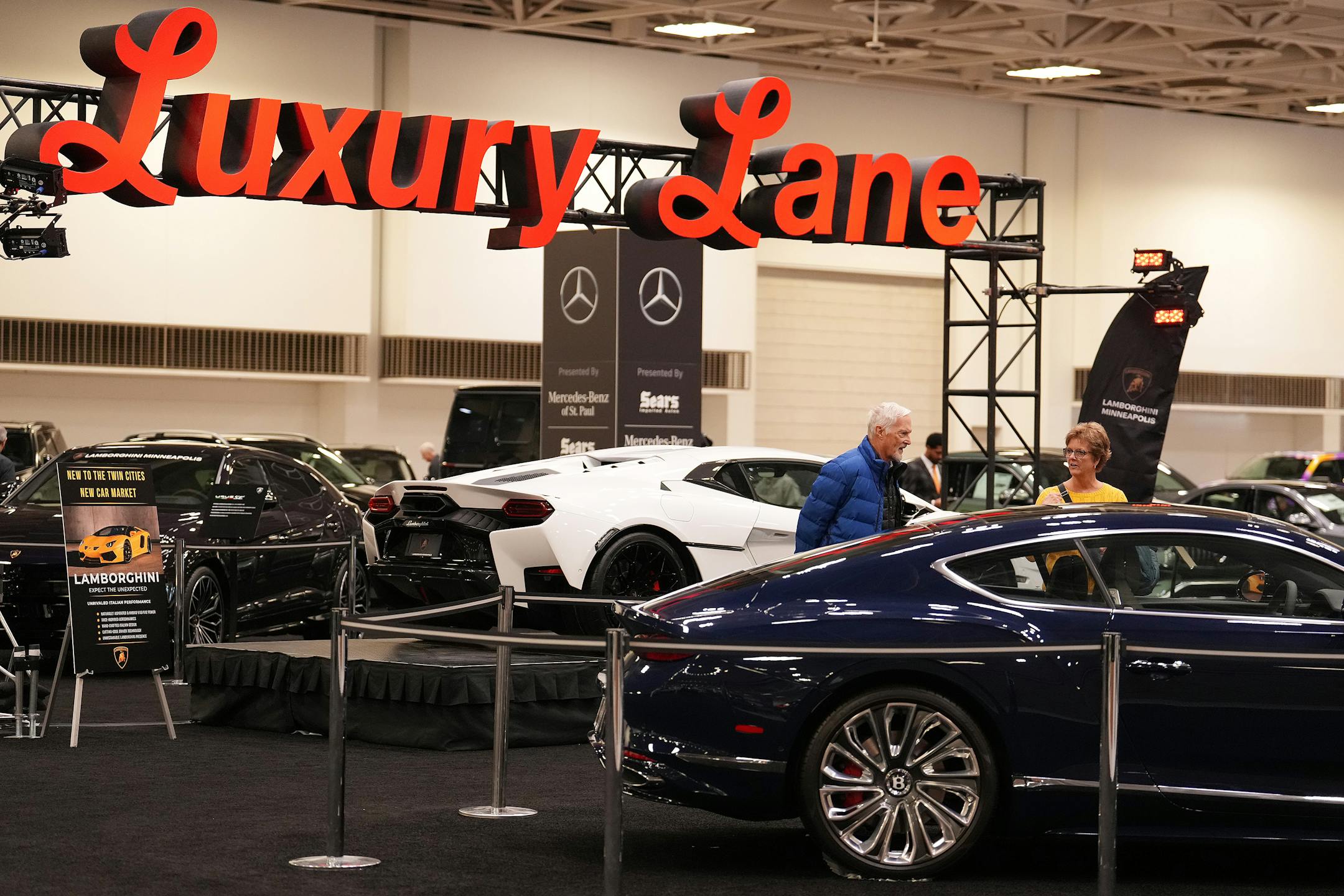
At the Twin Cities Auto show, Luxury Lane is getting longer.
Packed with the latest and most expensive models this year, the exhibit features showpieces only affordable for the mega-rich — like an $860,000 Lamborghini— plus more modestly priced but still-expensive imports like the Land Rover and Genesis.
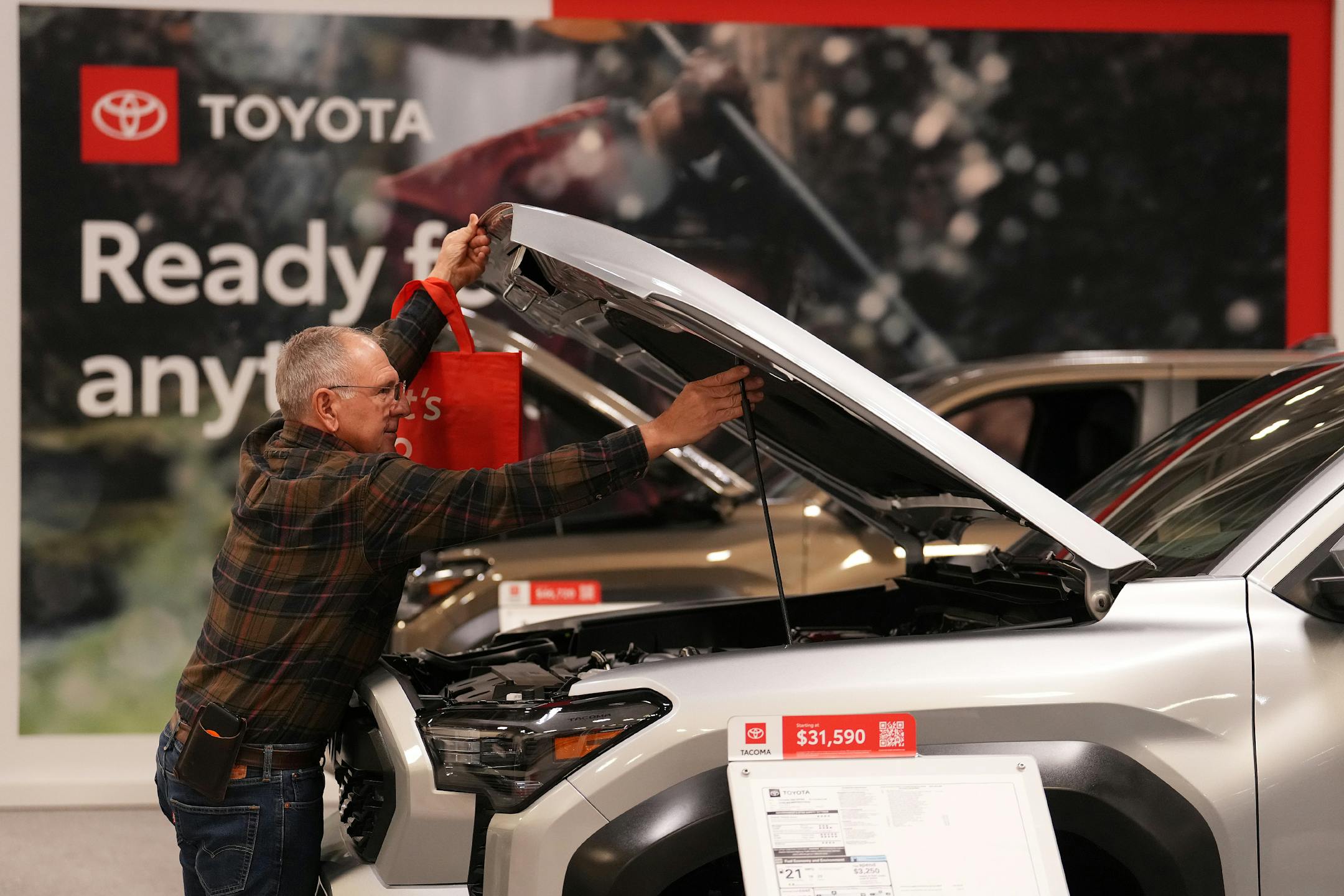
It’s been a big draw this year, along with a new lines of Jeeps and pickup trucks, some of which carry price tags as high as a luxury sedan. Another higher-end addition to the show is a popular new trend called “overloading,” where trucks are fitted with tents for outdoor adventures.
“The floor kind of reflects the market in a lot of ways,” said Scott Lambert, president of the Minnesota Auto Dealers Association.
Pricier models continue to be a driver of new auto sales in the U.S. The new buyer market nationally has become increasingly reliant on higher-income earners as the sticker price of new vehicles continues to tick up and affordable models have become harder to find.
A December analysis from Cox Automotive found the share of new car sales to households earning under $75,000 per year dropped 30% since 2019. During the same time, households earning up to $150,000 a year fell 7%, while those making above $150,000 rose 45%.
As the average new car price has crept up near $50,000, historic tariffs threatened to push new car prices even higher last year. Auto manufacturers shielded consumers from those increased costs, though that may not last.
In October, Michigan-based analyst firm Anderson Economic Group estimated a $10.6 billion impact to U.S. automakers for the full year, much of which automakers absorbed. Industry analysts, however, expect more of the tariff expense may pass down to consumers in 2026. (The U.S. Supreme Court may rule on the legality of the tariffs next week.)