
Minnesota’s climate lawsuit against the oil industry survives latest challenge

A state appeals court let the case move forward, but it could be years before a trial.

The Minnesota Star Tribune
January 28, 2026 at 11:53PM
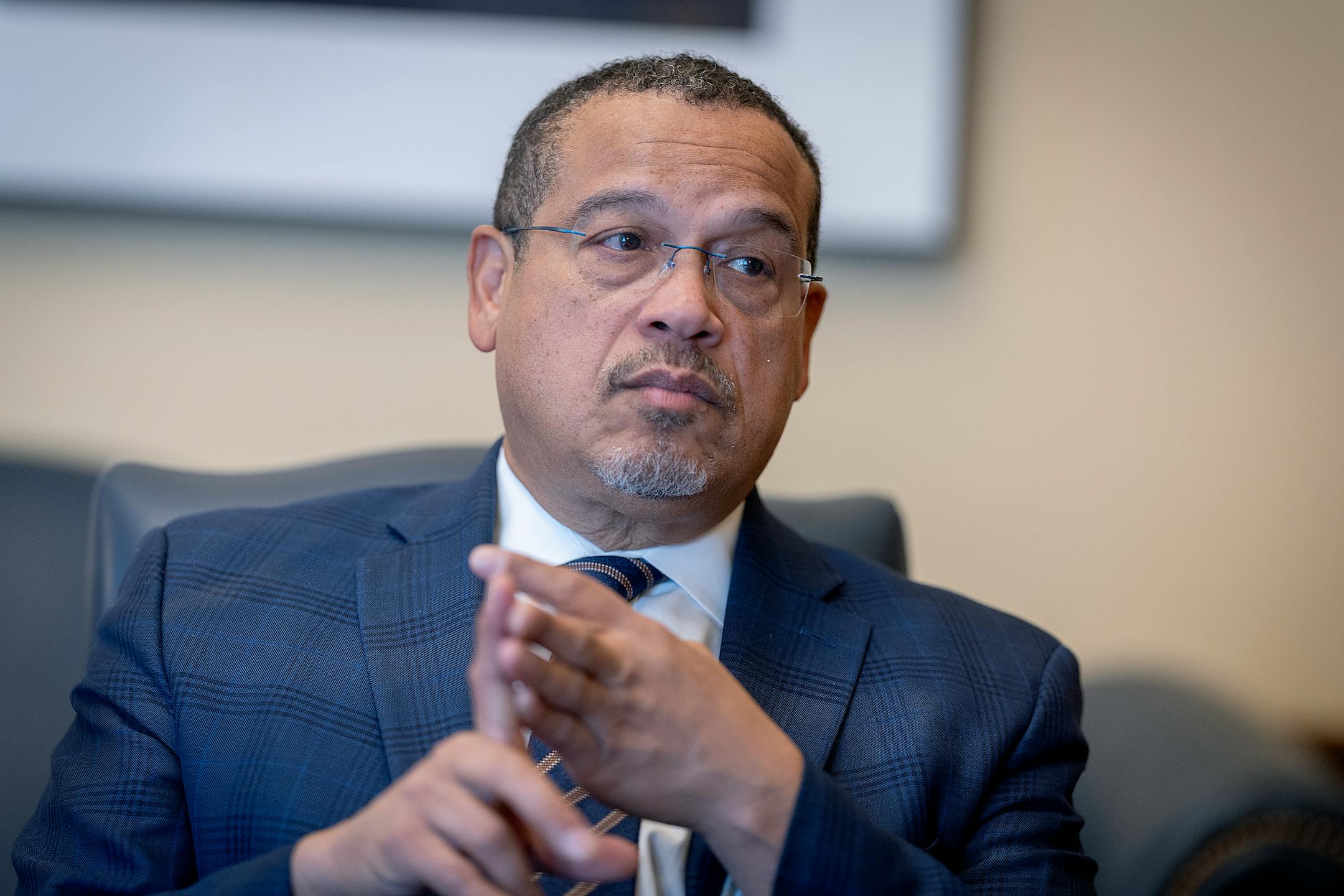
Minnesota Attorney General Keith Ellison filed a lawsuit against Exxon Mobil, Koch Industries and the American Petroleum Institute in 2020, alleging the companies misled the public about how their products contribute to climate change. A state appellate court ruled the case could move forward this week. (Elizabeth Flores/The Minnesota Star Tribune)

A lawsuit from the state of Minnesota that aims to hold the oil industry accountable for allegedly misleading the public about climate change can move forward, a state appeals court ruled Monday. The ruling inches the case closer to trial after nearly six years of legal challenges.

The decision affirms a lower court’s ruling, denying a motion by Exxon Mobil, Koch Industries and the American Petroleum Institute to throw the case out. The case now heads back to the lower court to begin the discovery process if no other attempts to dismiss it are filed.

The three-judge panel rejected the oil companies’ arguments that the case lacked jurisdiction in Minnesota, violated federal law that prohibits discrimination between in-state and out-of-state businesses, and broke Minnesota’s anti-SLAPP law.

SLAPPs, short for strategic lawsuits against public participation, are defined by the state as lawsuits with the express intent to harass or interfere with a person’s constitutional rights, such as free speech.

Minnesota’s suit, filed in 2020, is among dozens of pending cases filed by cities, counties and states that allege oil companies misled the public by hiding and downplaying evidence that burning fossil fuels heats the planet. Research shows that extreme weather, exacerbated by rising global temperatures, has caused more than $3 trillion in damage across the United States since 1980.

The suits, if successful, could have broad ramifications, including forcing oil companies to pay states billions of dollars in damages and requiring warning labels on petroleum products to inform consumers about their connection to climate change.

But attorneys familiar with the cases say it could be years before any of them make it to trial. Minnesota’s lawsuit, for example, has been tied up for years over peripheral issues such as whether it should be heard in a federal or state court.

“It’s good news for the state, but too early to pop the champagne corks,” said Michael Gerrard, founding director of Columbia Law School’s Sabin Center for Climate Change Law, when asked about the Jan. 26 decision.

The ruling comes as the Trump administration claws back billions of dollars in federal climate spending and pulls the U.S. out of the Paris Climate Agreement for the second time, making it the only country to leave the international treaty that aims to limit global warming to 2 degrees Celsius.

Outside questions of jurisdiction, Minnesota’s lawsuit faces other legal challenges as well. Those include whether state courts have the authority to issue decisions that could have broad ramifications on national environmental policy. Oil companies have argued that the lawsuits amount to climate policy that would be written by judges rather than lawmakers.

In a statement to the Minnesota Star Tribune, American Petroleum Institute General Counsel Ryan Meyers called the lawsuits “baseless” and “a coordinated campaign” against the fossil fuel industry by Democrat-led states. “We continue to believe that climate policy belongs in Congress, not a patchwork of courtrooms,” Meyers said.

The climate lawsuits aren’t novel. Many of them, including Minnesota’s, are adopting a legal strategy used by states to successfully sue tobacco companies in the 1990s. Those lawsuits ultimately forced tobacco companies to pay states billions of dollars and add labels to cigarette packs, warning that smoking can cause lung cancer.

Roberta Walburn, who helped file Minnesota’s lawsuit against tobacco companies, said there are many similarities between the tobacco suits and the ones facing oil companies today. For example, she said, both accused the companies of withholding information that otherwise might convince consumers to avoid using their products.

Gerrard said that will likely be a key issue addressed in the climate lawsuits, should they finally make it to trial: “If there was a sticker on every gasoline pump saying, ‘Caution, if you fill up your tank, you contribute three tons of carbon dioxide to the atmosphere,’ would anybody have not filled up their tank?”

That question likely won’t be answered by the courts anytime soon. But Gerrard said that timetable will become a bit more clear next month, when the U.S Supreme Court is expected to decide whether to hear a similar case filed by the city and county of Boulder, Colo., against Suncor and other oil companies.

If the high court does hear the case, and it rules in favor of the oil companies, Gerrard said, Minnesota’s lawsuit could be in trouble. The court could also reject the case, likely leading to appeals that could take years. Or it could take the case and rule in favor of the Boulder government, potentially setting the stage for Minnesota’s lawsuit to succeed.

about the writer

about the writer

Kristoffer Tigue

Reporter

Kristoffer Tigue is a reporter for the Minnesota Star Tribune.

See Moreicon

More from Politics

See More
card image
Aaron Lavinsky/The Minnesota Star Tribune

Video shows Pretti being tackled by officers after he flipped the middle finger to a vehicle carrying federal agents. An eyewitness said Pretti kicked a taillight of agents’ vehicle.

card image
card image