
Minnesota’s birding mecca expands reach with new tech

A device installed at Sax-Zim Bog delivers bird songs to followers in real time. Others to come will aid conservation efforts.

The Minnesota Star Tribune
January 10, 2026 at 11:00AM
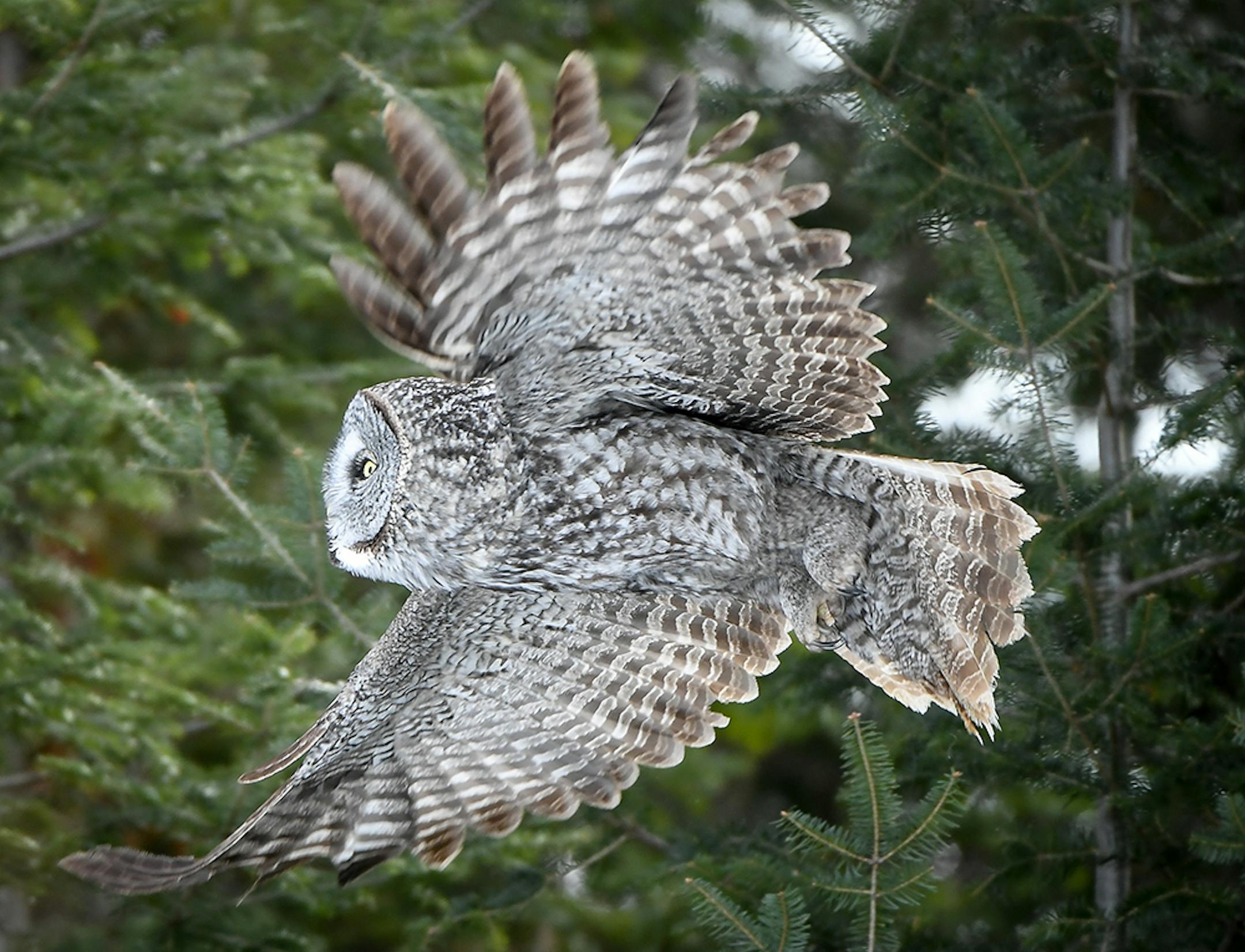
A great grey owl hunted for food Feb. 16, 2018, in the Sax-Zim Bog.
In February of 2018, a great grey owl was spotted hunting for food in the Sax-Zim Bog (Aaron Lavinsky/The Minnesota Star Tribune)

Year to year, birders document what they see perching or passing through northeast Minnesota’s Sax-Zim Bog.

Now, what’s heard at the popular birding destination might give an even clearer picture of the winged life drawn to its boreal bog landscape.

The Friends of Sax-Zim Bog has set up a listening device at its welcome center — the first of many similar types to be installed this year around the bog’s 25,000 acres — that captures bird song and calls 24 hours a day, seven days a week. The audio is made available at an online listening station on the BirdWeather app.

Group volunteer naturalist Rich Hoeg set up the unit, called a BirdNET-Pi, in advance of the welcome center’s winter opening in December.

The presence of northern owls alone makes the bog, located about 50 minutes northwest of Duluth, a must-visit this time of year. The recordings could inspire even more interest, with the public tuning in online or even visiting the bog timed to a sought-after birds’ vocals, the Duluth resident said.

Already in recent days, the presence of a species that Hoeg said was “100% absent” last winter has been heard. The high chirp of pine grosbeaks, whose males are known for their pinkish-red coloring, were picked up, among other species.

“Now, with these listening devices, we can start to see what is happening,” Hoeg added.

This week, 122 bird vocalizations were detected over a 24-hour period. Nine species were heard, including common redpolls, black-capped chickadees, a barred owl and a gold-crowned kinglet, a tiny songbird that is chickadee-like for its ability to survive extreme cold.

Audio recording devices that present a real-time accounting of bird songs and calls are regarded as a valuable advancement for bird science and conservation, too.

“Bioacoustics research and technology continue to improve rapidly and has opened our ears to new ways to quantify biodiversity,” said Marissa Ahlering, the Nature Conservancy’s science director for Minnesota and North and South Dakota.

A BirdNET-Pi audio recording device. (Photo: Courtesy of Rich Hoeg)

Friends volunteers will set up 20 or more recording devices around the bog this spring and summer, said group executive director Sparky Stensaas. The group is collaborating with the Owl Research Institute in Montana, which is focused on great gray owls.

The recording units reflect the varied landscape of birding audio technology. Among the different devices are Owl Sense units, which run on batteries and store recordings on SD cards that volunteers will collect for analysis. The hope is the data will provide a deeper knowledge about great grays’ nesting, habitat and behavior, Stensaas said, but he expects to learn more about songbirds, too.

“This will be important research for us, because we are trying to establish baseline data of breeding birds,” he said. “Birders come to the bog to see winter residents, but as far as bird populations go, this is a breeding habitat.”

All these recording devices use a database of millions of birdsongs and calls from the Cornell Lab Ornithology, called BirdNET. Artificial intelligence software trained on those bird vocalizations analyzes the data and identifies the species.

BirdWeather is a hub that harnesses what is picked up. Creator Tim Clark describes it as a “living library of bird vocalizations.”

Similar to the way that the Cornell Lab’s popular eBird app allows birders to share and track sightings, BirdWeather lets the public listen to bird calls from around the world.

Those recordings are captured on 7,200 “stations,” which are plotted on an interactive online map. All told, there were more than 27 million detections across 2,400 species on BirdWeather in recent days, Clark said. “It’s continuous monitoring,” he said.

BirdWeather has attracted the interest of researchers. A pair studying the effect of light pollution on bird activity used data from highly lit areas where devices recorded millions of BirdWeather vocalizations from more than 500 species.

View post on Instagram
 

The researchers found that light pollution appeared to upset the birds’ circadian rhythms. Exposed birds were vocal for nearly an hour longer than normal, especially those with large eyes and open nests.

Back at the bog, Stensaas said, audio recordings could shorten the time and decrease the number of volunteers needed for human-run bird counts. Or help answer questions about the whereabouts and health of specific bog visitors, such as the Connecticut warbler.

The species’ population is in steep decline owing partly to habitat loss, according to the National Audubon Society.

The warblers arrive in May and June but are elusive and seem less frequent, Stensaas said. But are they? Stensaas has wondered and said that recording devices could, for example, be set up deep in black spruce-tamarack boggy areas favored by the warbler for nesting.

The effort would build on past research by the Smithsonian Institution and, closer to home, the Natural Resources Research Institute at the University of Minnesota Duluth.

“The technology is kind of taking off now,” he added. “It’s exciting.”

Ahlering, at The Nature Conservancy, said the rapid improvement of bioacoustic technology already is helping scientists know more about bird communities, like those that rely on Sax-Zim Bog and other Minnesota habitats.

“This knowledge can help us make better decisions on how to promote bird populations at particular locations,” she added, “and it also helps us measure conservation success.”

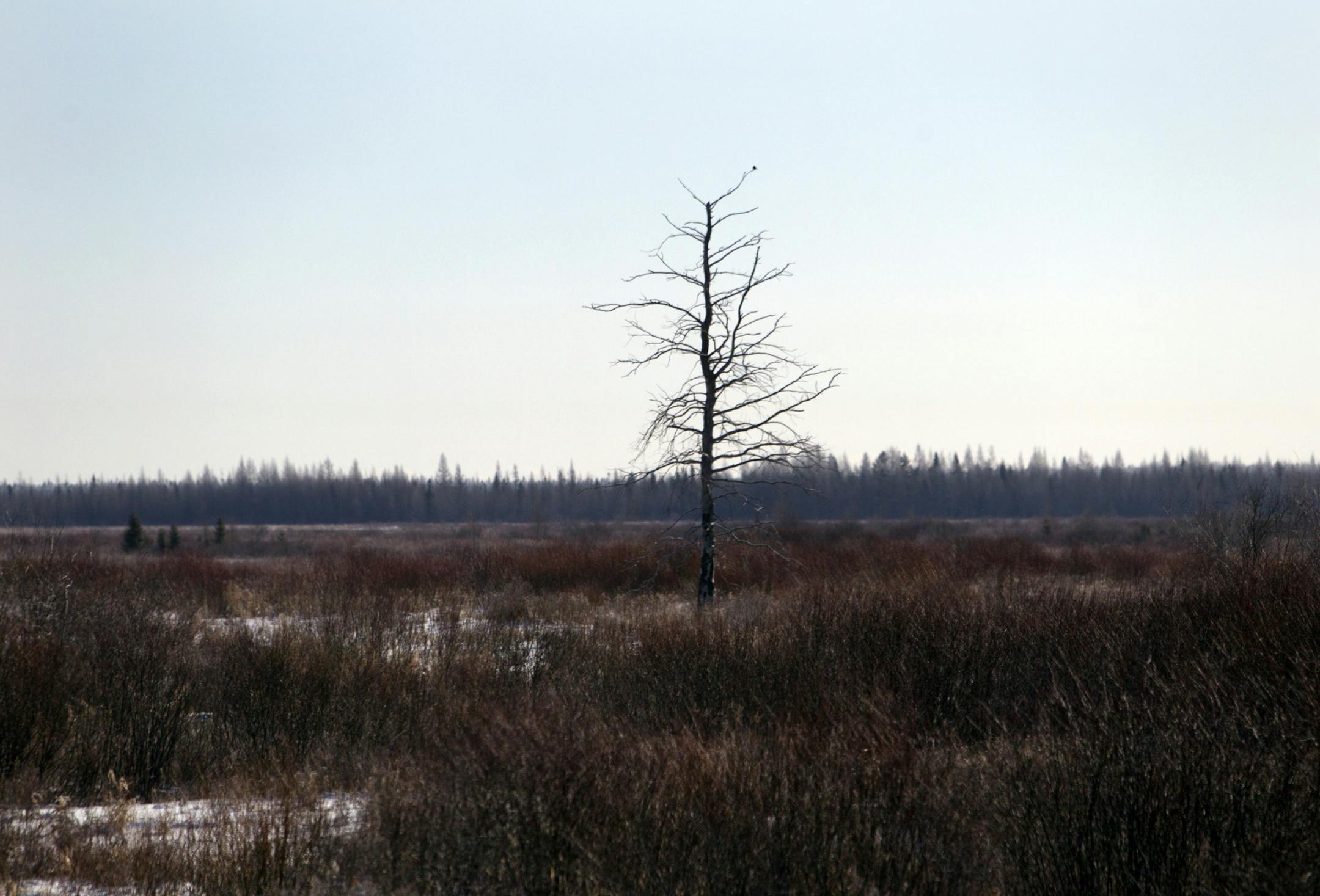
A lone grey jay perched in a barren tree in the brown, drab winter landscape of Sax-Zim Bog during the Sax-Zim Winter Birding Festival Saturday, Feb. 16, 2013, in Meadowlands, MN.
Look closely and you may be able to spot a lone jay perched high in a barren tree in the Sax-Zim Bog of northeastern Minnesota. (Star Tribune file/The Minnesota Star Tribune)
about the writer

about the writer

Bob Timmons

Outdoors reporter

Bob Timmons covers news across Minnesota's outdoors, from natural resources to recreation to wildlife.

See Moreicon

More from Outdoors

See More
A great grey owl hunted for food Feb. 16, 2018, in the Sax-Zim Bog.
Aaron Lavinsky/The Minnesota Star Tribune

A device installed at Sax-Zim Bog delivers bird songs to followers in real time. Others to come will aid conservation efforts.