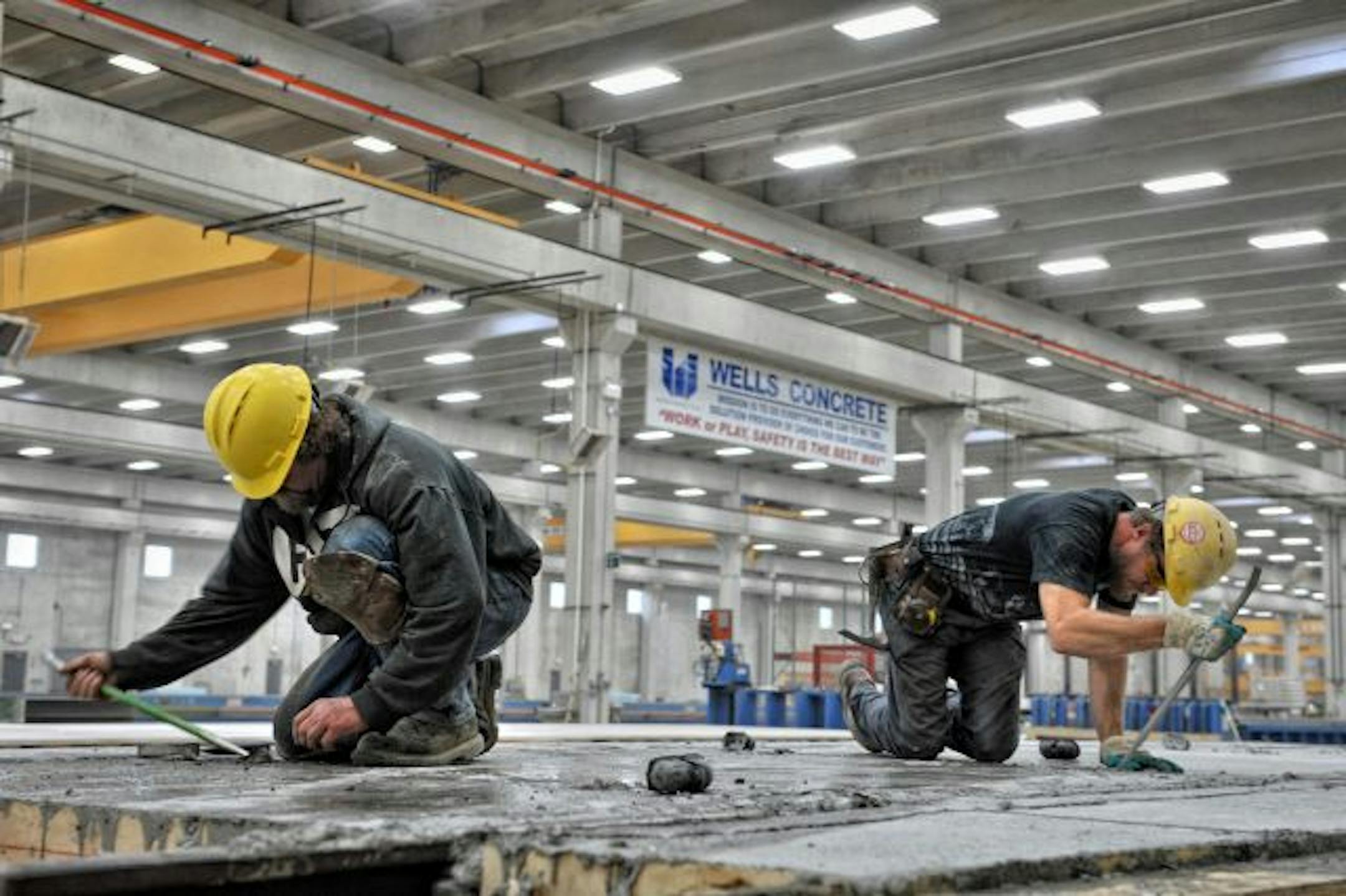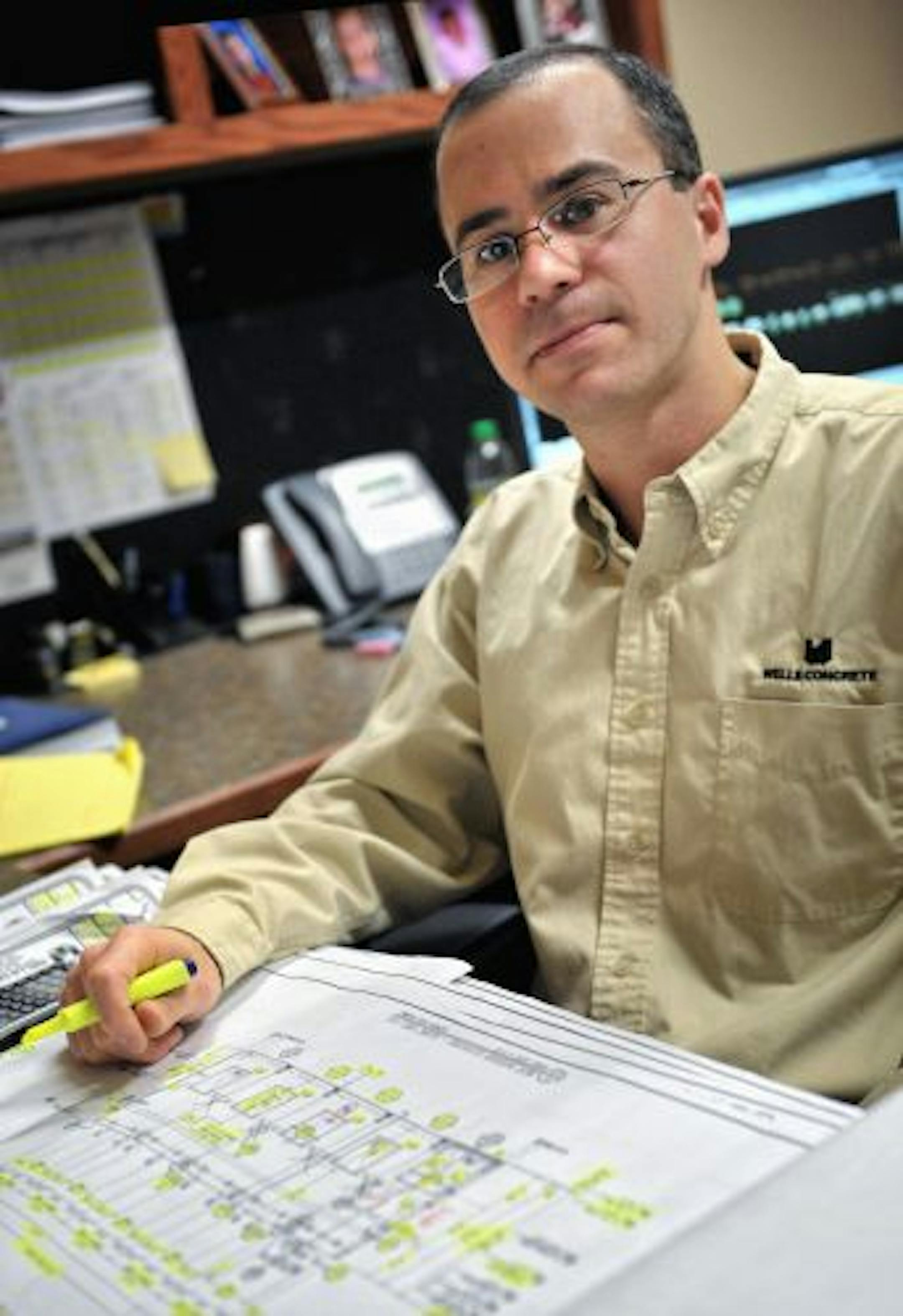
Last spring, construction draftsman Travis Becker was laid off from Precast Detailing in Elk River. But the father of three was soon hired as a project coordinator by Wells Concrete, which just completed its new plant in Albany, Minn., and is enjoying a renaissance after a difficult 2008 and 2009.
"I just can't believe that everything worked out the way it did. It's amazing," Becker said. "I am one of the few success stories these days. I got lucky. I got really lucky."
While October's national unemployment rate spiked to 10.2 percent -- the highest in 26 years -- the dismal recession seems to be ebbing. Becker is one of the thousands of Minnesotans slowly trickling back into daily work after devastating job losses. The state reports October's unemployment numbers Thursday, and officials expect that the uptick in the national unemployment rate portends a similar rise locally, according to Kirsten Morell, a spokeswoman at the state Department of Employment and Economic Development (DEED). Discouraged workers are likely to hear about the pending economic recovery and toddle back into the job hunt, Morell said.
But companies including Ecolab, 3M, Best Buy, Pier One, Wells Concrete and temp agencies report that they are hiring again after months of deep jobs cuts. Some manufacturers are calling workers back to rebuild inventories. And some construction outfits such as Wells are forgoing profit and shaving prices to secure new orders and retain trained workers.
The situation has economists and job-seekers hoping that, by mid-2010, the "job churn" will begin to favor applicants, countering the relentless stream of terminations that have marked the worst recession in 70 years.
Despite ups, a mixed picture
"I hear anecdotally all the time that some businesses are doing just fine and hiring even during this downturn," Minneapolis Federal Reserve Bank economist Toby Madden said. But he acknowledges that, overall, the picture is "mixed."
Many companies ran their inventory levels so low that they desperately need to increase production just to satisfy customer demand, Madden said. As a result, some have to rehire workers, but it's not yet widespread, he said.