

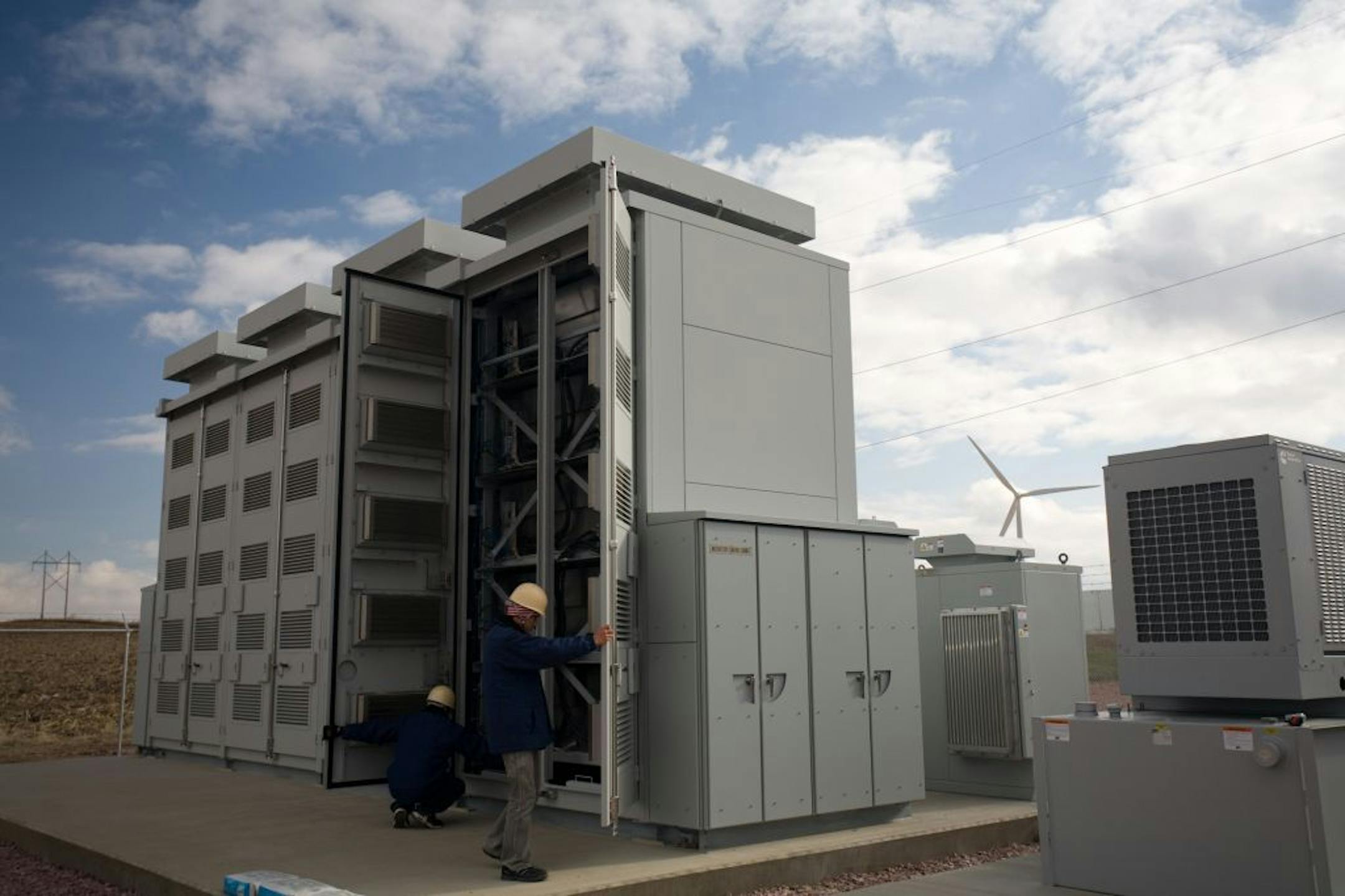
The only battery in Minnesota large enough to store electricity from wind turbines is going back into operation after a 15-month shutdown and overhaul to reduce the risk of fire.
Xcel Energy Inc. installed the $4.7 million battery in 2008 next to a Luverne, Minn., wind farm and operated it safely for more than two years. The sodium-sulfur battery was shut down in October 2011 on the advice of its Japanese manufacturer after a similar unit caught fire there.
Now, the Minneapolis-based utility says, the Luverne battery has been rebuilt by manufacturer NGK Insulators of Nagoya and is likely to be back in service by February.
"It is a brand-new battery at this point," Albert Choi, Xcel's Denver-based manager of next-generation research, said during an interview.
The one-million-watt battery can store enough electricity to provide power to 500 homes for 7.2 hours. Researchers who analyzed output of the "Wind-to-Battery Project" in 2009-11 found that it successfully stored electricity and released it as needed.
"It wasn't like we had problems," added Mark Willers, CEO of MinWind III, which owns the adjacent wind farm and substation and sells the output to Xcel. "It ran perfectly."
Utilities like Xcel, which has the most wind power on its system of any U.S. utility, are looking at energy storage because wind farms often generate power at night and at other times when demand is low. Pike Research of Boulder, Colo., estimates the world market for grid storage, including batteries, could exceed $30 billion a year by 2022.
When the Luverne unit began operating in 2009, it was the nation's largest wind-farm battery. On Wednesday, Duke Energy said a new, 36-megawatt system is storing power at its Notrees Windpower Project in Texas, making it the nation's largest wind farm battery. The project received a $22 million U.S. Energy Department grant that the Charlotte, N.C.-based power company matched.


