
Analysis: What should new Twins owners make of the fire sale?

Whether it be starting from scratch with a barren roster or having a star to build around and sell tickets, there are two trains of thought when a new owner comes in.

Columnist Icon
The Minnesota Star Tribune
August 5, 2025 at 10:00AM
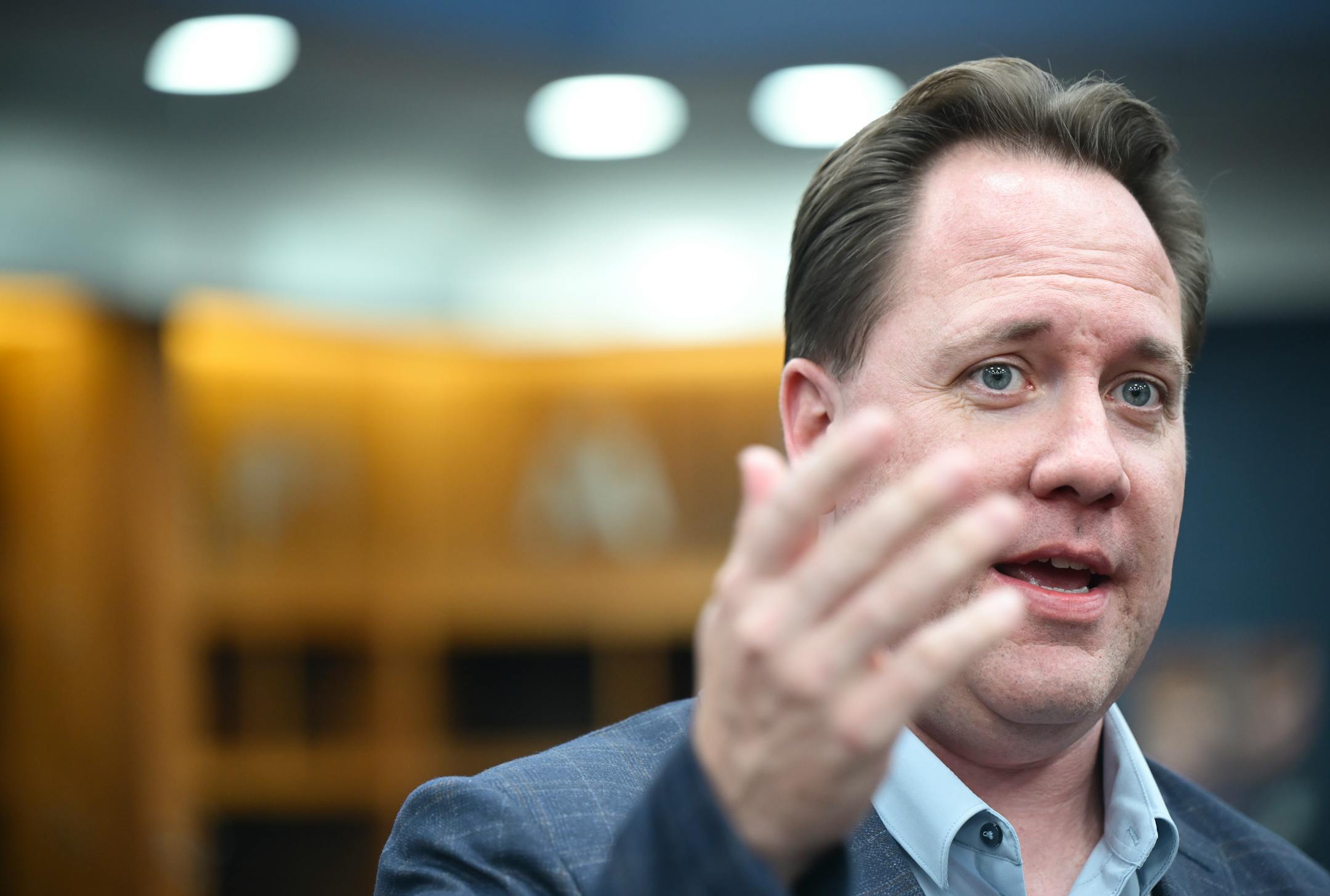
Twins President Derek Falvey speaks to the media on November 12th in the Twins clubhouse at Target Field in Minneapolis. (Aaron Lavinsky/The Minnesota Star Tribune)

The spin began at the end of Black Thursday, as the dust settled from the wrecking ball Twins president Derek Falvey took to his roster.

Nearly 40% of that roster was demolished before Major League Baseball’s trade deadline, along with any hope that the Twins would make a last-ditch run toward the postseason.

In all, the Twins traded 11 players and received 13 players — and much payroll relief — in return.

“As part of a small- to mid-market baseball team, that’s just the realities of the way this works,” Falvey said during a conference call. “There are trades that happen, that happens across baseball. I’m not saying that’s unique to Minnesota, and it’s hard, but it’s about making sure that you’re constantly trying to find a way to not just sit on your heels, hope that it all goes better, and keep your fingers crossed. It’s a way to actually kind of go invest in the future of the team, hopefully the short term and the long term.”

Falvey continued on Friday to articulate the company line in a message to season ticket holders.

“We know moves like this spark reactions,” Falvey wrote. “That’s natural. That reflects how much you care. That’s why we are positioning the Twins to compete at a higher level, not just in the short term, but in a way that can endure the ups and downs of a long season. That’s the kind of team you deserve.”

Wait for the future

It’s not the message the fan base wanted to hear. But the Twins felt the group that fell apart down the stretch in 2024 was largely the same group that was underwhelming this season. So the time was right for a restart, and Falvey started working the phones. Most of the deals were for prospects.

The Twins shaved $26 million off this season’s payroll and $71 million that remained on shortstop Carlos Correa’s contract.

ADVERTISEMENT

Fans are furious, and rightfully so.

The Twins were supposed to be beyond these teardowns. Fans endured it in 1998, when the 70-92 Twins, which included seven players between 33 and 41 years old, were dismantled. The Twins played 17 rookies the following season, and the core of the team that won six division titles in the 2000’s began to form.

But there was short-term pain. The Twins were 24th in payroll in 1998 then dropped to 29th, 30th (last) and 30th (last) over the next three seasons.

Back then, the baseball world noted that the Twins did something many clubs were reluctant to do: Initiate a total teardown. Accept self-inflicted pain.

But 27 years later, the Twins are at it again.

Regardless of the revenue streams, or the lengths an owner is willing to fund a team, bad decisions can foil a franchise. And the events on Black Thursday were due to poor baseball decisions.

The optics of ownership saving money fuels the frugal narrative that has followed it going back to the days when patriarch Carl Pohlad ruled the franchise. Fair or unfair, that sentiment has been trumpeted on radio shows and social media since trade-a-rama ended.

Falvey has spent the time since the deadline attempting to articulate his new vision to fans.

For more than just fans?

The Twins have been for sale since last September, but there has been no word of a deal in the near future. There are indications that serious buyers have emerged during the summer. And, according to a Front Office Sports report on Friday, there continues to be momentum toward the franchise being sold.

What should the future owners think of Falvey’s fire sale?

First, since the last name of the majority owner won’t be Pohlad, he or she will automatically be embraced. They will engage with a tortured fan base desperate to see the team become a World Series threat.

Falvey’s moves before the deadline likely will slow that process down. A new core of position players needs to regenerate around All-Star Byron Buxton. The Twins don’t have reliable middle-of-the-order hitters. They don’t have production at first base or designated hitter, two spots that demand it. Manager Rocco Baldelli hasn’t had the ingredients to craft a functional batting order.

It might have been easier for new owners to take over with the roster Twins had before the deadline, make a splashy move or two that could liberate the Twins offense and then charge into 2026 with some momentum. And that would bring fans back to Target Field.

Instead, the owners might have to watch if Edouard Julien has learned his lessons, if newcomer Alan Roden can hit major league pitching and if Royce Lewis can become the cornerstone many believe he can be.

On the other hand, the decks have been cleared for new owners to oversee a reconstruction.

The Twins, according to Spotrac, only have $38 million on the books for 2026 — not counting their arbitration-eligible players. There will be room for new ownership to flex its muscles.

The Twins didn’t dismantle their rotation. In fact, they added Taj Bradley and Mick Abel to a group of Pablo López, Joe Ryan, Bailey Ober, David Festa, Zebby Matthews and Simeon Woods Richardson. That’s excellent starting pitching depth. The hardest part of building a winner is taken care of.

Building the bullpen is the least challenging of the three areas of the roster. How quickly the position players reach their potential will determine the length of this reboot. But a proactive free agent purchase could speed up that timeline. That’s where new owners can impact the roster.

Either way, inheriting a roster that needs a piece or two or taking over a dismantled roster, a new owner will have opportunities to turn the Twins into a winner and revive the fan base.

New ownership will have another decision to make: Should Falvey and Baldelli survive the regime change? Since 2017, the two have led the Twins to three playoff berths. But this year’s failure would be the fourth time in five seasons they have missed the postseason. They did win a series in 2023, the first playoff win since 2002. But they have failed to capitalize on it since.

Black Thursday was their capitulation. Their fates will be decided by the next regime.

And for fans, regime change could not come fast enough.

about the writer

about the writer

La Velle E. Neal III

Columnist

La Velle E. Neal III is a sports columnist for the Minnesota Star Tribune who previously covered the Twins for more than 20 years.

See Moreicon

More from Sports

See More
card image
Jeff McIntosh/The Canadian Press

The Flames scored two goals less than three minutes apart early in the third to take control in the Wild’s first regulation loss in nearly a month.

card image
card image