Advertisement

How Minnesota’s athletes fared at the 2026 Winter Olympics

February 23, 2026
The 2026 Olympics have ended, but many Minnesotans are returning home with hardware. (Jake Lovett/The Minnesota Star Tribune)

Nineteen Olympians with Minnesota connections are returning from the Milan Cortina Games with medals, including 15 gold medal-winning hockey players.

For the Minnesota Star Tribune
Advertisement

The U.S. sent its largest Winter Olympics delegation to the Milan Cortina Games, totaling 232 athletes — 37 of whom had ties to Minnesota. Nineteen of them are returning from Italy with medals from five events. Fifteen are hockey players as the men’s and women’s teams won gold at the same Winter Olympics for the first time.

Finishing second in the medal count with 33 medals to Norway’s 41, Team USA set a new national record with 12 gold medals at a single Winter Olympics, surpassing the previous mark of 10 at the 2002 Salt Lake City Games.

Gold medalists
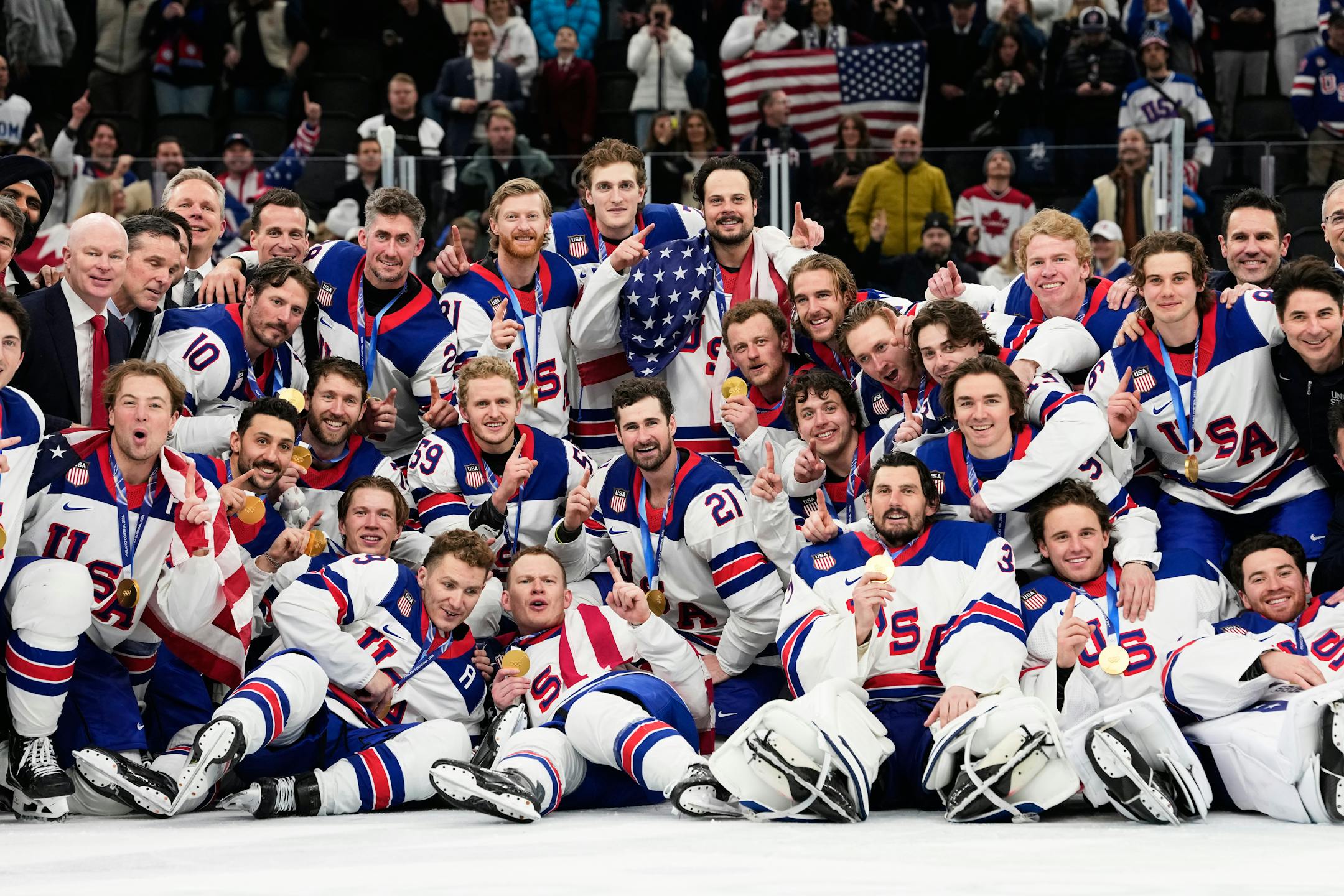
The U.S. men's hockey team, with seveon players with Minnesota connections, pose together after receiving their gold medals at the Winter Olympics in Milan on Sunday, Feb. 22, 2026. (Hassan Ammar/The Associated Press)

U.S. men’s hockey team

The U.S. men’s hockey team captured gold with a 2–1 overtime victory over Canada on Feb. 22. The Americans sealed the victory less than two minutes into a 3-on-3 overtime period, marking their first gold medal since the “Miracle on Ice” team in 1980. Within the 46-year drought, the U.S. reached the gold-medal game twice, falling to Canada both times at the 2002 and ’10 Olympics. It’s the program’s third Olympic gold, the first being in 1960.

Wild defenseman Quinn Hughes had one goal, the overtime game-winner in the quarterfinals, and seven assists across the six-game tournament and was named best defender in the tournament. Wild winger Matt Boldy opened the scoring in the gold-medal game to give the Americans an early edge; he finished with two goals and two assists. Other Minnesotans on the team were Maple Grove’s Brock Faber of the Wild (one goal, one assist); Woodbury’s Jake Guentzel (one goal); Warroad’s Brock Nelson (two goals, one assist); Eden Prairie’s Jackson LaCombe; and Lakeville’s Jake Oettinger, who did not see the ice as a backup goalie.

Nelson is a third-generation gold medalist. His uncle Dave Christian was on the 1980 team, and his grandfather Bill Christian and great uncle Roger Christian won gold in 1960.
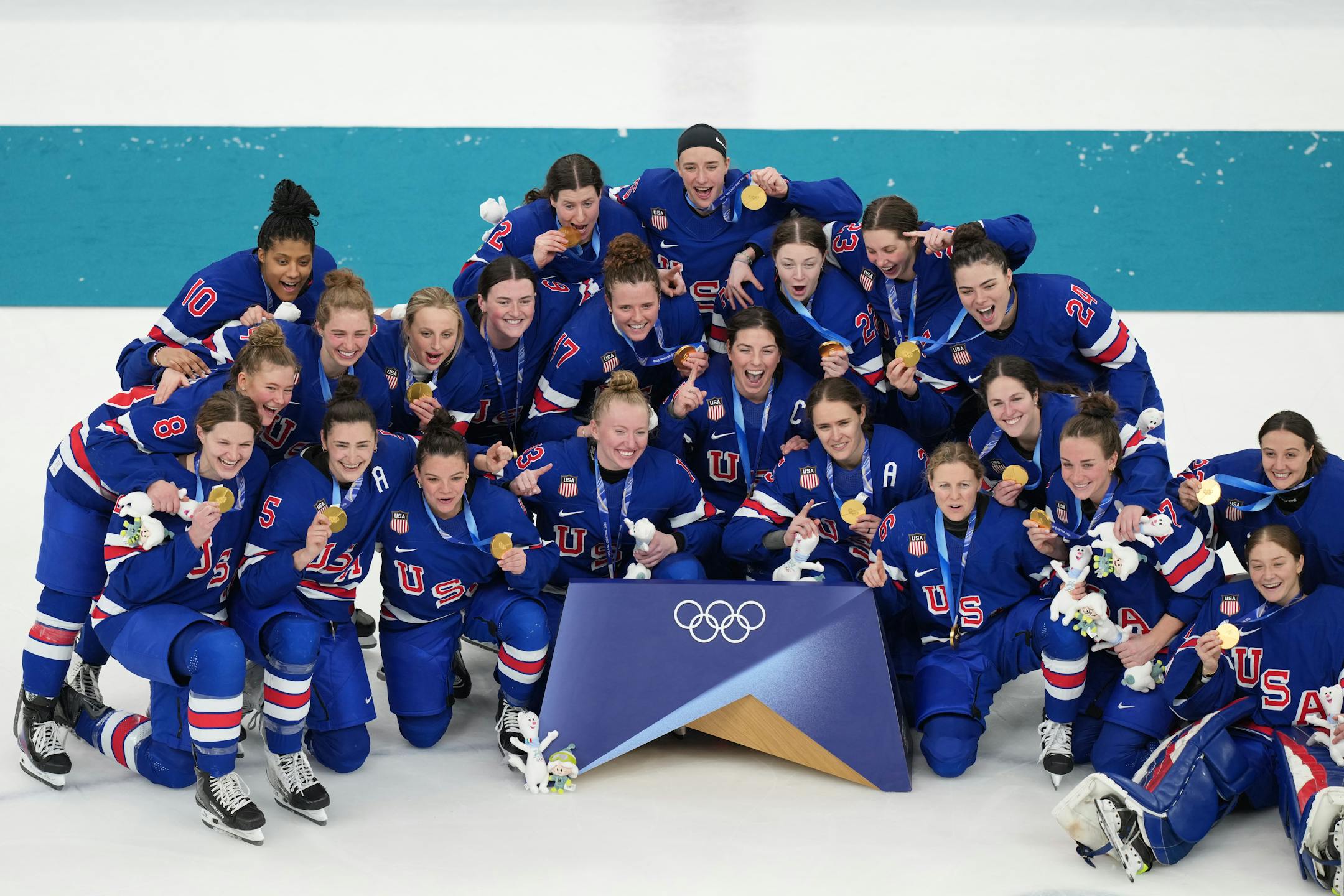
The U.S. women's hockey team, with eight players with Minnesota ties, poses together after receiving their gold medals at the Winter Olympics in Milan on Thursday, Feb. 19, 2026. (Carolyn Kaster/The Associated Press)

U.S. women’s hockey team

Team USA defeated Canada 2-1 in overtime on Feb. 19 to complete a perfect 7-0 tournament run. Until the final, the Americans scored at least five goals in each game, including an early 5-0 victory against Canada in the preliminaries. This marks the third Olympic gold for U.S. women’s hockey, having won in 1998 and 2018.

Taylor Heise of Lake City and the Frost, in her first Olympics after being one of the final cuts in 2022, assisted Megan Keller’s game-winning overtime goal vs. the Canadians. She had two goals and three assists across the seven-game tournament.

“It definitely was relief,” the former Gopher said of the moment she realized they won gold. “Relief in the best way, not relief in the fact that we didn’t believe that we could do it, but relief in the fact that we were done and we finally finished the job and climbed Mount Everest and did what we needed to do.”
ADVERTISEMENT

Nearly 35% of the team have Minnesota ties, including six players for the Frost. Kendall Coyne Schofield of the Frost contributed three goals and the Gophers’ Abbey Murphy had two goals and five assists. Other Minnesota-connected players were the Frost’s Britta Curl-Salemme (one goal, five assists), Roseville’s Lee Stecklein (two assists); Excelsior’s Grace Zumwinkle (one assist); Plymouth’s Kelly Pannek (two assists); and Chanhassen’s Rory Guilday.

Silver medalists

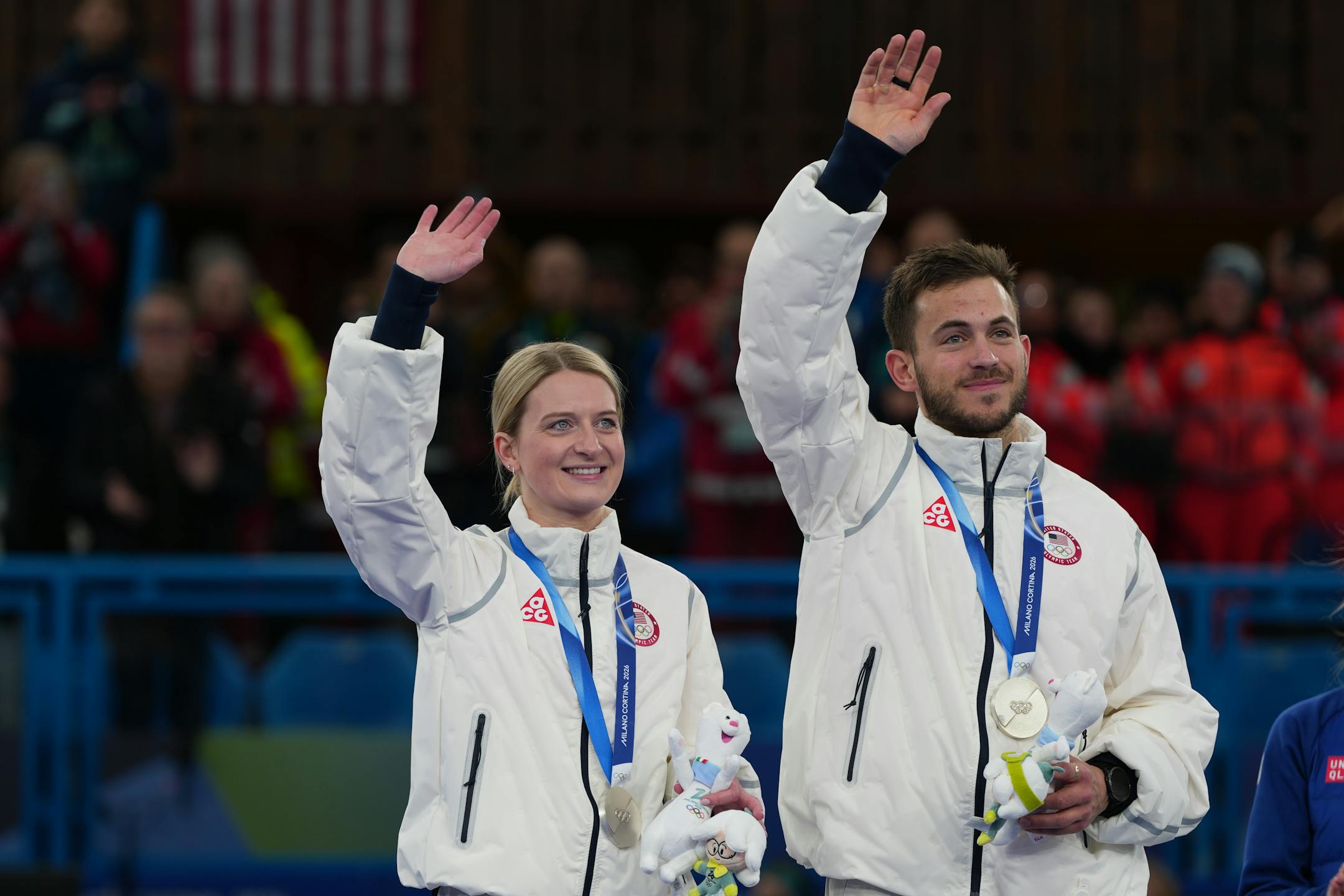
Cory Thiesse, left, and Korey Dropkin of Duluth wave on the podium after winning the silver medal of the mixed doubles curling competition at the Winter Olympics in Cortina d'Ampezzo, Italy, on Tuesday, Feb. 10, 2026. (Misper Apawu/The Associated Press)

Korey Dropkin and Cory Thiesse

In their Olympic debut as mixed doubles partners, Thiesse and Dropkin of Duluth won the first U.S. Olympic medal in the event since its introduction in 2018. And Thiesse won the first curling medal for an American woman. They opened round-robin play 4-0 — the best start by any U.S. curling team in history. They closed the tournament with a 7-4 record, losing 6-5 to Sweden in the gold-medal match.

Thiesse also competed in the women’s curling tournament, narrowly missing another medal by finishing fourth. By reaching the medal round in mixed doubles and women’s curling, Thiesse set a record for most ends played by a curler in a single Olympics.

Thiesse and Dropkin’s silver medal follows a chain of success since the pair teamed up in 2022. Together, they quickly claimed national and world championship titles.

Bronze medalists

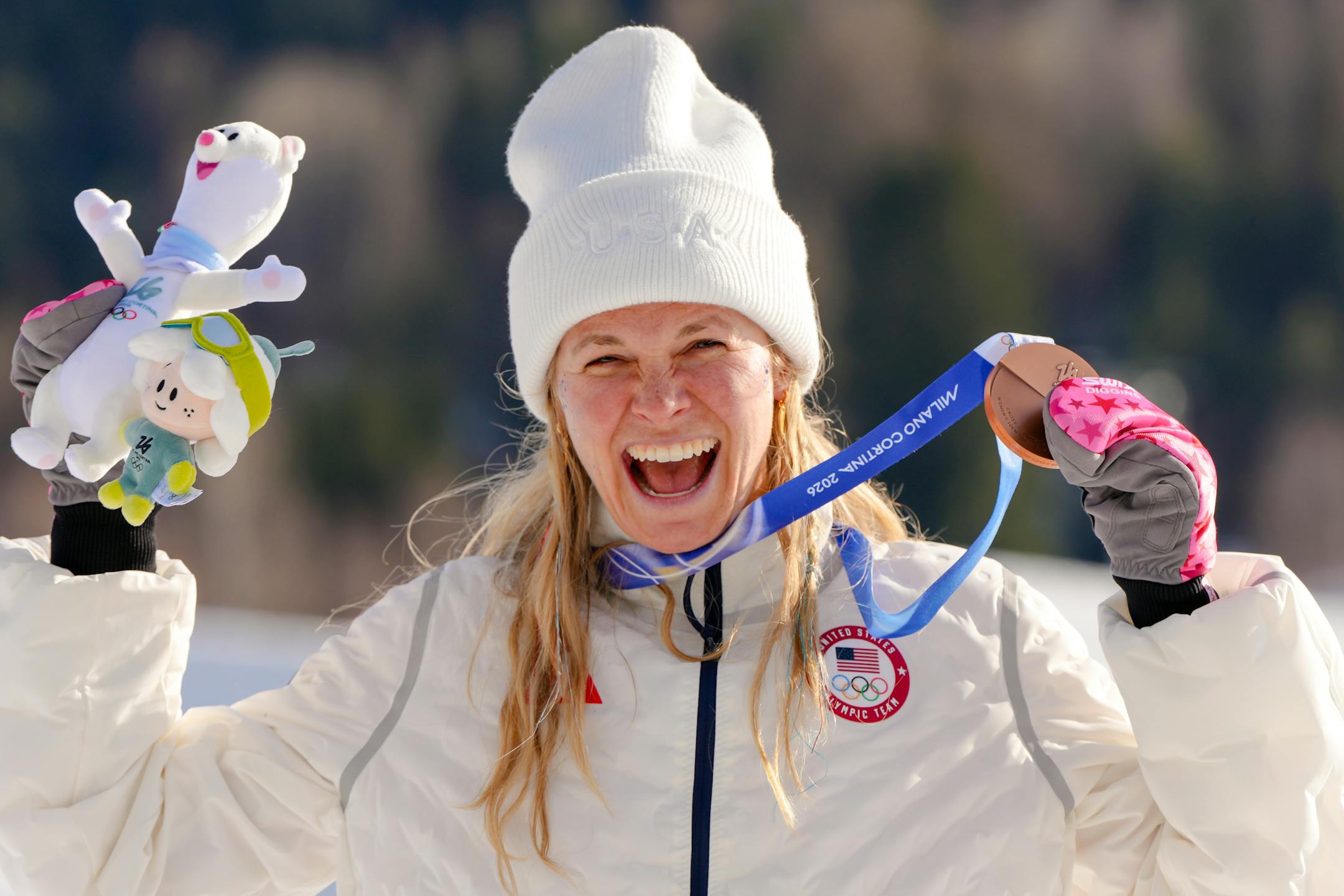
Jessie Diggins of Afton poses with her bronze medal from the cross country skiing women's 10km interval start freestyle race at the Winter Olympics in Tesero, Italy, on Thursday, Feb. 12, 2026. (Kirsty Wigglesworth/The Associated Press)

Jessie Diggins

Afton’s Diggins, the most decorated American cross-country skier, added a second Olympic bronze medal to her collection by finishing third in the women’s 10-kilometer freestyle. It was her fourth Olympic medal, and her only one at the 2026 Olympics, her last before she retires at the end of the season. Diggins also competed in the women’s relay, anchoring Team USA to a fifth-place finish, the skiathlon (eighth), the team sprint (fifth), the 50km mass start (fifth) and the individual sprint (17th).

She suffered bruised ribs from a crash in her first event, the skiathlon, on Feb. 7 and persevered through the pain to win bronze in the 10km on Feb. 12, behind Frida Karlsson and Ebba Andersson of Sweden.

Advertisement

“You can block out the pain to some degree while you’re racing, but when you finish, it all comes flooding in,” Diggins said. “I knew that was going to happen, but I was only going to let that in once I’d crossed the finishing line.

“I’m the happiest bronze medalist in the world,” she added. “I’m so grateful for everyone getting me here.”

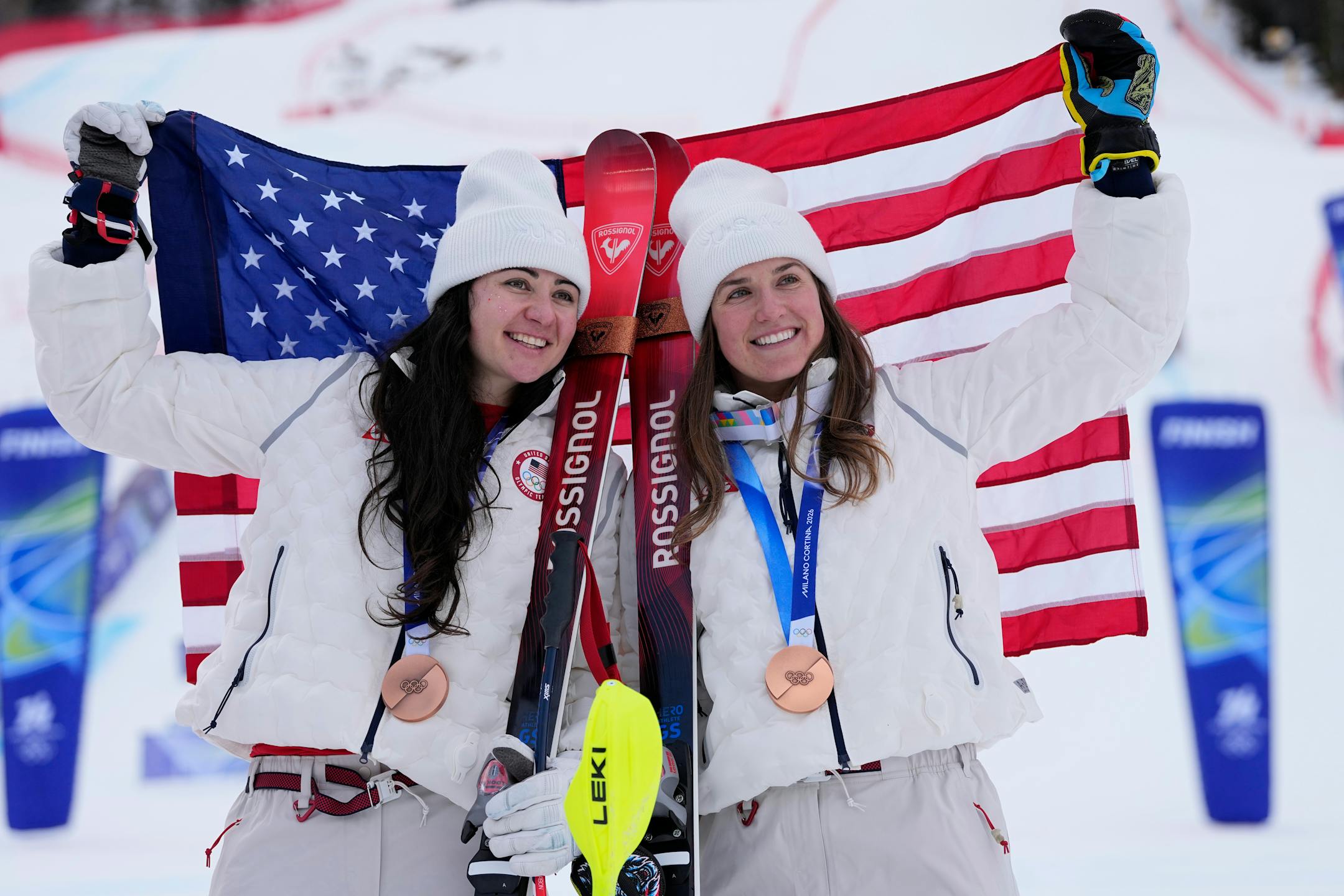
Paula Moltzan of Prior Lake, right, with teammate Jacqueline Wiles, left, after winning the bronze medal in the women's team combined Alpine skiing event at the Winter Olympics in Cortina d'Ampezzo, Italy, on Tuesday, Feb. 10, 2026. (Andy Wong/The Associated Press)

Paula Moltzan

Two-time Olympian Motlzan of Prior Lake earned her first Olympic medal with teammate Jacqueline Wiles, finishing 0.06 seconds ahead of fellow U.S. skiers Breezy Johnson and Mikaela Shiffrin for bronze in the first Olympic women’s team combined on Feb. 10. Johnson posted the fastest overall downhill time at 1:36.59, but Shiffrin was among the last finishers in the slalom leg at 15th. Wiles and Moltzan both finished fourth in their respective runs.

Moltzan finished 15th in the giant slalom, which had been her best event this season. And in the slalom, a mistake in the first run left Moltzan 0.48 seconds short of the podium despite posting the fastest second run. Her second run of 51.39 was more than half a second faster than gold medalist Shiffrin’s, pushing Moltzan from 23rd to eighth.

Moltzan, 31, had a big cheering section in Italy of friends and family wearing hockey jerseys with her name on them. “A lot of the emotions come from feeling like you let down family that travelled so far to cheer you on,” she said after the slalom. “Maybe I have to go [to] another Olympic cycle to figure it out a third time.”

Other Minnesotans on Team USA

Lindsey Vonn, Alpine skiing: Vonn came out of retirement with a goal of competing at her beloved Cortina downhill course at age 41. A week before the Olympics, she tore the ACL in her left knee in a crash in Crans-Montana, Switzerland. She pressed on and, wearing a brace, completed two downhill training runs. But in the race on Feb. 8, Vonn clipped a gate 13 seconds into her run and crashed again. She suffered a complex tibia fracture in her left leg and spent several days in an Italian hospital having multiple operations that saved her from an amputation. “I will always take the risk of crashing while giving my all, rather than not ski to my potential and have regret,” she wrote on Instagram on Feb. 14.

Advertisement

Luci Anderson, biathlon: Competing in her first Olympics after picking up biathlon in the summer of 2024, Golden Valley’s Anderson finished 18th in the women’s relay, 79th in the 7.5km sprint and 84th in the 15km.

Margie Freed, biathlon: A former Minnesota state champion in Nordic skiing, Freed of Apple Valley had her best finish of 14th in the mixed relay. In her first Olympics, she was also 18th in the women’s relay, 21st in the 15km and 66th in the 7.5 km sprint.

Paul Schommer, biathlon: A former All-American at the College of St. Scholastica, Schommer was part of a fifth-place men’s relay, the best American finish in the event. He was also 47th in the 10km sprint, 44th in the 20km and 48th in the 12.5km pursuit in his second Olympics.

Zak Ketterson, cross-country skiing: Ketterson of Bloomington crashed in each of his first two races at his first Winter Olympics, finishing 43rd in the men’s skiathlon and 28th in the men’s sprint. After a 38th-place finish in the 10km race, Ketterson anchored the men’s 4x7.5 relay to sixth-place finish, the best Olympic result in the event since 2002. “To get handed the task of being the anchor leg at the Olympics, I mean, I think every kid dreams of that chance,” Ketterson told reporters in Italy.

Danny Casper, Aidan Oldenburg, Ben Richardson, Rich Ruohonen, Luc Violette, men’s curling: In their first Olympics, Team Casper, based in the Twin Cities, went 4-5 in round-robin play, losing their last three games to miss out on the semifinals. The rink’s Olympic berth was a changing of the guard in U.S. men’s curling, with its top four curlers averaging 25 years of age. Ruohonen, their 54-year-old alternate from Brooklyn Park, became the oldest American to compete at a Winter Olympics when he entered a match against Switzerland on Feb. 12.

Taylor Anderson-Heide, Aileen Geving, Tabitha Peterson Lovick, Tara Peterson, Cory Thiesse, women’s curling: Skipped by Peterson Lovick of Eagan, the Minnesota-based U.S. team finished second in pool play with a 6-3 record. But in the medal round, Team Peterson lost to No. 2-ranked Switzerland 7-4 in the semifinals, then to top-ranked Canada 10-7 in the bronze-medal game. The Americans had defeated Canada in pool play — their first women’s curling victory over their northern neighbors — but were unable to replicate the result with a medal on the line. Still, fourth place matched the best Olympic result in women’s curling with the 2002 team also reached the semifinals but finished fourth.

Advertisement

Iris Pflum, snowboarding: The 21-year-old from Minneapolis finished 30th in the qualifying runs of the parallel giant slalom and didn’t advance to the knockout rounds in her first Olympics. “Not the Olympics I wanted, dreamed of, expected, or anything in between,” Pflum wrote on Instagram on Feb. 9.

Giorgia Birkeland, speedskating: Chosen for her second Olympics as a women’s team pursuit specialist, Birkeland of White Bear Lake skated in the quarterfinals and semifinals with Brittany Bowe and Mia Manganello as the Americans reached the bronze-medal race. They finished fourth.

Conor McDermott-Mostowy, speedskating: The 2024 Macalester graduate, competing in his first Olympics, finished ninth in his only event, the men’s 1,000 meters.

Greta Myers, speedskating: In her first Olympics at age 21, the Lino Lakes speedskater raced for the bronze medal in the women’s team pursuit, losing to Japan. In the women’s mass start event, she finished 12th but helped teammate Mia Manganello earn the bronze. “I was honestly trying to just set myself up and set Mia up for success. Make sure she was in good position,” Myers said. “I’m incredibly proud.” Myers also finished 29th in the 1,500 and 20th in the 3,000, after finding out a few hours before the race that she’d made the field as an alternate.

Naila-Jean Meyers of the Minnesota Star Tribune contributed reporting.

about the writer

about the writer

Grace Praxmarer

More from Olympics

See More
card image
Jake Lovett/The Minnesota Star Tribune

Nineteen Olympians with Minnesota connections are returning from the Milan Cortina Games with medals, including 15 gold medal-winning hockey players.

card image
card image
Advertisement