
Analysis: Will the collective weight on the Timberwolves be lifted with another playoff run?

Things are heavier than usual around the team, starting with the overall moodiness of players and that effect on games.

Columnist Icon
The Minnesota Star Tribune
February 13, 2026 at 8:02PM
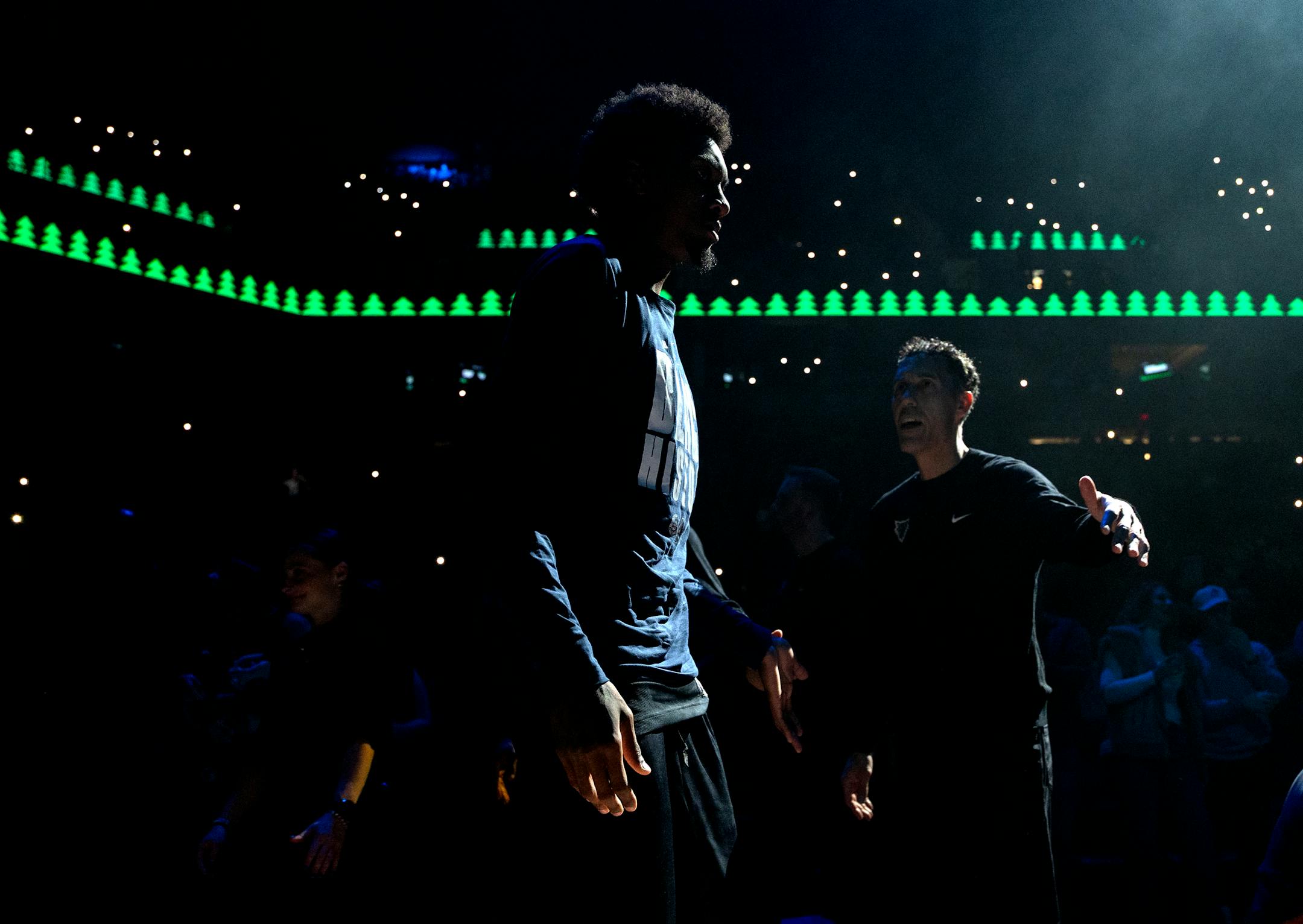
Jaden McDaniels of the Wolves during pregame introductions at Target Center on Feb. 8. (Carlos Gonzalez/The Minnesota Star Tribune)

In eight years of covering the Timberwolves, I don’t think there has been a season with as much collective weight on all levels of the organization as this one.

The team bottomed out in some seasons, and the games meant nothing on a night-to-night basis.

Some Wolves teams defied expectations, and the vibes were great all season (think two seasons ago, and the season the Wolves first made it to the playoffs under Chris Finch).

Some Wolves teams had to slog their way through and figure it out as they went along (the first year of the Rudy Gobert trade, and last season following the acquisition of Julius Randle and Donte DiVincenzo).

But in none of those seasons have I observed, at all levels of the organization, the kind of weight that exists in this one.

First, there’s a burden on the players to be better after a 34-22 record at the break. You can feel it when you walk in the locker room after some of these grueling losses. You saw that pressure force some cracks when Gobert essentially called out the team’s top two players, Anthony Edwards and Randle, for a lack of effort on defense following a recent loss to the New Orleans Pelicans.

The Wolves are a self-described moody team, and they often wear their emotions on their sleeves.

That can help, as it did when Randle was motivated to put up a season-high 41 points because he felt snubbed that Portland’s Deni Avdija made the All-Star team over him.

ADVERTISEMENT

But Randle isn’t the only moody Wolves player. There are several, and when the mood of one or two is off, it can throw the whole balance of the team out of whack. They care about statistics, they care about minutes, they care about who closes a game — all the individual things you’re not really supposed to care about in the name of winning.

But the challenge is to put egos aside and come together to try and win anyway. That’s not always an easy thing to do in the NBA. The Wolves have done it the past few seasons. Can they do it again without fracturing?

It’s a point Finch emphasizes at this time of the season every year, and he did again going into the All-Star break. Finch preached that message last season when the Wolves were on the road in Phoenix, and they listened, and sprinted to the finish line to secure the No. 6 seed.

“Nothing else matters right now. Shots, minutes, role acceptance,” he said. “You’re coming out with 25, 26 games, you’re not going to greatly affect your average. … You got to settle in, winning has to be first and foremost all the time rather than anything else, and that might be different from night to night.”

A risk that didn’t work

There’s more weight on Finch and the front office than there has been before. The Rob Dillingham trade was an acknowledgement by the team that they have not been able to thread the delicate needle of trying to win now while developing young talent, either in the identification of that talent in the draft, the development of that talent afterward, or a combination of both.

Recent draft picks could not fill the void in the rotation left by Nickeil Alexander-Walker when he went to Atlanta this offseason. President of Basketball Operations Tim Connelly had to swing a deal — and go through some luxury-tax magic while doing so — to bring in Ayo Dosunmu while (eventually) retaining Mike Conley and saving around $20 million in the luxury tax.

In an ideal world, it would not have come to that. Either Dillingham, Jaylen Clark or Terrence Shannon Jr. would have been the ones to fill that void, not another player who was going to cost assets to bring in, on top of the assets (2031 unprotected first-rounder, 2030 pick swap) it took to bring in Dillingham.

It’s a hard challenge to undertake — finding young players who can contribute in a meaningful way to a deep playoff run. On this subject, I do think rookie center Joan Beringer could find his way into some playoff minutes.

The Wolves are like a lot of other teams in that regard, such as the Nuggets team they defeated in the playoffs in 2024. But the Dosunmu trade now puts more of a weight on the coaching staff to make that move work on the floor the rest of the season, and a weight on the front office to make sure Dosunmu is around after the season when he is a free agent, so that the Dillingham era doesn’t amount to a rental of Dosunmu for one postseason run.

From the top down

Finally, there is a weight on the Marc Lore-Alex Rodriguez ownership. The honeymoon period ended for a lot of fans over the last month as they saw, in many cases, significant season-ticket price increases along with an ownership that slashed luxury tax payments at the trade deadline.

Lore and Rodriguez have pledged that they have money in waiting, and will do what it takes in terms of luxury tax payments to make sure the Wolves are in contention for years. With that increase in ticket prices, fans are going to demand that, and rightfully so. Ownership needs to recognize this is also a Minnesota fan base scarred by what happened a few steps away at Target Field, where the Pohlad family angered Twins fans by reducing payroll following playoff success.

The failure to pay the tax in future years can have a ripple effect down the organization. Connelly will have one more year on his deal after this season and will likely command a lucrative next contract. Will the owners meet that, while giving him the necessary resources to maintain a contender?

The failure to keep a contending roster around Edwards could also affect his desire to stay in Minnesota in future seasons. Short-term savings could eventually lead to long-term issues for the Wolves.

This is the collective weight on the Wolves for the final 26 games of the season. You can feel it when you talk to people up and down the organization. That weight is present in a way that wasn’t previously. The only cure? Winning. But just how much winning alleviates that weight? Title or bust? Another conference finals appearance?

It depends who you ask.

Pressure can make diamonds, but it can also cause fault lines to crack and erupt.

about the writer

about the writer

Chris Hine

Sports reporter

Chris Hine is the Timberwolves reporter at the Minnesota Star Tribune.

See Moreicon

More from Wolves

See More
card image
Carlos Gonzalez/The Minnesota Star Tribune

Things are heavier than usual around the team, starting with the overall moodiness of players and that effect on games.

card image