

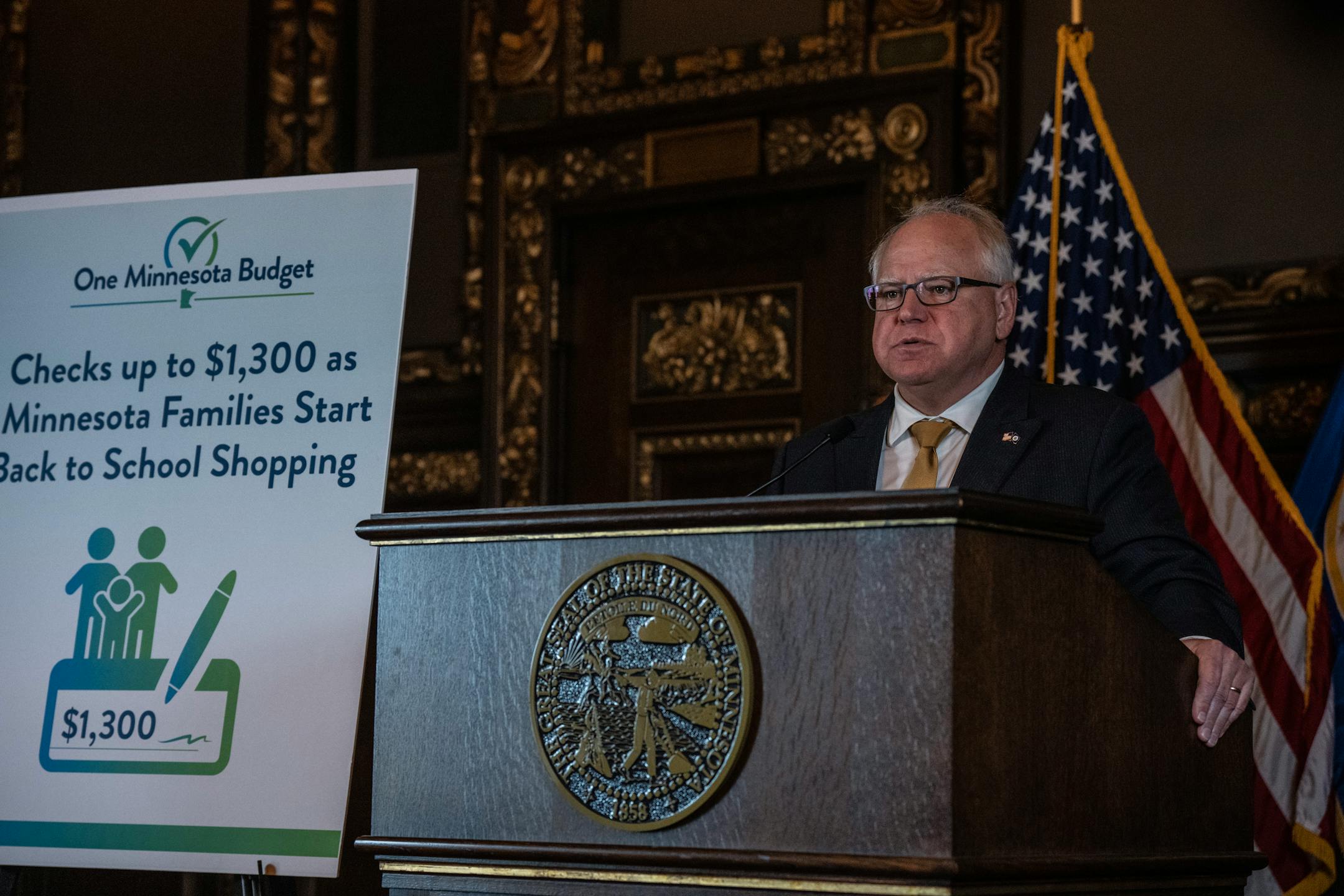
Nearly 1 million Minnesotans can expect to see tax rebates in their bank accounts this week, a boost Democratic lawmakers said families need as kids head back to school.
Direct deposits landed in roughly 200,000 bank accounts Tuesday evening, and the Department of Revenue estimated up to 700,000 more Minnesotans had money sent directly to their accounts Wednesday. More than 2 million payments totaling $1.1 billion will be sent out through September.
"It was part of a cohesive tax policy and a cohesive and holistic approach to the legislation to make life more affordable for middle-class Minnesotans," Gov. Tim Walz said Wednesday, announcing the arrival of the rebates alongside legislators and families who are eligible for the checks.
Individuals with a gross adjusted income of up to $75,000 in 2021 are eligible for $260, while married filers with an income of up to $150,000 could get double that amount. Minnesotans are disqualified if they made any amount over that threshold. Families can get an additional rebate check for up to three dependents, for a maximum of $1,300.
Republicans threw cold water on Walz's announcement, noting that the checks are smaller than the $2,000 rebates for couples and more for families he pitched earlier this year.
"Democrats took full control and decided they'd rather spend the record $17.5 billion surplus themselves than return it back to Minnesotans," House Minority Leader Lisa Demuth, R-Cold Spring said in a statement. "Now, only a select few Minnesotans will be getting a paltry $260 — hardly what they were promised by the governor."
The DFL-controlled Legislature passed the one-time rebate checks this spring as part of a broader $3 billion tax package that also cut Social Security taxes and created a new child care tax credit for low-income families, while raising $1 billion in taxes on some corporations and wealthier Minnesotans.
Senate leader Mark Johnson, R-East Grand Forks, said other tax increases and new fees for cars, license tabs and deliveries will cost Minnesotans more than they get from the rebates. "The discussion of today's small refund simply pales in comparison to the higher tax burden Minnesotans will face in the years to come," he said.


