

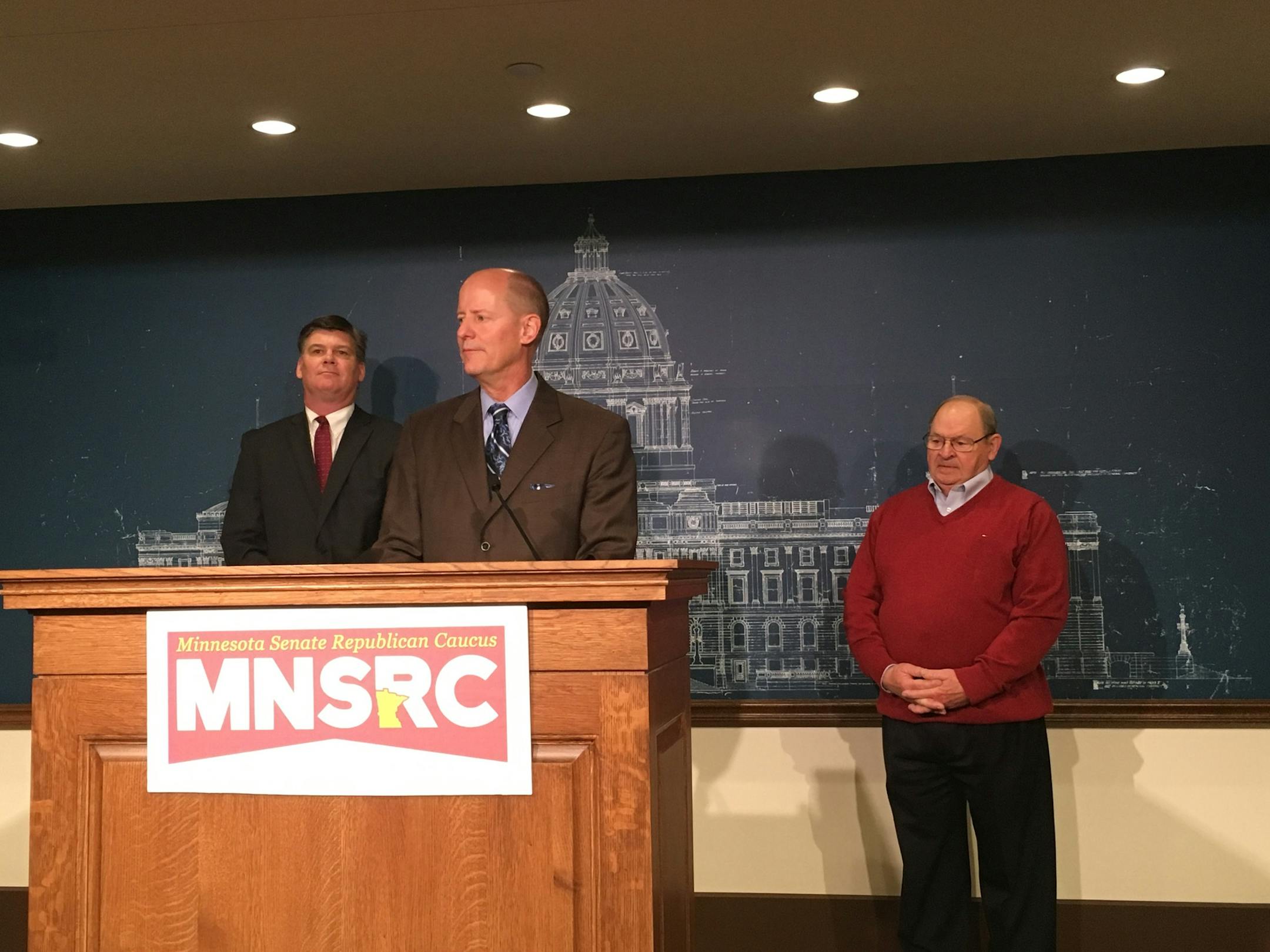
The Minnesota Senate, fast running out of money amid a protracted political and legal dispute between Gov. Mark Dayton and GOP leaders, plans to furlough employees and stop paying senators as soon as Dec. 1, its top leader said Wednesday.
"We're in a very, very difficult spot here," Senate Majority Leader Paul Gazelka, R-Nisswa, said at a news conference in St. Paul. Mounting bills and a dwindling bank account prompted Gazelka to freeze senators' per diem, out-of-state travel, and reimbursements for mileage and communication, but he said that won't be enough to ensure the Senate can keep issuing paychecks and making monthly payments on its new office building.
Without a solution, the Senate's 205 employees will get furlough notices on Dec. 1, Gazelka said, and the 67 state senators won't get paychecks past that date.
The Senate and House have been running without a budget since Oct. 1, when a temporary funding agreement between GOP legislative leaders and the DFL governor expired. But the Legislature's budget has been in limbo even longer, after Dayton in May vetoed House and Senate funding amid a dispute over the state budget.
Dayton wants GOP leaders to reconsider several recently enacted tax and policy provisions. Legislative leaders sued instead; the Minnesota Supreme Court heard arguments on the matter in August, but declined to strike down Dayton's veto and has offered no further guidance.
Dayton and Republican leaders continue to spar over how much money the Legislature actually has on hand — and about how much of a hardship the governor's veto created for the legislative branch. Gazelka and House Speaker Kurt Daudt, R-Crown, say the Legislature will run out of money before the next legislative session starts on Feb. 20; Dayton says lawmakers can use other funding sources to go well past that point, providing enough time for the Legislature to pass a new budget for itself and erase the governor's veto.
"The Senate Republican leader is creating this situation," said Matt Swenson, a spokesman for Dayton. "Despite sitting on nearly $45 million in available state funding for his operations, he and other legislative leaders are choosing to lay off their own employees, rather than admit that they have misled the courts, the press and the public about their true financial situation."
Gazelka cited one potential stop-gap measure that could help the Senate pay its bills into January: tapping into about $3 million in reserves held by the Legislative Coordinating Commission, a nonpartisan office that oversees some of the Legislature's functions.


