

A hundred fifty years ago, Minnesotan John B. Sanborn led a group of Minnesotans — soldiers of the Fourth Minnesota Volunteer Infantry Regiment — at the head of the column of Union troops marching into Vicksburg to take possession of the besieged city after its surrender on July 4, 1863.
The event is recorded in a dramatic painting hanging in the reception room of the governor's office at the State Capitol, and it's fitting that we remember it now. Marching at the head of this victorious army was an enormous honor, one well-deserved by the regiment and its former commanding officer.
Today, as in the days of the Civil War, most of the media focus is on events in the East. So it's not surprising that the focus of the Star Tribune's attention so far on the Civil War has been on the extraordinary deeds of a single regiment, the First Minnesota, which happened to be the only Minnesota regiment engaged in the Eastern Theater of the Civil War.
Yet it was in the West that the Civil War was ultimately won, and it was in the West that the vast majority of Minnesotans who served and fought in that conflict were to be found.
In the West, with Minnesotans and other Midwesterners at the heart of his army, Ulysses Grant undertook one of the most daring campaigns in military history. Severing his ties to his supply lines and "living off the land," carrying only needed supplies and ammunition, he attacked inland into Mississippi and engaged two separate Confederate armies.
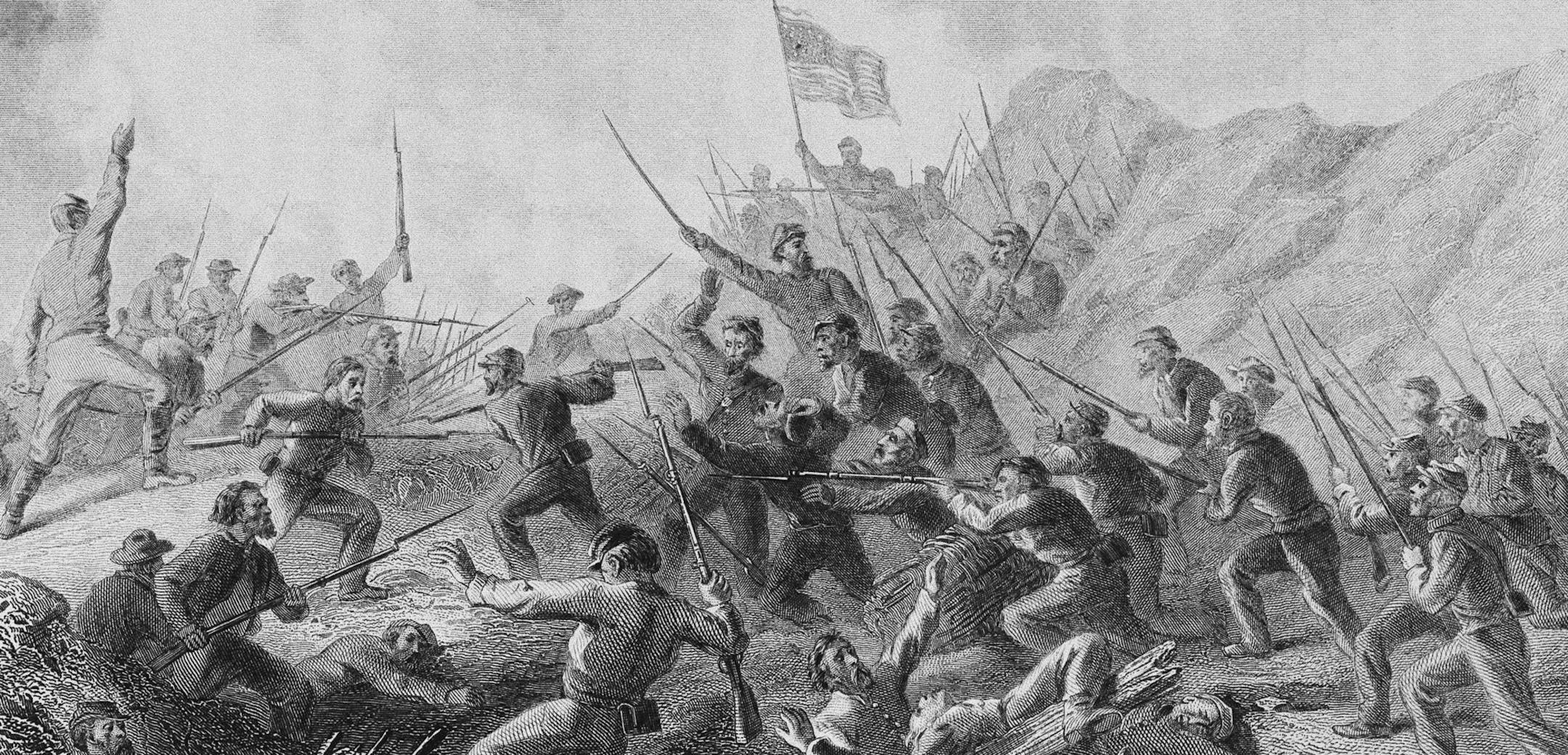
The critical battle of the campaign took place at the heights located between Jackson and Vicksburg, Miss. — a place known as "Champion's Hill." (The Champion family still owns the land where most of the battle took place.) In a bitter battle, the key high ground changed hands three times in the course of a single day. At one perilous moment, a Rebel Missouri shock brigade came within 300 yards of Grant's supply train, which included all of the ammunition for the army.
Had this brigade succeeded in reaching his supplies, Grant would have been forced to beat a very hasty retreat and would certainly have been unable to take Vicksburg. He also, very possibly, would have lost his command.
Instead, Sanborn arrived with his brigade in time to stem the final Rebel counterattack. The Southerners literally ran out of ammunition and were forced back for the last time and, ultimately, retreated into Vicksburg. In that fight, the Fourth Minnesota captured an entire Southern regiment: the 46th Alabama. The victory for the Northern forces was decisive. For the Southern forces trapped in their retreat into Vicksburg, it was only a matter of time, after Champion's Hill, before they would be forced to surrender and the Union would have full control of the Mississippi River.


