
Minnesota readies early warning system for measles

Measles cases in Rochester this fall offered a test case that wastewater sampling could identify even the slight presence of the infectious disease.

The Minnesota Star Tribune
November 13, 2025 at 12:00PM
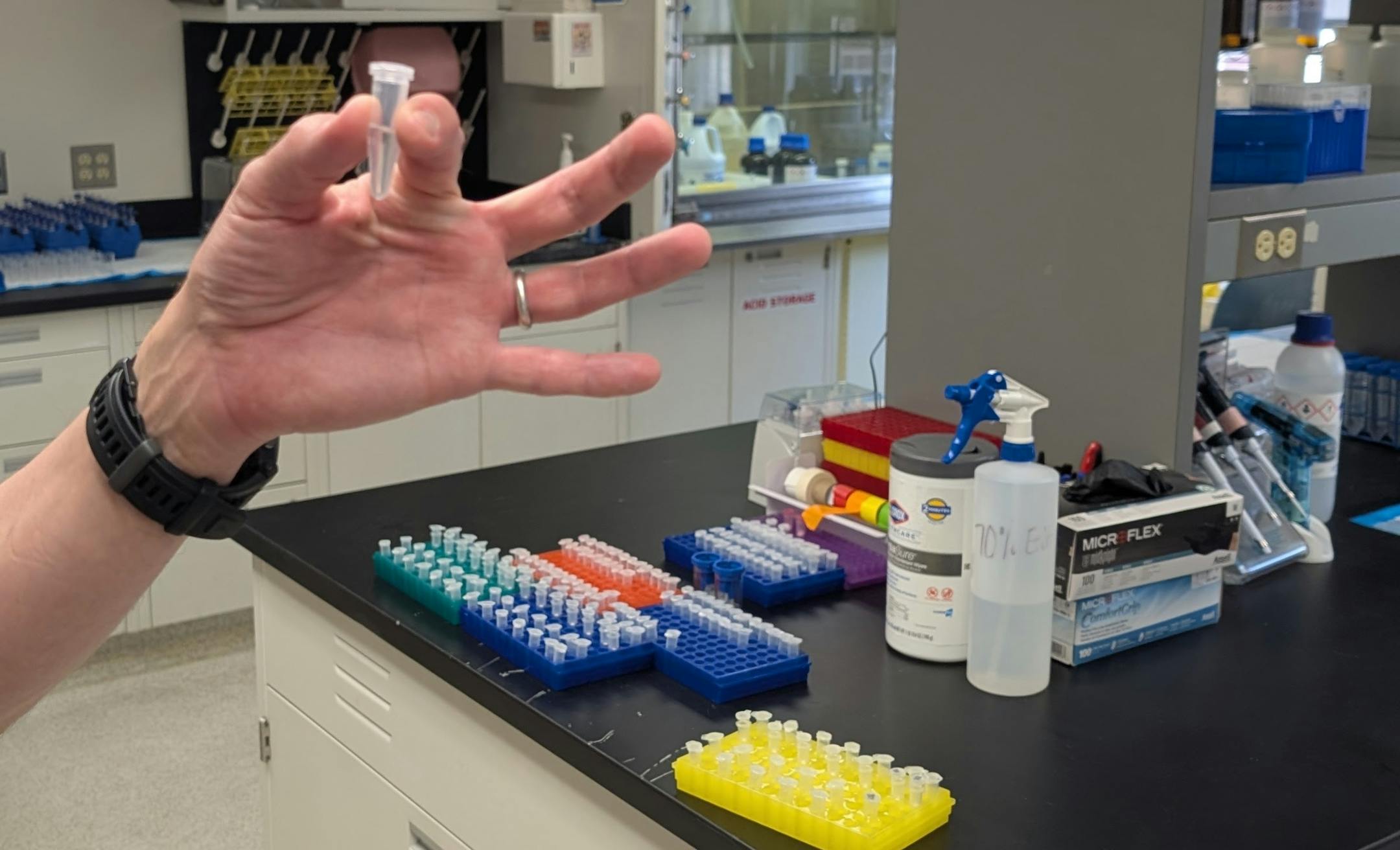
University of Minnesota scientist Mark Osborn holds a vial of nucleic acids, isolated from wastewater, for molecular testing to see if it contains traces of the virus that causes COVID-19. The same technique can be used to look for traces of measles in wastewater. (Jeremy Olson/The Minnesota Star Tribune)

Traces of measles virus turned up in wastewater in Rochester during a mini-outbreak this fall, suggesting sewage surveillance could serve as an early warning system against the highly infectious disease.

Only three measles cases were detected in Rochester, raising Minnesota’s total to 23 for 2025. But even a small amount of virus was enough to show up in molecular testing of wastewater from thousands of homes and buildings that flowed to the city’s treatment plant.

“It’s not always true with every disease, but we are seeing some good initial indications with measles” that it can be tracked via wastewater sampling, said Stephanie Meyer, an epidemiology supervisor with the Minnesota Department of Health. “We think that can be really helpful.”

The impromptu test case in Rochester was a final step before the Minnesota Department of Health starts publicly reporting levels of measles detected in sewer water samples and also takes over the University of Minnesota’s wastewater surveillance for COVID-19. Detecting viral genetic material in toilet water flushed into the sewer was a public health technique that emerged during the pandemic.

As more parents decline recommended measles vaccinations for their children, state health officials suspect more severe illnesses and hospitalizations will emerge in Minnesota.

The number of confirmed cases this year is the fourth-highest since at least 1997, the most recent year for which measles cases are available on the state’s website. There were only three cases in Minnesota between 2003 and 2009, when the state had one of the nation’s highest pediatric immunization rates. Risks at that time primarily involved unvaccinated children adopted from other countries.

Measles levels in Rochester’s wastewater rose right when Mayo Clinic acknowledged one case that occurred in its hospital and potentially exposed others to the virus. The levels then declined, Meyer said, but rose again around the time that two relatives of the initial case suffered measles.

The surveillance could prove especially useful in the future if known cases decline but wastewater levels remain elevated, she said. “If we’re still seeing a big signal in wastewater, that could tell us that we’re missing something.”

The measles virus is one of the most infectious pathogens on the planet, capable of lingering in the air and spreading to others long after infected people have left. The disease is mostly known by its itchy head-to-toe rash, but it also can cause severe respiratory symptoms and other complications requiring hospital care.

People also can spread the coronavirus that causes COVID-19 before they know they are sick, which is why public health authorities pursued wastewater testing during the pandemic as a way to warn people to take precautions. Results from 38 treatment plants statewide show, for the second year in a row, that COVID levels at least temporarily declined in October after increasing at the start of the school year.

A collaboration including Stanford and Emory universities is already publicly reporting on surveillance for measles as well as COVID, influenza and other pathogens. The nationwide results come from more than 190 municipal wastewater treatment plants, including locations in Mankato, Red Wing, Rochester and St. Cloud.

Its WastewaterSCAN website showed signs of measles in Red Wing recently, even though no cases of the infectious disease have been reported there. Meyer said the town is on the Wisconsin border and a tourist destination, so the testing result could have revealed that infected people visited the community but didn’t spread measles to others in Red Wing.

The state will begin sampling wastewater at a different point in the treatment process than the academic partnership, but in both cases they are obtaining aggregate results. Meyer said there is no way under current testing to trace the positive results back to an individual or to a specific address.

The state will soon be reporting wastewater data for COVID, influenza and RSV as well, leaving U of M researchers with time to explore expanded uses. One research goal is to identify new viral mutations or variations. The U also has been developing a mobile kit that local public health workers can use to instantly see what’s in their wastewater.

about the writer

about the writer

Jeremy Olson

Reporter

Jeremy Olson is a Pulitzer Prize-winning reporter covering health care for the Star Tribune. Trained in investigative and computer-assisted reporting, Olson has covered politics, social services, and family issues.

See Moreicon

More from Business

See More
card image
Jerry Holt/The Minnesota Star Tribune

President Donald Trump’s order starts the process of reclassifying cannabis alongside drugs with recognized medical uses, a change that could reshape taxes and enforcement in Minnesota.

card image
card image