

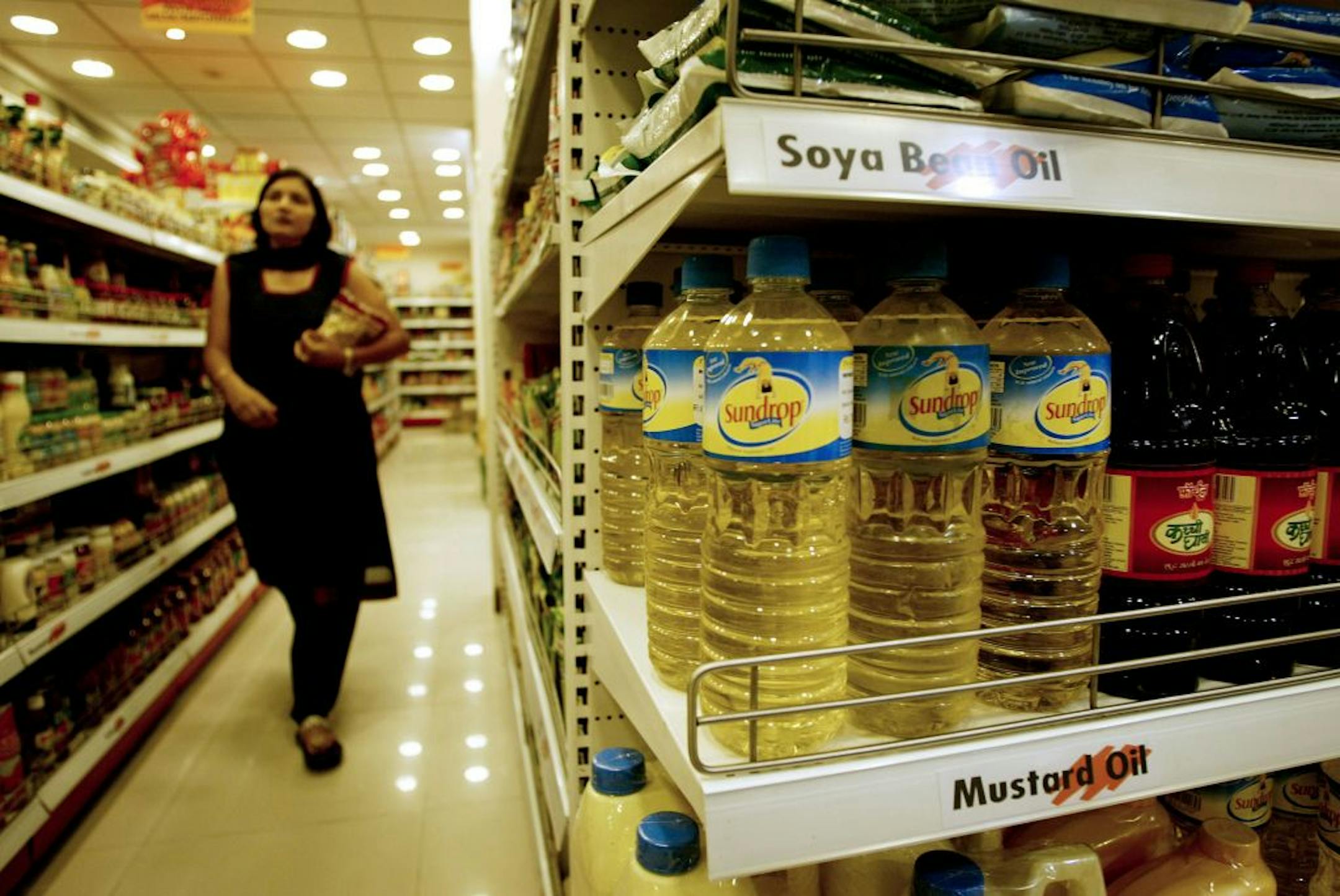
The 250 million members of India's growing middle class are young and educated, they have money, and they want new kinds of food.
About 15 smaller Minnesota companies that sell everything from dried chickpeas to milkshake mix heard that pitch this week in downtown Minneapolis. They met Indian buyers and now will decide whether to export to the world's second-most-populous country.
By the numbers, this is a huge opportunity for food exporters -- 1.2 billion people who eat breakfast, lunch and dinner. And it's a key example of a demographic phenomenon playing out in several parts of the world. Large numbers are joining the middle class, and forward-thinking businesses are looking for ways to sell their goods in the new market.
At a conference this week that was organized by the Minnesota Department of Agriculture, state firms that sell chocolate, honey, barbecue sauce, breakfast sandwiches, hot cereal, cold cereal, popcorn and legumes met one-on-one with Indian importers. A couple of firms are now thinking about striking a deal.
"I think there's an opportunity to do some business," said Mike Slauson, who started Osseo-based Slauson Trading Co. 10 years ago and exports to the U.K., Netherlands, Germany and France.
The firm markets dried legumes, many of them grown in the Red River Valley. Slauson met with a representative of an import firm based in Mumbai, and offered to sell 120 tons of dried beans. A bag of dried legumes makes sense as an export to India because it has a long shelf life and is rich in protein.
Food industry heavyweights such as General Mills Inc. and Cargill Inc. already have Indian divisions. But the conference aimed to highlight opportunities that exist for smaller companies.
Minnesota's trade with India has room to grow. In 2011 exports to India were $203.8 million, less than exports to much smaller economies like Ireland and the Philippines. That's partly because India has historically discouraged foreign companies from doing business there. The country has only allowed imported food for the past 12 years, and it still forbids imports of dairy, meat and genetically modified fruits and vegetables.


