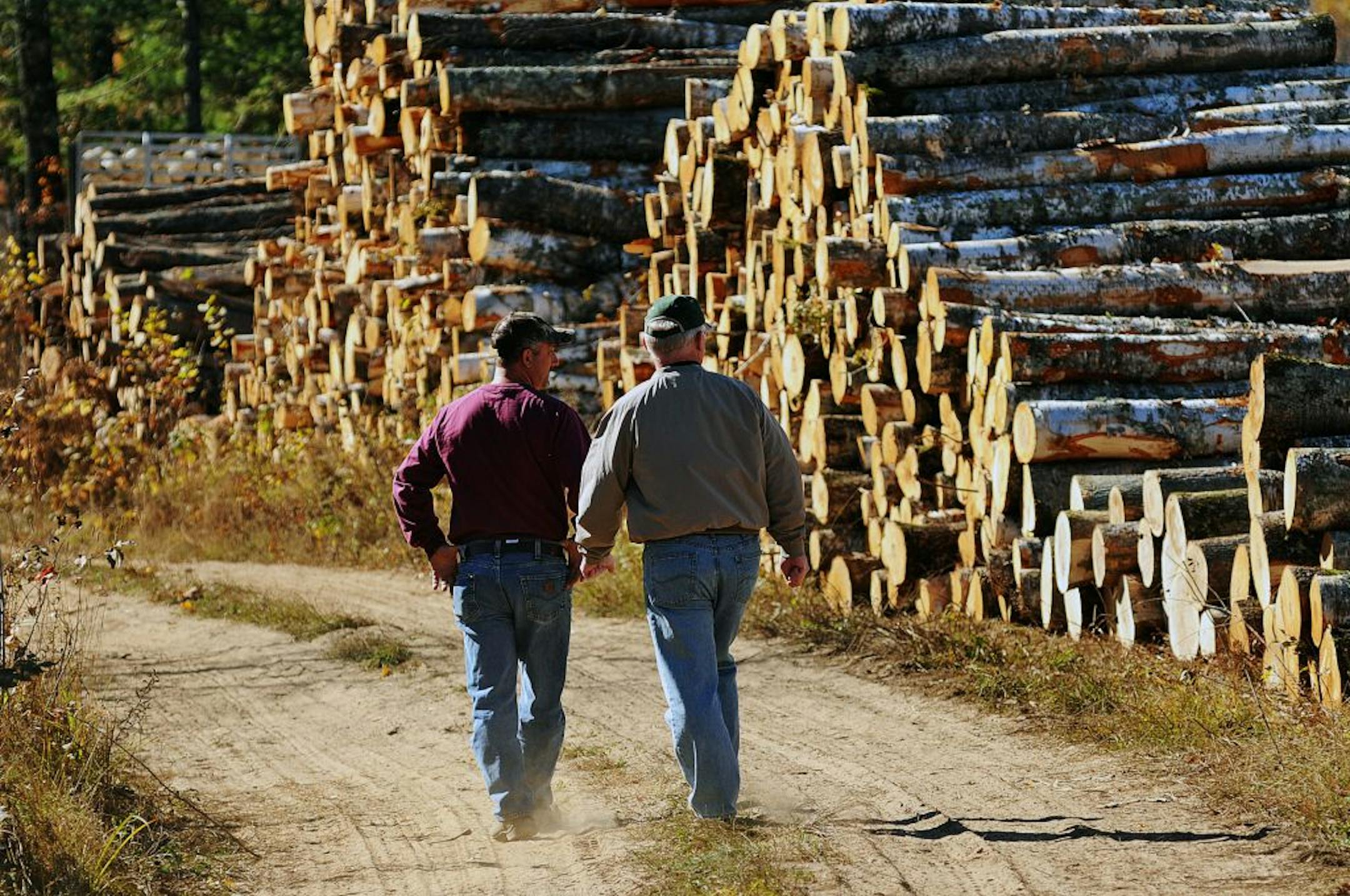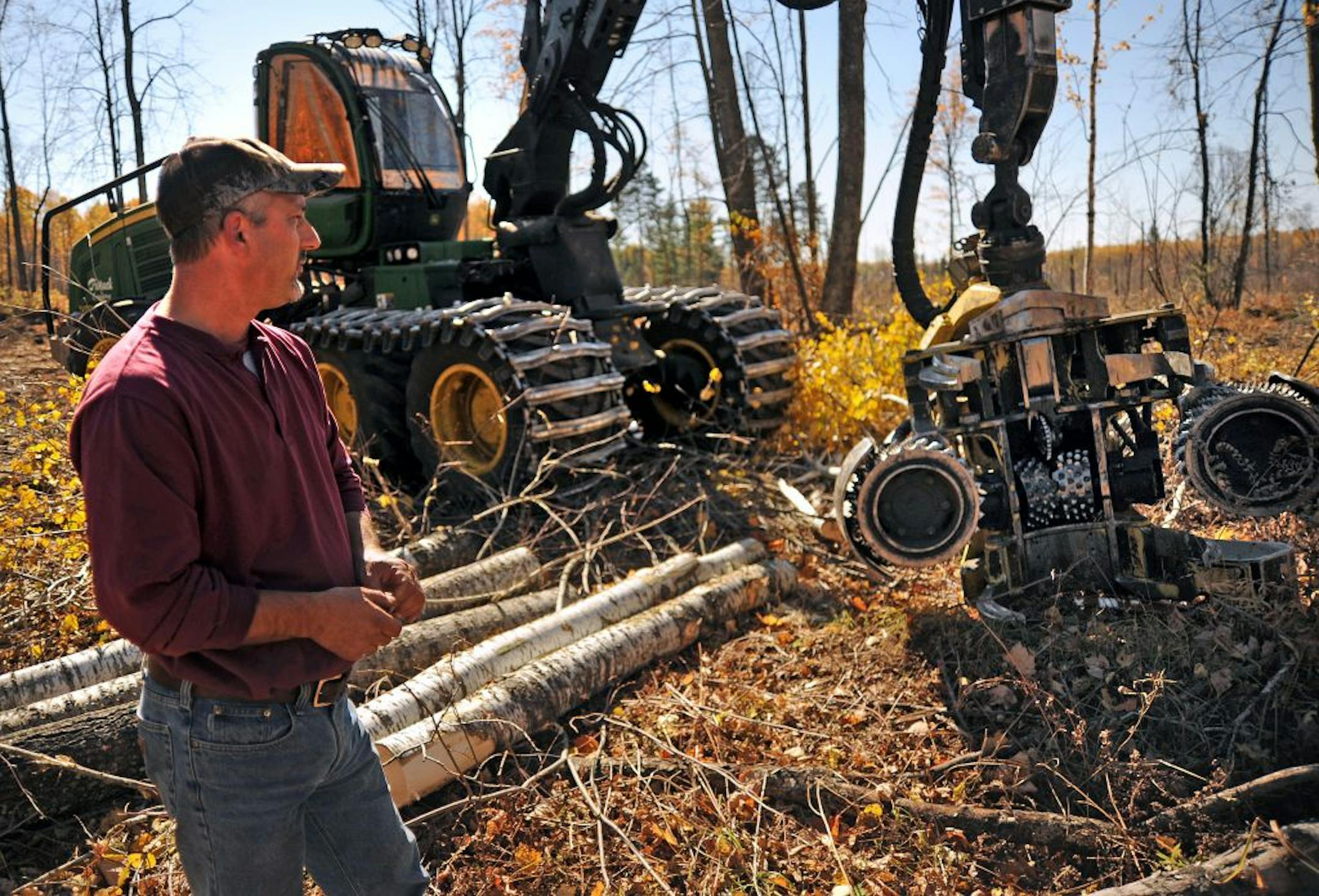
NASHWAUK, MINN. - Scott Pittack grew up in a logging family and has made his living in the woods.
But as he climbed down from a timber harvester at the end of a winding road in the hills, the forest behind him aflame with October color, he admitted he has his doubts about the business.
Nowadays, the industry that's hiring on the west end of the Mesabi Iron Range, where Pittack has been cutting down trees for more than two decades, is taconite, not logging.
In the past 18 months, Pittack's six-man operation has lost two truck drivers to mineral companies.
"I don't blame them guys for going to the mines," Pittack said. "There's some days it looks pretty appealing to me."
Lumberjacks are the foot soldiers of the forest industries, and in recent years they've been pounded on two sides. Not only have more than a hundred U.S. paper mills shut down in little more than a decade, as demand for paper declines in the Western world, but the collapse of the American housing market eliminated demand for building products made from trees.
As of July, the tree harvest in Minnesota had plummeted 40 percent in six years, mostly because of the departure of companies that make oriented strand board by fusing pieces of wood with glue under high pressure.
In August, two more mills announced closures, erasing a tenth of the demand that remained. Verso Paper closed its mill in Sartell two months after an explosion and fire that killed a man, saying the tepid market for its brand of magazine paper didn't justify the expense of repairs. A few days later, privately held Georgia-Pacific announced it would shutter a plant in Duluth that made a thin, hard product called Superwood.