
Minnesota legislators say laws on failure to report child abuse need fresh look

December 23, 2025
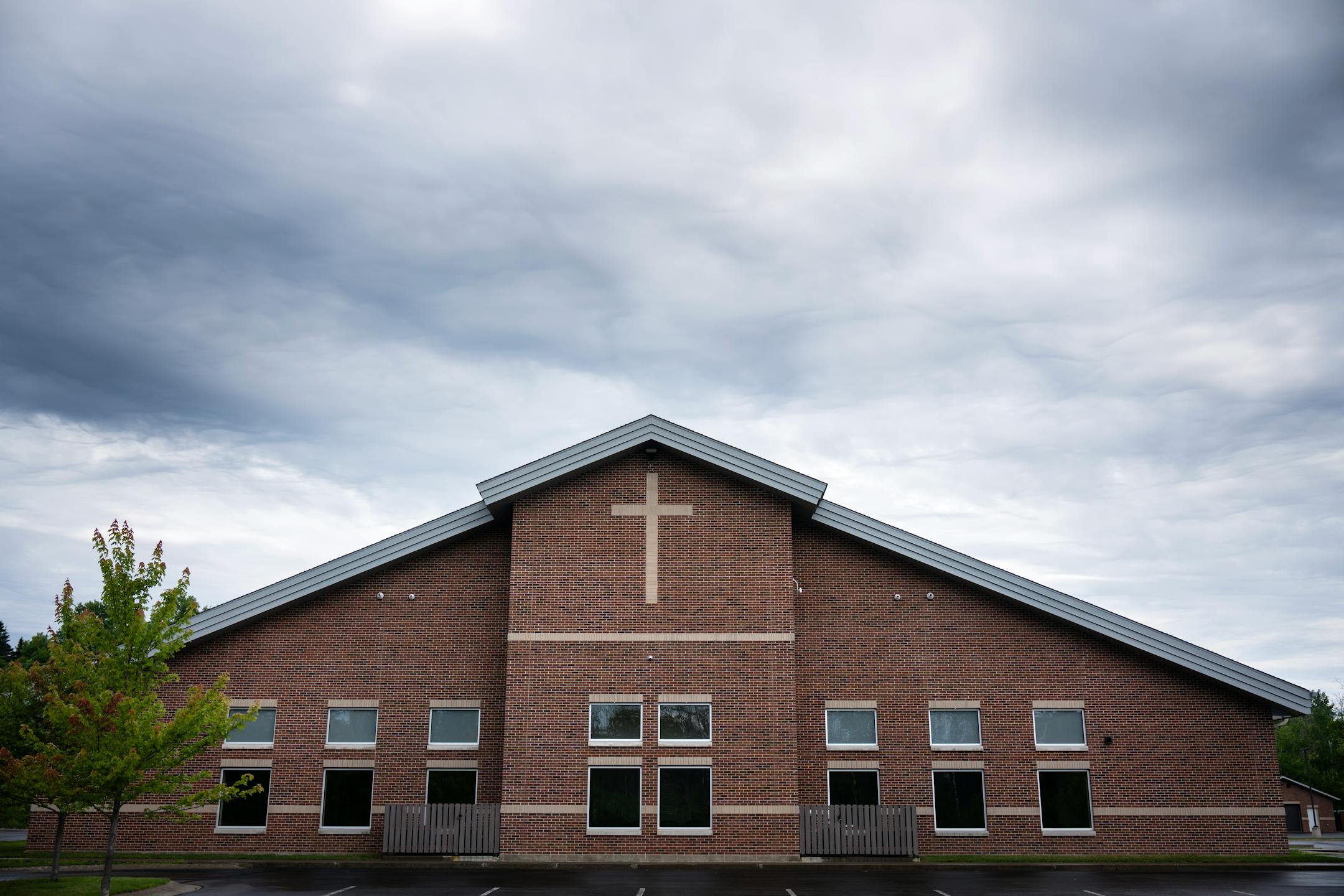
The Old Apostolic Lutheran Church on Martin Road in Duluth, shown on July 18. The OALC is a conservative Christian revival movement that came to the U.S. with 19th century settlers from Norway, Finland and Sweden, and it is not affiliated with any mainstream Lutheran denominations.

Convictions for violating the statute are scarce, and fines are often similar to traffic tickets. A Minnesota senator wants to strengthen the laws designed to protect children.

The Minnesota Star Tribune

This story is in partnership with ProPublica, a nonprofit newsroom that investigates abuses of power.

A Minnesota senator wants to strengthen state laws meant to hold adults entrusted with children’s safety accountable for failing to report suspected child abuse, after an investigation by the Minnesota Star Tribune and ProPublica found that the leadership of a church in Duluth for years protected a child sex predator.

Sen. Erin Maye Quade, DFL-Apple Valley, said she’s focused on situations where such an adult has concrete knowledge that a specific person is abusing children and nonetheless stays silent, allowing the abuse to continue.

“If you know an adult who is committing child sexual abuse, you need to report that,” she said. “For that, the penalties could be a lot higher.”

The Star Tribune/ProPublica report found that preachers in Duluth’s Old Apostolic Lutheran Church knew for years about allegations that a member, Clint Massie, had been sexually abusing young girls in the congregation. Instead of reporting it to police, church leaders encouraged some of the victims to take part in sessions where they were pressured to forgive Massie. They were then told never to speak of the abuse.

In one case, preacher Daryl Bruckelmyer facilitated a meeting with Massie and a young girl, still in the first years of grade school, in his business office. The girl had recently told her parents that Massie groped under her shirt and touched her genitals, according to her account of the incident to investigators 15 years later. In front of the girl, her father and Bruckelmyer, Massie asked her for forgiveness, she told law enforcement. Then the girl’s dad and preacher allowed Massie, who had been sexually abusing her since kindergarten, to hug her.

Massie, now 50, pleaded guilty last year to four counts of felony criminal sexual conduct with victims under the age of 13 related to abusing girls in the church. In March, a judge sentenced him to 7½ years in prison. Bruckelmyer declined to comment, but a spokesperson for the church has said that its preachers followed the law in the Massie case. In interviews with police, Bruckelmyer said that the church encouraged victims to go to police but that ultimately it was up to them to do that.

Under Minnesota law, mandatory reporters — including clergy, doctors, teachers and day care providers — can already be charged with a misdemeanor if they do not make a report to authorities when they believe a child has been maltreated within the past three years.


Some legal experts said the criminal statute has proved an ineffective mechanism for holding accountable people who violate it. Out of 28 people who have been charged with violating the statute over the past 15 years, only six have been convicted, according to data reviewed by the Star Tribune and ProPublica. All but one resulted in probation, suspended jail sentences or options to perform community service and fines of $85 to $385.

What’s more, Minnesota courts have repeatedly blocked lawsuits from people who’ve tried to pursue damage claims from adults or institutions that stayed silent. In one key 2007 case, the state Supreme Court said that even if mandatory reporters are rarely prosecuted, courts cannot create a civil right to sue simply because the criminal law is weakly enforced. “We leave it to the legislature with its fact-finding power to determine whether civil liability is appropriate,” Justice Paul Anderson wrote in a position adopted by a majority of the justices.

The result is a system where the strongest legal motivators for compliance — civil liability and the threat of damages — simply don’t exist.

Maye Quade said she is studying changes the Legislature can make this session, beginning in February. She is asking Senate research staff to begin looking into where the gap is occurring in the law.

“Honestly, we should have looked at it before,” she said. “These victim survivors coming forward and sharing their stories — it would just be wrong to not respond to that.”

Clint Massie was sentenced in the St. Louis County Courthouse in March to 7.5 years in prison.

Law lacks teeth, experts say

Prosecutors in St. Louis County said the church community’s lack of cooperation was a major factor in the delay in bringing charges against Massie. Yet none of the preachers have been charged for failing to report the abuse, even though clergy are mandatory reporters under state law. Kimberly Lowe, a lawyer for the church, said its preachers are unpaid. She said this raises questions as to whether they are subject to the mandatory reporting law, which specifically cites clergy “employees.” A prosecutor in the case said his office and police decided instead to try to “educate” church leaders about their legal responsibility to report sexual abuse.

In general, holding people accountable for violating the mandatory reporting statute is challenging, said Robert Small, executive director of the Minnesota County Attorneys Association, which represents county prosecutors across the state. To convict someone, prosecutors must prove the person knew or had reason to believe a child was being neglected or sexually abused.

In the cases where people in Minnesota have been convicted, the penalties were often minor. In one case in 2022, a police officer in Wright County was convicted of a misdemeanor after a 14-year-old told him and others she’d been molested and he didn’t report it. He was sentenced to one day of probation and a suspended jail sentence, meaning he did not have to serve any time.

Victor Vieth, a former prosecutor who now trains child-abuse investigators nationwide and is based in Minnesota, said it’s difficult to know how often mandated reporters stay silent. Many victims delay disclosure for years, and by then, the three-year statute of limitations usually prevents prosecuting the mandatory reporter who failed to report.

Assistant St. Louis County Attorney Mike Ryan, right, talks with George Olson, who works in victim witness services. Olson worked on the Massie case, and Ryan was the lead prosecutor.

When failures do surface, he said prosecutors often face a catch-22. The mandated reporter who didn’t report may have critical evidence, and prosecutors may decide they need their cooperation more than they need a low-level conviction for failing to report.

But mandatory reporting laws have been on the books nationwide since the 1960s. Over the past half-century, reporting duties have been embedded across American life, in schools, hospitals, churches and child care centers, and training on the obligation to report suspected abuse is now routine — often required as a condition of employment or licensure. Every state has its own laws to comply with the federal legislation passed in the 1970s that provided funding and guidance for protecting children, said Toby Briggs, co-founder of Simple Learning Systems, a California-based company that creates training software for mandatory reporting.

Briggs said he doesn’t see a lot of cases for failure to report, but high-profile lawsuits have led to stricter rules and more required training for mandatory reporters.

“You have these huge, high-profile examples like Boy Scouts and Catholic Church that have been sued and that did not train their folks and the financial cost is enormous,” he said.

A few states, including Washington, let victims sue people or institutions if they fail to report abuse and the harm continues. This pushes schools and hospitals to train workers better and thoroughly investigate reports.

Because Minnesota doesn’t allow those civil suits, the state hasn’t seen the same attention to the issue, said Jeff Anderson, one of the nation’s most prominent clergy-abuse attorneys, who is based in St. Paul. He described the statute as “a tool nobody uses” and said he believes mandated reporters know there is almost no chance of criminal or civil accountability if they stay silent.

ProPublica reporter Jessica Lussenhop contributed to this report.

Jeremy Kohler can be contacted at jeremy.kohler@propublica.org.

about the writer

about the writer

Andy Mannix

Investigations

Andy Mannix is an investigative reporter for the Minnesota Star Tribune.

See Moreicon

More from News & Politics

See More
card image
Anthony Soufflé/The Minnesota Star Tribune

The design of the distinctive green-tiled building, much-discussed on social media and even knitted into scarves, grew from one woman’s love of evergreens.

card image