
Minnesota law professors call arrests of journalists for documenting church protest an attack on free press

Georgia Fort and Don Lemon were arrested nearly two weeks after the demonstration at Cities Church in St. Paul.

The Minnesota Star Tribune
January 30, 2026 at 10:59PM
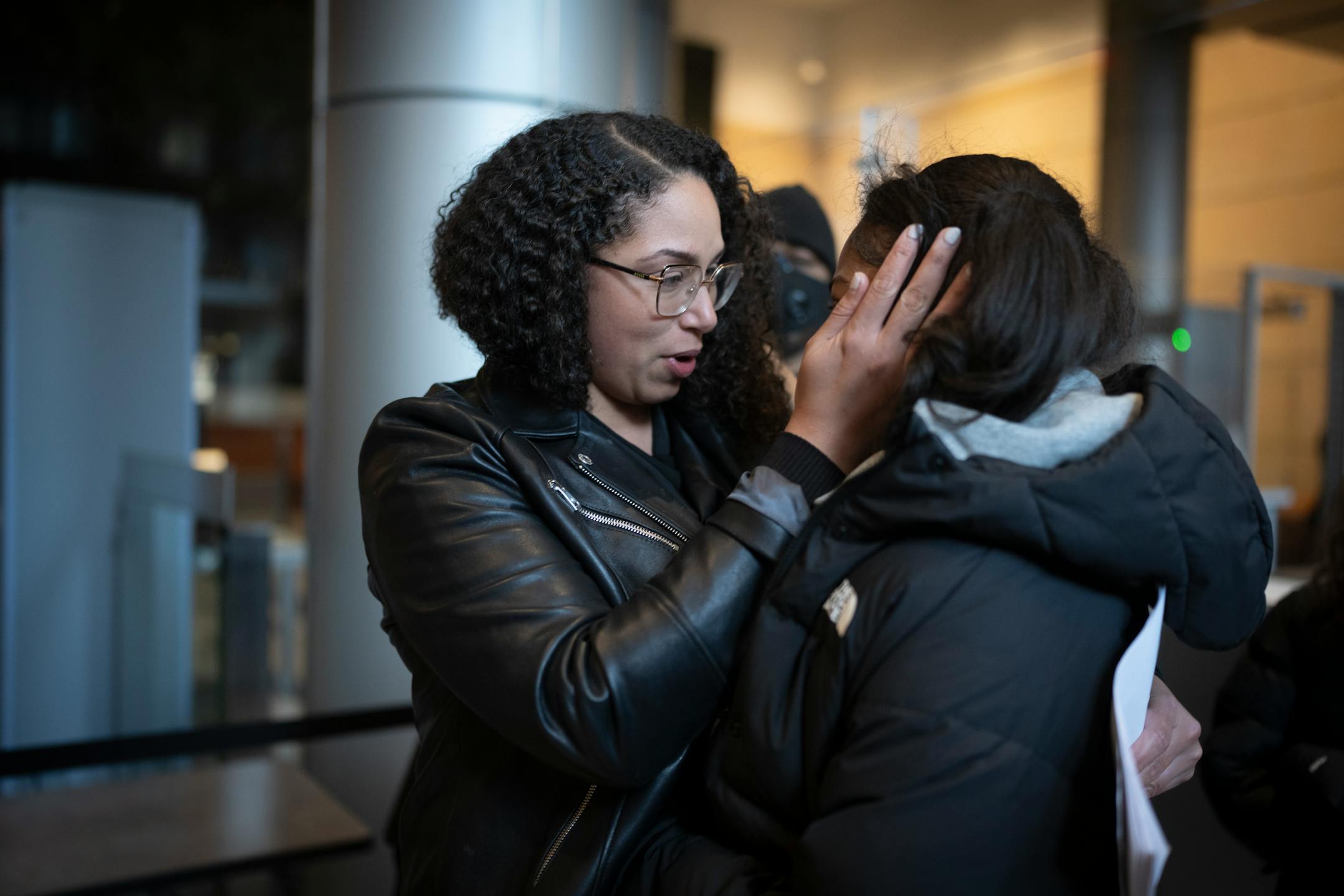
Journalist Georgia Fort hugs her daughter Araya Hammond-Fort as Fort leaves the federal courthouse in Minneapolis on Jan. 30 after being arrested for covering a Jan. 18 protest at Cities Church in St. Paul. (Renée Jones Schneider/The Minnesota Star Tribune)

Three Minnesota law school professors say the arrests of journalists Don Lemon and Georgia Fort represent a troubling attack on freedom of the press and a misuse of a federal law that has never before been used to prosecute reporters.

Lemon and Fort were arrested on Thursday and Friday, nearly two weeks after they documented an anti-ICE demonstration during a church service on Jan. 18 at Cities Church in St. Paul. Protesters disrupted the service because one of the church’s pastors, David Easterwood, works as the acting director of ICE’s local field office.

The federal government has sought to charge Lemon and Fort for allegedly conspiring to deprive rights and interfering with someone’s religious freedom in a house of worship. Also arrested were politician and Black Lives Matter-Minnesota co-founder Trahern Crews and DFL activist and former state House staffer Jamael Lundy. A federal judge ordered the release of all four on Friday.

Julie Jonas, a law professor at the University of St. Thomas, called the arrests “absolutely an attack on the press” and said the journalists have a strong First Amendment defense.

“What the administration is basically saying is that you can’t report on this unless we approve of what you’re reporting on,” Jonas said of the arrests. “They are trying to chill journalistic endeavors, and they’re successful in many ways.”

Beyond their concern of freedom of the press, some believe Lemon and Fort’s cases represent a misuse of the crime being alleged — violation of the Freedom of Access to Clinic Entrances (FACE) Act of 1994.

It prohibits injuring, intimidating or interfering with someone from obtaining or providing reproductive health services, but it also bans anyone from restricting the First Amendment right of “religious freedom at a place of religious worship.”

In order to violate those laws, someone must either intentionally injure, intimidate or interfere with another person, Jonas explained.

“The language that we’re talking about is physical obstruction, intentionally injures, intimidates, or interfere with” someone, Jonas said. “And I assume, as journalists, they did none of those things.”

The professors said the FACE Act has historically only been used to prosecute someone who restricted others from getting access to reproductive health facilities, even though it also protects religious spaces.

And, they said, it has never been used against a journalist.

Jane Kirtley, a professor of media ethics and law at the University of Minnesota, said covering a protest “is a legitimate, newsworthy thing to cover.”

David Schultz, a professor of political science and legal studies at Hamline University, defended Lemon after watching the videos of his coverage, saying he didn’t see “anything that approached, ‘threats, force or intimidation.’”

He believes the arrests demonstrate attacks on two of the major functions of journalism: keeping tabs on those in power through accountability, and keeping the public informed.

“I think the concern here is, to what extent is arresting the press an effort to try to basically prevent either the watchdog function, or providing information to society?” Schultz said.

Since early winter, when the federal government first sent thousands of agents to carry out a massive immigration operation in Minnesota, many journalists have been hit in the face with pepper spray or tear-gassed by officers. Some have argued it rises to an attack on the press.

Kirtley said she’s concerned the targeting of journalists is now being coupled with attempts to charge them in court.

“This is basically a war on journalists that are trying to gather information and provide it to the public,” she said.

about the writer

about the writer

Louis Krauss

Reporter

Louis Krauss is a general assignment reporter for the Star Tribune.

See Moreicon

More from News & Politics

See More
card image
Carlos Gonzalez/The Minnesota Star Tribune

Protesters marched in streets, students walked out of school and businesses shut their doors around the U.S. to show support for Minnesota.

card image