
Minnesota keeps June 20 cutoff for spraying dicamba

Herbicide restriction helped cut complaints from farmers in 2018, regulators said.

December 13, 2018 at 1:30AM
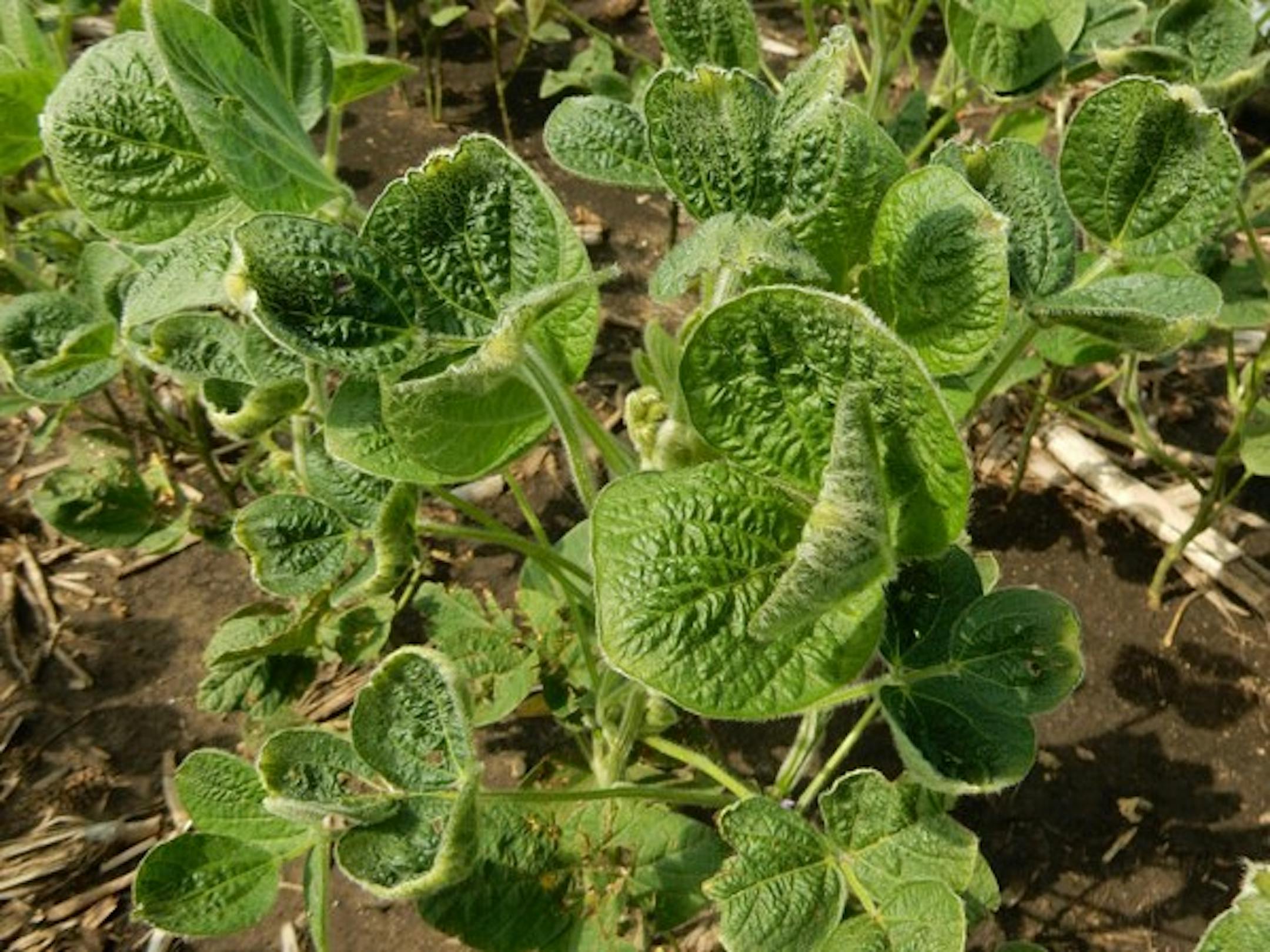
Soybean plants exposed to dicamba show a "cupping effect" in which the leaves turn up at the edges.
Soybean plants exposed to dicamba show a "cupping effect" in which the leaves turn up at the edges. (The Minnesota Star Tribune)

The state of Minnesota will maintain the June 20 cutoff date for use of the herbicide dicamba, but dispense with restrictions on spraying on hot days, the Minnesota Department of Agriculture announced this week.

The weed killer was the subject of hundreds of complaints in 2017 when it drifted across property lines and damaged an estimated 265,000 acres of Minnesota soybeans. Regulators received 253 reports of alleged dicamba drift in 2017, and in 2018 forbade farmers from spraying the chemical after June 20, or when the temperature was above 85 degrees.

Complaints of drift fell off dramatically in 2018, and regulators decided to set the same June 20 cutoff in 2019.

"We now have two years' worth of data to show what measures can and should be taken to limit the potential drift of dicamba to non-target crops," Agriculture Commissioner Dave Frederickson said in a statement. "It is evident that measures put in place last year worked well and we must continue to use this product in a prudent manner."

However, the state's temperature restriction will go away in 2019, a move that farmers applauded.

"We're happy that they removed the temperature restriction," said Mike Petefish, a farmer near Claremont, Minn., who uses dicamba on all his soybeans. "Last year we had a lot of problems. There were a lot of issues with farmers being able to find enough days to spray their crops."

Monsanto developed dicamba to kill weeds that have become resistant to Roundup and other popular herbicides, and then engineered soybean and cotton seeds to tolerate dicamba.

The problem is that dicamba can drift and kill soybeans and other crops on nearby fields that are not engineered to resist the herbicide.

The chemical generated more than 2,700 complaints in more than 20 states and affected about 3.6 million acres in 2017, according to reports from state ag departments and state extension weed scientists compiled by the University of Missouri.

The Environmental Protection Agency made dicamba a restricted-use herbicide in 2018. Rules associated with the designation say that dicamba cannot be sprayed when the wind is blowing at more than 10 mph. As well, people who apply it to fields have to be certified.

Individual states have authority to make additional rules for pesticides that are more restrictive than federal requirements.

Petefish said that while farmers are happy that Minnesota removed the temperature restriction on the chemical's use, they would prefer that the state simply follow the EPA guidelines for dicamba.

"For simplicity, it's just best that states follow the federal label," he said. "I think it gets complicated when you have states that want to piecemeal the labels."

Adam Belz • 612-673-4405 Twitter: @adambelz

about the writer

about the writer

Adam Belz

Reporter

Adam Belz was the agriculture reporter for the Star Tribune.

See Moreicon

More from Business

See More
card image
Spencer Platt

The U.S. stock market roared back on Friday, as technology stocks recovered much of their losses from earlier in the week and bitcoin halted its plunge, at least for now.

Attendees of Frostbike made their way through the convention Saturday at the Quality Bike Products campus in Minneapolis. ] (AARON LAVINSKY/STAR TRIBUNE) aaron.lavinsky@startribune.com Frostbike 2016 was held at the Quality Bike Products Campus on Saturday, Feb. 27, 2016 in Bloomington, Minn.
card image
